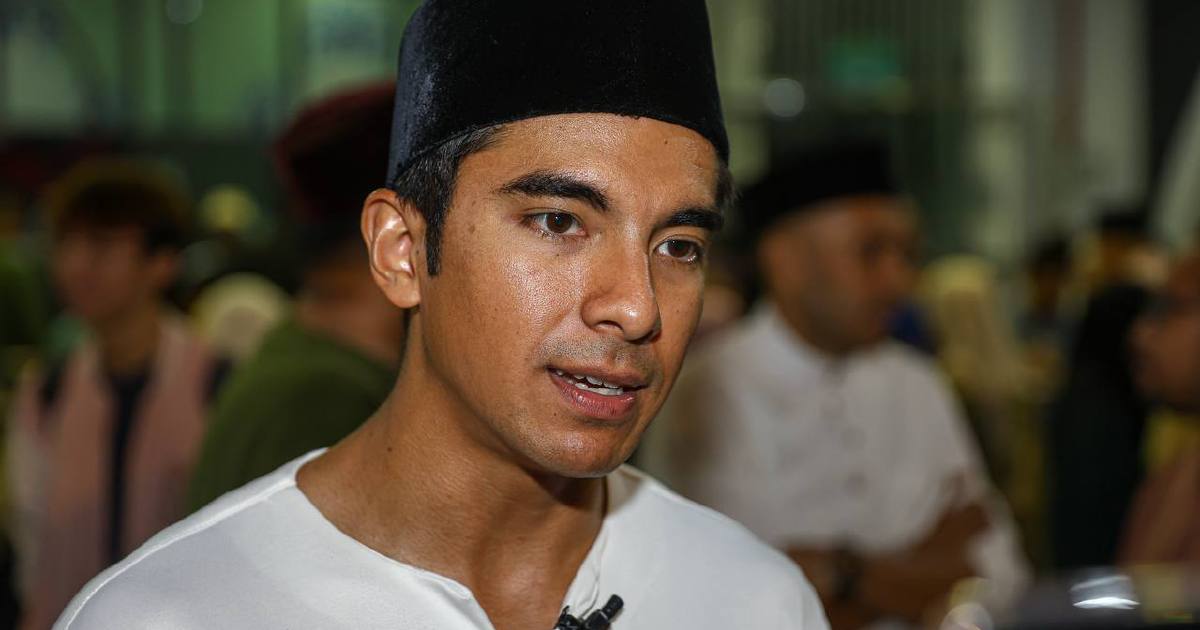
Syed Saddiq Abd Rahman, the former Youth and Sports Minister, has signalled his readiness to accept whatever outcome emerges from the Federal Court's forthcoming decision by placing his trust in God's hands. The statement underscores the intensity and personal significance of the legal proceedings as they approach their climactic phase in Malaysia's highest judicial tier.
The approaching ruling marks a decisive moment for the politician, whose career has been marked by rapid ascent through the ranks of Malaysia's political establishment. From his early prominence as a reformist voice within the ruling coalition to his appointment as Youth and Sports Minister, Syed Saddiq has positioned himself as a contemporary figure attempting to bridge generational divides within Malaysian politics. The Federal Court case now threatens to reshape his political trajectory and public standing.
This posture of spiritual resignation carries deeper implications beyond mere personal piety. In Malaysian political discourse, invoking divine will often serves as both a genuine expression of faith and a strategic communication tool, allowing public figures to project composure and dignity during moments of uncertainty. For a politician whose image has been carefully cultivated around youth leadership and progressive values, maintaining composure before the court's judgment demonstrates an attempt to preserve political capital regardless of the verdict.
The legal challenge facing Syed Saddiq has attracted considerable attention within Malaysia's political circles, where the outcome could have ramifications extending beyond his individual circumstances. Federal Court decisions involving prominent politicians frequently establish precedents that ripple through the system, affecting how similar cases are adjudicated and how the judiciary's relationship with the political establishment is perceived by the broader public. The court's determination will inevitably be scrutinized for what it reveals about judicial independence and the treatment of sitting or former political figures.
Syed Saddiq's apparent calm reflects a broader pattern observed among Malaysian politicians facing legal jeopardy. Rather than engaging in prolonged public contestation or mounting aggressive defences through media channels, many have adopted a quieter approach that emphasizes acceptance and faith. This strategy potentially preserves dignity while avoiding escalation that could antagonize judges or invite further public criticism. By framing his situation as beyond his control, Syed Saddiq positions himself as subject to forces greater than political maneuvering or legal argument.
The timing of his statement, emerging just as the Federal Court prepares to deliver judgment, suggests a deliberate effort to shape the narrative around whatever decision materializes. Whether the court rules in his favour or against him, Syed Saddiq's public acceptance of the outcome offers him a degree of narrative control. Should the judgment disappoint his supporters, he can point to his dignified acceptance; should it vindicate him, he can attribute the victory to divine favour working through the judicial system.
For Malaysian observers, the case demonstrates how the intersection of law, politics, and religion continues to structure the country's public discourse. The invocation of God's will by a politician facing Federal Court judgment touches on fundamental questions about accountability, justice, and the role of fate in human affairs—questions that resonate across Malaysia's diverse constituencies and religious communities. The manner in which Syed Saddiq navigates this intersection may influence how other politicians subsequently present themselves when confronting similar crises.
The approaching ruling also occurs against a backdrop of broader discussions about judicial reform and the political independence of Malaysia's courts. Federal Court decisions affecting prominent figures inevitably attract scrutiny regarding whether the judiciary operates free from political pressure or factional influence. Syed Saddiq's case will be no exception, with observers likely to parse the judgment for clues about the courts' institutional health and autonomy.
Syed Saddiq's invocation of spiritual acceptance, whether deeply sincere or strategically calculated, reflects a recognition that the forthcoming decision lies beyond his direct influence. The Federal Court judgment will represent not merely a legal determination but a pronouncement on his political future, his reputation, and potentially his ability to continue participating in Malaysia's political sphere. By publicly surrendering to divine will, he positions himself as dignified and accepting, irrespective of the outcome that awaits.

