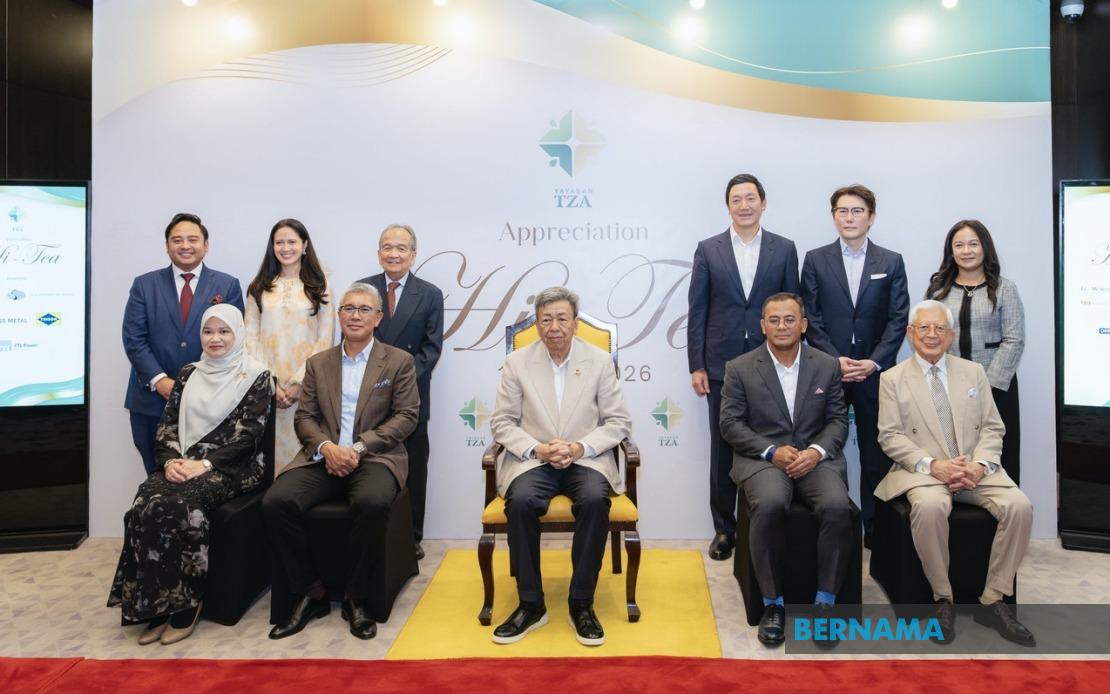
The Sultan of Selangor, Sultan Sharafuddin Idris Shah, lent his presence to the Yayasan TZA (YTZA) Appreciation Hi-Tea Ceremony in Kuala Lumpur on June 18, underscoring the royal family's continued endorsement of charitable work aimed at strengthening communities. Arriving at 3.50 pm, the Sultan was formally received by YTZA chairman Tan Sri Arshad Raja Tun Uda and YTZA advisor Tengku Datuk Seri Zafrul Abdul Aziz, with senior government officials including Selangor Menteri Besar Datuk Seri Amirudin Shari and Education Minister Fadhlina Sidek also in attendance. The gathering highlighted the foundation's evolving role in addressing structural inequalities through a combination of immediate relief and long-term capacity building.
Tengku Zafrul outlined YTZA's expansive vision during the ceremony, emphasising that the foundation's programmes transcend short-term charitable giving to instead focus on systemic change. He articulated a philosophy centred on enabling individuals and communities to develop their own pathways out of poverty, rather than merely providing temporary assistance. This approach encompasses educational scholarships, environmental sustainability projects, and grassroots community engagement, all underpinned by the conviction that inclusive economic and social development requires sustained institutional effort. The Sultan's participation symbolised the alignment between royal patronage and the foundation's core mission of fostering a more resilient Malaysian society.
Among YTZA's most significant initiatives is the ACE SPM programme, which concentrates on preparing students from lower-income households for the crucial Sijil Pelajaran Malaysia examinations. Tengku Zafrul revealed that in 2025 alone, the scheme directly supported 467 students across ten schools throughout Selangor. Beyond classroom tutoring, the foundation has leveraged digital platforms to broaden access, with online modules reaching over 4,000 pupils. The exponential difference between direct and digital beneficiaries underscores the scalability potential of technology-enabled education, a critical consideration for a nation seeking to narrow achievement gaps among B40 communities. These metrics demonstrate not merely the scale of ambition but also the rigour with which YTZA monitors programme outcomes.
The foundation's commitment to expanding reach was reinforced through tangible financial commitments announced during the ceremony. The Sultan witnessed the presentation of a mock cheque for RM1 million from Kuok Brothers Sdn Bhd, one of Malaysia's largest family-controlled conglomerates, alongside a RM300,000 contribution from YTL Power International Berhad. These donations, totalling RM1.3 million, reflect corporate confidence in YTZA's governance and impact. In the Malaysian philanthropy landscape, such commitments from established commercial entities signal both the credibility of the foundation and the growing recognition among corporations that strategic giving aligned with educational and social outcomes offers meaningful returns for society and brand reputation.
Tengku Zafrul took the opportunity to express profound gratitude to the constellation of partners sustaining YTZA's operations—sponsors, donors, strategic collaborators, and grassroots volunteers. This acknowledgment is more than ceremonial; it reflects the reality that foundation-driven social change in Southeast Asia depends heavily on multi-stakeholder ecosystems. Private donors, corporate partners, government agencies, and volunteer networks must operate in concert, each bringing distinct resources and expertise. The visibility afforded by the Sultan's attendance amplifies this message, potentially encouraging additional supporters to consider their own roles in fortifying the social safety net.
Beyond immediate educational support, YTZA leveraged the event to unveil Larian KITA@Klang, a community fun run scheduled for October 10 that will coincide with celebrations marking the Sultan of Selangor's Silver Jubilee. This represents the fourth edition of the Larian KITA series, positioning organised runs as more than fitness events but rather as vehicles for community bonding and celebration of local cultural heritage. In Malaysian urban contexts, such initiatives serve multiple functions: they promote public health awareness, foster neighbourhood cohesion, and provide platforms for inclusive community participation that transcend traditional socioeconomic divides. The strategic timing, linked to the Sultan's milestone anniversary, also ensures prominent media coverage and heightened civic engagement.
The October 10 run will showcase the cultural and culinary attractions of the Klang route, deliberately designed to celebrate local identity and heritage while advancing YTZA's inclusivity messaging. For Selangor residents and Malaysian communities more broadly, such events offer accessible entry points into philanthropic ecosystems. Participation barriers are minimised—a fun run requires no prior experience or specialised knowledge—yet the event platforms awareness of underlying charitable missions and community challenges. This democratisation of social engagement represents a quiet but important evolution in how Malaysian civil society mobilises around shared causes.
The gathering itself exemplified the contemporary intersection of royal patronage, corporate social responsibility, and grassroots community development in Malaysia. The Sultan's formal attendance validates YTZA's work within the context of Selangor's broader development priorities, while the presence of senior education officials signalled alignment between foundation activities and national educational policy. For Malaysian NGOs and social enterprises, such institutional visibility remains crucial in navigating funding landscapes and securing government cooperation. The event thus operated simultaneously as celebration, accountability platform, and recruitment drive for future supporters and partners.
Looking forward, YTZA's expansion ambitions face both opportunities and structural challenges. Digital initiatives have demonstrated capacity to reach students beyond traditional geographic and resource constraints, yet sustainability of funding and volunteer engagement remains perpetually contested in the Malaysian charity sector. The RM1.3 million in new commitments provides crucial operating capital, yet the foundation's leadership has signalled commitment to expanding the ACE SPM programme and geographic footprint. This will require not merely financial resources but also deepened partnerships with schools, local government bodies, and community organisations capable of identifying eligible beneficiaries and monitoring programme quality. The Sultan's endorsement provides political cover and moral legitimacy for such expansion; converting that support into operational capacity represents the ongoing challenge facing Malaysian social sector leaders.