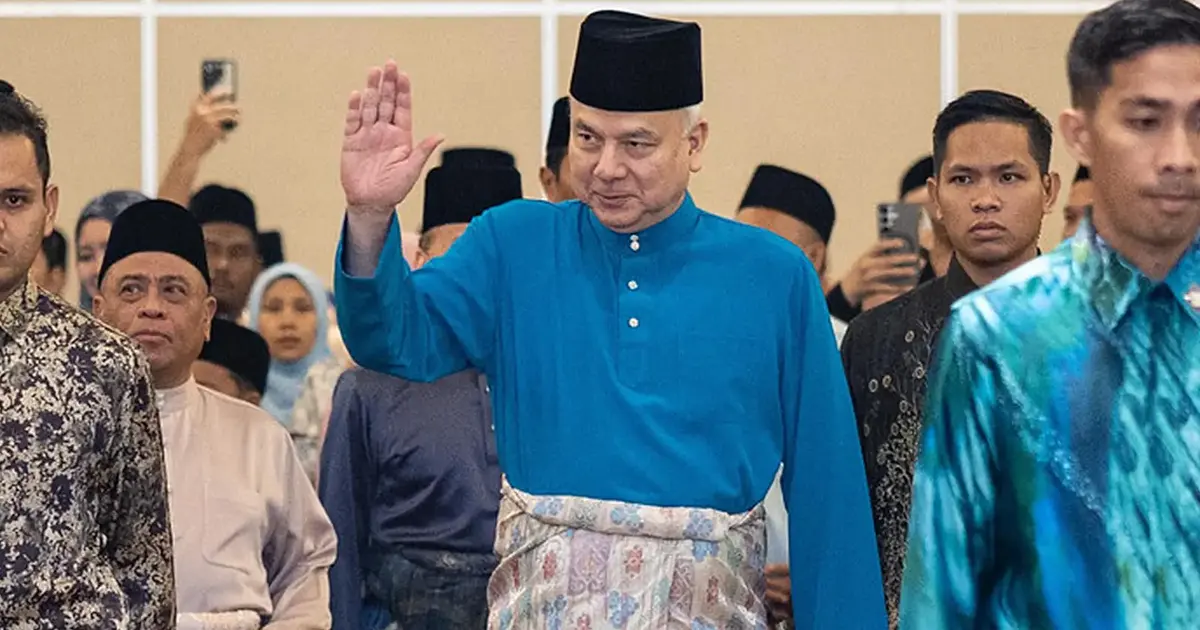
Sultan Nazrin Shah, the Deputy Agong, has delivered a pointed message to Malaysia's leadership establishment: the pursuit of reactive, emotion-driven governance poses a significant threat to the nation's long-term stability and development. Speaking at an official engagement, the Ruler emphasised that steering the country forward demands a departure from spontaneous policy-making and instead calls for deliberate, thoughtful approaches to complex national challenges. His remarks carry particular weight given his constitutional role and standing within Malaysia's monarchical system, where the Sultan serves as an important voice on matters of national governance and institutional integrity.
The essence of Sultan Nazrin's message centres on a fundamental truth about nation-building that is often overlooked in the hurried tempo of contemporary politics: a country's fundamental strength lies not in the decisions of any single leader or faction, but rather in the collective willingness of its diverse population to work toward shared objectives. This principle has profound implications for Malaysia, a multicultural federation where economic prosperity, security, and social cohesion depend heavily on the ability of different communities to find common ground despite legitimate differences in worldview, culture, and interest. When leaders succumb to impulse and emotion, they risk fracturing these delicate bonds of understanding that hold the nation together.
The warning against emotional decision-making is particularly timely in Malaysia's current political landscape, where governance has occasionally been characterised by rapid shifts in policy direction, reversals in announced programmes, and decisions that appear reactive rather than strategically considered. Such volatility creates uncertainty for investors, confuses the electorate about the government's true priorities, and can undermine public confidence in institutions. When citizens observe their leaders making hasty choices without apparent consultation or careful deliberation, it erodes trust in the democratic process itself and may encourage different segments of society to pursue narrow sectional interests rather than national welfare.
Sultan Nazrin's emphasis on mutual respect as a cornerstone of national success addresses another critical dimension of governance that extends beyond technical policy competence. Respect in this context means acknowledging the legitimacy of other perspectives, including those from opposition parties, civil society organisations, religious communities, and ordinary citizens. It requires leaders to listen to voices different from their own, to consider contrary evidence, and to recognise that diverse viewpoints often contain valuable insights. In Malaysia's context, where religious sensitivities, ethnic concerns, and regional disparities frequently intersect with policy debates, this kind of respectful engagement is not merely courteous but essential for achieving durable solutions.
The call for harmonious living represents perhaps the most ambitious element of the Sultan's message. Harmony does not mean enforced conformity or the silencing of legitimate dissent; rather, it implies an environment where people with fundamentally different beliefs and interests can nonetheless coexist peacefully and cooperate on matters of common concern. Achieving such harmony in a plural society requires leaders who resist the temptation to play to narrow constituencies through divisive rhetoric, and who instead seek to articulate inclusive visions of progress that acknowledge the aspirations of various groups. This is particularly relevant for Malaysia's ethnic and religious communities, which have generally maintained peaceful relations but face periodic tensions that can be exacerbated by irresponsible political messaging.
The framework Sultan Nazrin proposes has clear implications for how Malaysia should approach major policy decisions ranging from economic management to constitutional issues. When governments rush into significant changes without proper stakeholder consultation, they risk unintended consequences that prove costlier than the problems they were meant to solve. Infrastructure projects launched without adequate environmental assessment, economic policies introduced without input from affected industries, or constitutional amendments pursued through narrow majorities rather than broad consensus can all generate backlash that ultimately undermines their intended benefits. Conversely, when leaders take time to build understanding across different groups, even when this slows the decision-making process, the resulting policies tend to be more robust and better implemented.
The Sultan's message also implicitly challenges the zero-sum political culture that has occasionally characterised Malaysian governance, where opposition parties are treated as enemies to be defeated rather than fellow stakeholders in the national project. When leaders view political opponents as threats to be vanquished through any available means rather than as representatives of legitimate constituencies requiring engagement, it creates an adversarial atmosphere that poisons rational policy discussion. This dynamic has international dimensions too: Malaysia's standing in the region and globally depends partly on the perception that its government represents all Malaysians and governs according to principled, consistent approaches rather than factional interests or momentary passions.
From a Southeast Asian perspective, Sultan Nazrin's counsel carries broader resonance. The region has witnessed instances where leaders' impulsive decisions or poor governance have triggered political instability, economic disruption, or international complications. Malaysia, as one of Southeast Asia's larger and more complex economies, has particular responsibility to model responsible governance. When Malaysian leaders act with deliberation, consult meaningfully, and respect institutional processes, they contribute to regional stability and reinforce democratic norms that benefit the entire region. Conversely, when governance becomes erratic or dominated by factional infighting, it sends troubling signals about the durability of democratic institutions and may invite unwelcome external intervention or regional criticism.
Implementing the principles Sultan Nazrin advocates requires institutional reforms that encourage more participatory, transparent decision-making processes. This might include strengthening parliamentary committees' investigative capacity, establishing genuine consultation mechanisms that include civil society and affected communities, and creating accountability mechanisms that ensure leaders face consequences for pursuing policies without adequate justification or preparation. Such reforms would help transform governance from a top-down exercise of power into a more collaborative enterprise where different stakeholders contribute to identifying problems and developing solutions. The benefits would extend beyond improved policy outcomes to include enhanced public confidence in government and stronger social cohesion across Malaysia's diverse communities.