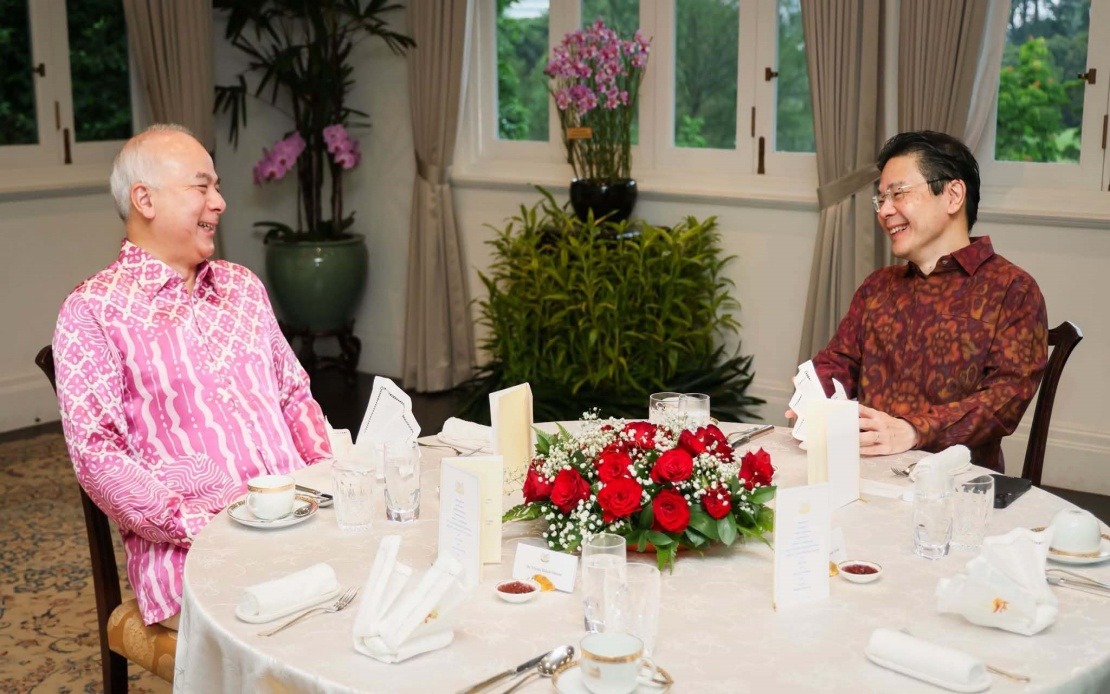
Singapore Prime Minister Lawrence Wong welcomed the Deputy Yang di-Pertuan Agong, Sultan Nazrin Shah of Perak, for a breakfast meeting at The Istana on Thursday, marking yet another significant diplomatic engagement between two nations that remain among Southeast Asia's closest neighbours. The occasion underscored the depth of the relationship that continues to define regional stability and cooperation in a strategically vital corner of Asia.
During their discussion, the two leaders focused on bolstering collaboration within the Association of Southeast Asian Nations (ASEAN), a bloc where both Singapore and Malaysia play instrumental roles in shaping policy and regional direction. The bilateral conversation also encompassed a range of joint initiatives that the two countries are actively pursuing together, reflecting a commitment to translating diplomatic goodwill into concrete, mutually beneficial programmes.
In remarks posted on social media, Wong emphasised that the relationship between the two nations transcends mere geographical proximity. He pointed to shared historical experiences and strong personal connections among citizens of both countries as foundational elements that bind them together. These people-to-people ties have historically served as a stabilising force during periods of tension and continue to foster mutual understanding and cooperation across multiple sectors, from commerce to education and culture.
The Prime Minister expressed confidence that Singapore and Malaysia would persist in their collaborative efforts to realise a shared vision for the future, one that promises tangible advantages for the populations of both territories. This sentiment reflects a broader strategic calculation in both capitals that regional prosperity and stability are inseparable from bilateral cooperation, particularly given their economic interdependence and geographic proximity. The framing of future partnership in terms of mutual benefit rather than zero-sum competition represents a pragmatic approach to contemporary bilateral relations.
Sultan Nazrin's presence in Singapore extended beyond the formal diplomatic engagement with Wong. The Deputy Yang di-Pertuan Agong, who simultaneously holds the position of Chancellor at Universiti Malaya, travelled to the city-state to participate in the 55th Tunku Chancellor Golf Tournament, a sporting event that brings together participants from Universiti Malaya and the National University of Singapore. This biennial competition, held from July 29 to 30, serves as another platform for fostering institutional ties between Malaysia's premier university and its Singaporean counterpart.
The choice of venue for the bilateral discussion—The Istana, Singapore's official residence of the President—reflects the diplomatic significance attributed to the meeting. Such high-level encounters, particularly those involving constitutional figures like the Deputy Yang di-Pertuan Agong, carry symbolic weight beyond the immediate agenda items discussed. They signal to international observers and domestic audiences alike the importance both governments assign to maintaining harmonious and productive relations.
Malaysia-Singapore relations have historically been marked by periodic tensions over issues ranging from water resources to maritime boundaries, yet both nations have consistently demonstrated a capacity for pragmatic resolution and forward-looking cooperation. The willingness of senior leaders to engage regularly in substantive discussions on areas of mutual interest suggests a commitment to managing differences while maximising opportunities for joint advancement. This approach has proven effective in maintaining the bilateral framework that underpins much of Southeast Asia's regional architecture.
The emphasis on ASEAN cooperation during the Wong-Sultan Nazrin meeting reflects broader geopolitical imperatives facing the region. With great power competition intensifying and global supply chains under strain, ASEAN's unity and effectiveness as a regional organisation have become increasingly vital. Both Malaysia and Singapore, despite their different strategic positions and foreign policy priorities, have vested interests in maintaining ASEAN's relevance and capacity to mediate regional disputes while advancing collective interests.
Beyond formal diplomacy, the participation of the Deputy Yang di-Pertuan Agong in the university golf tournament demonstrates how educational institutions facilitate sustained engagement between Malaysia and Singapore at multiple levels. These interpersonal connections, particularly among younger generations, help sustain the broader relationship during periods when high-level political engagement may face challenges. The inter-university competition exemplifies how sports and educational exchange programmes contribute meaningfully to bilateral relations, often operating beneath the radar of media attention yet producing meaningful long-term dividends.
The bilateral initiatives referenced in Wong's remarks remain largely unspecified in public statements, suggesting they may encompass sensitive areas requiring careful diplomatic handling or projects still under development. Common areas of Malaysia-Singapore collaboration include trade and investment facilitation, infrastructure projects, security cooperation, and educational partnerships. The breadth of potential cooperation areas underscores the maturity and complexity of the relationship between two countries that are simultaneously close allies and economic competitors.
Looking forward, the momentum generated by regular high-level engagement such as the Wong-Sultan Nazrin breakfast meeting provides a foundation for addressing outstanding issues and identifying new opportunities for collaboration. As both nations navigate economic transitions and geopolitical shifts in the Indo-Pacific region, maintaining robust bilateral channels of communication becomes increasingly important. The consistent emphasis on shared vision and people-to-people ties suggests a mutual recognition that the Malaysia-Singapore relationship remains a cornerstone of regional stability and prosperity.

