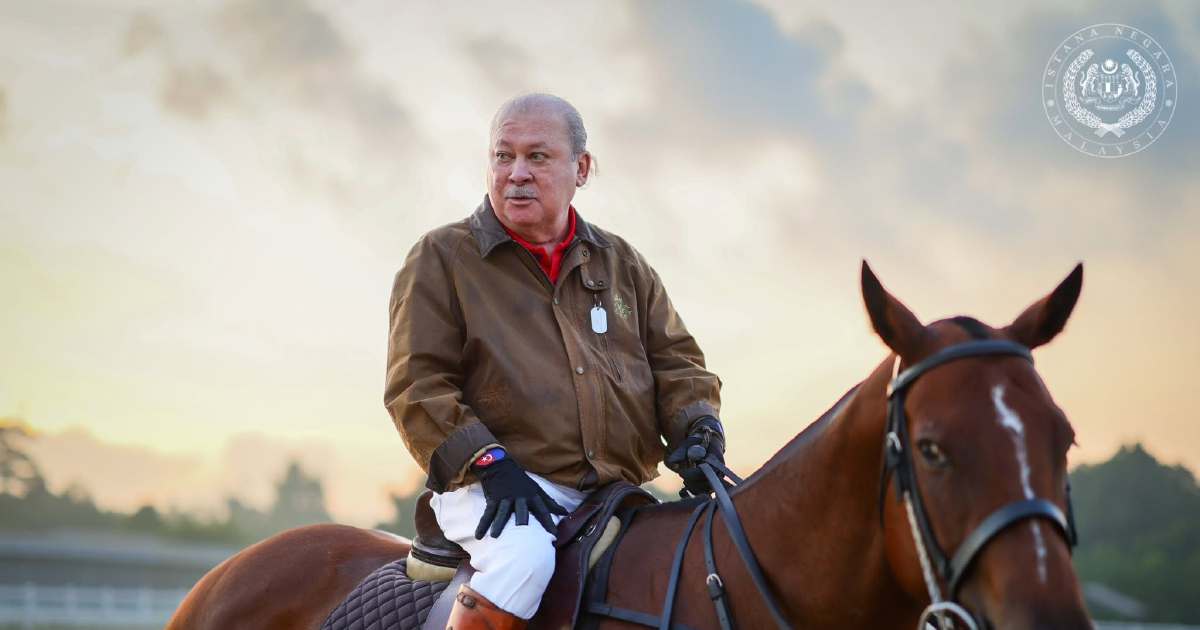
His Majesty Sultan Ibrahim, King of Malaysia, has continued his established morning horse riding routine at the Royal Johor Polo Club situated at Istana Pasir Pelangi in Johor Baru, underscoring his commitment to maintaining physical fitness through disciplined daily practice.
The monarch's decision to sustain this particular wellness regimen reflects a pattern of personal dedication to active pursuits that have become characteristic of his leadership approach. By integrating equestrian exercise into his daily schedule, Sultan Ibrahim demonstrates the importance he places on physical health and mental well-being despite the considerable demands of the highest office.
The Royal Johor Polo Club, headquartered at the prestigious Istana Pasir Pelangi estate, provides an appropriate setting for such activities. The venue, steeped in royal tradition and offering extensive facilities designed for equestrian sports, has long served as a focal point for polo and horse-related recreational pursuits among Malaysia's elite circles. The club's maintained grounds and professional infrastructure enable participants to engage safely and effectively in this demanding sport.
Horse riding, particularly when undertaken with the measured composure evident in the King's approach, offers substantial health benefits spanning cardiovascular conditioning, core strength development, and enhanced balance. The discipline required to manage a horse competently also provides mental engagement and stress relief—factors especially relevant for national leaders navigating complex policy decisions and ceremonial responsibilities throughout their tenure.
Such public visibility of the King engaging in leisure activities humanises the monarchy and projects an image of an active, engaged ruler who maintains personal vitality. This contrasts with perceptions of detachment sometimes associated with high office and conveys to Malaysian citizens that leadership encompasses demonstrable commitment to personal wellness and disciplined routine.
The trotting pace described—characterised as calm and relaxed—suggests the King prioritises sustainable, measured exercise rather than high-intensity or competitive pursuits during these sessions. This approach aligns with contemporary health understanding that consistent, moderate-intensity activity performed regularly yields superior long-term outcomes compared to sporadic intense exertion, particularly for individuals managing demanding professional schedules.
Johor's historical significance as a major centre of royal and administrative authority in Malaysia makes it an appropriate location for the King to pursue personal interests. The state's governance structures, infrastructure development, and economic initiatives frequently require vice-regal or direct royal attention, creating natural opportunities for the King to combine personal wellness activities with official responsibilities during sojourns in the region.
The establishment of visible, regular personal routines contributes to institutional stability and predictability in the monarchy's operations. Malaysian citizens and international observers alike monitor visible patterns of royal activity, interpreting them as indicators of the King's health status, engagement level, and commitment to institutional responsibilities. Transparent engagement in well-established routines signals continuity and normality in governance structures.
Equestrian pursuits hold particular resonance within Malaysian royal traditions, extending back through generations of Malay sultanates where horsemanship featured prominently in courtly culture and military heritage. The continuation of such practices by the contemporary King acknowledges this cultural lineage while demonstrating that traditional pursuits remain compatible with modern governance demands and expectations.
The yoga of equestrian practice—the coordination required between rider and animal, the responsiveness necessary to subtle environmental cues, the patience demanded in working with sentient creatures—offers psychological benefits beyond mere physical exercise. These dimensions position horse riding as a holistic wellness practice rather than solely a recreational or sporting endeavour, explaining its appeal across diverse cultural contexts and social strata.
For the broader Malaysian public, the King's visible commitment to personal health practices reinforces messaging around wellness and preventive health orientation. Official encouragement of active lifestyles becomes more persuasive when the nation's highest office holder visibly models such commitment, potentially influencing public perception of health priorities and normalising regular physical activity across society.