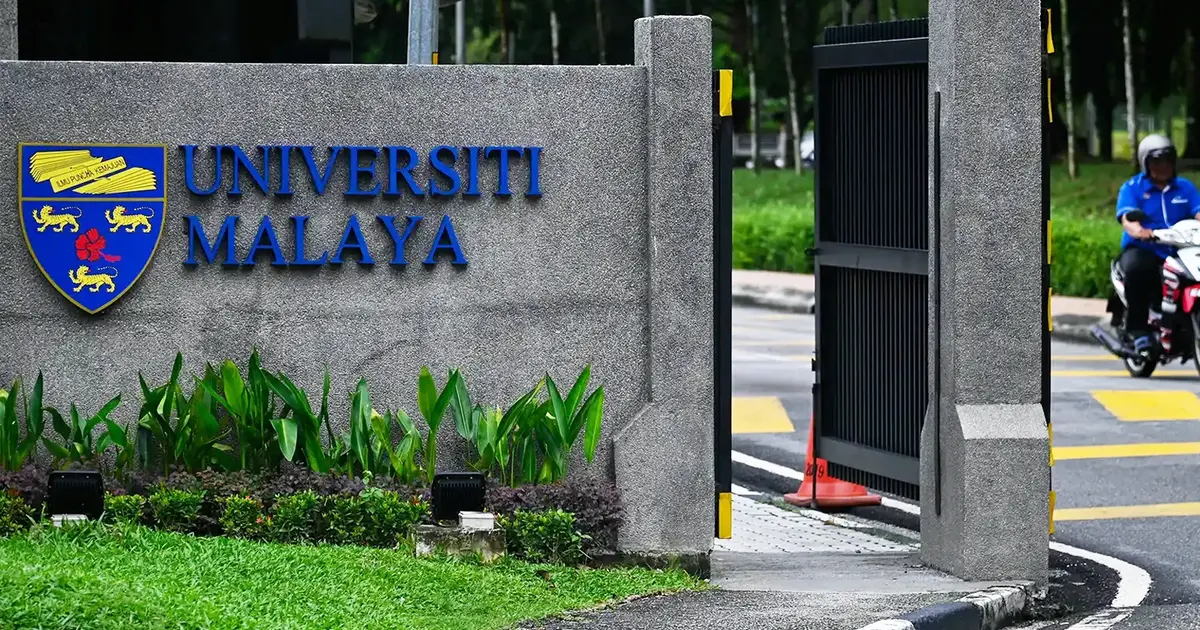
Student activists at the University of Malaya are escalating calls for accountability and transparency regarding a sexual harassment investigation into a professor, arguing that institutional silence has persisted despite the university's own timeline indicating resolution should have arrived by now. NewGen UM, an independent student collective focused on governance and accountability issues, has publicly challenged the institution's handling of the matter, pointing to a significant gap between the administration's stated progress last September and the absence of any formal announcement regarding findings or outcomes.
The investigation centres on allegations that emerged within the campus community, prompting institutional action that the university leadership framed as a priority. When officials addressed the situation in September of the previous year, they characterised the inquiry as approaching its concluding phases, suggesting that stakeholders would receive definitive information in the near term. However, months have elapsed without the university releasing any formal statement detailing the investigation's results, disciplinary measures taken if warranted, or procedural steps going forward.
This silence has created a credibility problem for university management. Students and faculty members who expected transparency as a baseline requirement of institutional integrity have instead encountered opacity that invites speculation and erodes trust in the administration's commitment to addressing misconduct. The delay also raises practical concerns about whether affected parties—particularly the complainant or complainants—have received closure or whether the case has simply been deprioritised amid competing administrative demands.
NewGen UM's push for disclosure reflects broader sentiment among Malaysian university students who increasingly demand that their institutions meet international standards for handling workplace misconduct. Public universities in Malaysia operate under scrutiny from students accustomed to observing how comparable universities in neighbouring countries and beyond manage similar cases with greater transparency. The contrast underscores Malaysia's position within a regional and global higher education landscape where accountability mechanisms are becoming non-negotiable.
The group's intervention also signals frustration with a pattern observed across Malaysian academia: investigations into serious allegations proceed behind closed institutional doors, insulated from public scrutiny or meaningful oversight. While confidentiality considerations are legitimate—particularly regarding the complainant's privacy and the respondent's right to due process—complete opacity prevents the broader campus community from understanding how the institution approaches accountability. This distinction between confidentiality and total secrecy remains poorly articulated by many Malaysian universities.
For the University of Malaya specifically, the situation carries institutional weight. As Malaysia's oldest and most prominent public university, its handling of sexual harassment cases sets a standard that reverberates through the higher education sector. When investigations stretch beyond announced timelines without explanation, the message conveyed to potential complainants is ambiguous at best: that reporting misconduct may initiate bureaucratic processes whose conclusions remain uncertain, and whose outcomes will not be disclosed to the campus community.
The absence of a public statement also complicates questions about institutional learning and prevention. If the investigation has concluded, what safeguarding measures has the university implemented to prevent recurrence? Have policies been strengthened? Have training protocols been enhanced for staff and students? These questions remain unanswered, yet they directly affect the campus environment and the institution's credibility regarding commitment to cultural change.
NewGen UM's demand for an update implicitly advocates for a middle path: acknowledging confidentiality obligations while providing sufficient information to demonstrate that the process has reached conclusion and that institutional responsibilities have been executed. This might include confirming that an investigation has concluded, describing any systemic changes implemented in response, and reaffirming the university's commitment to safe campus environments—all without breaching the privacy of individuals directly involved.
The timing of the announcement last September is significant. That statement occurred months ago, and the passage of additional time without follow-up suggests either that the investigation encountered unforeseen complications, administrative capacity constraints diverted resources, or institutional momentum simply dissipated. Any of these scenarios would indicate systemic weaknesses that extend beyond this single case and implicate how the university manages sensitive matters more broadly.
Sexual harassment investigations in Malaysian universities remain relatively novel in terms of formal institutional procedures. Many institutions lack mature investigative frameworks, trained personnel, and established communication protocols for disclosure. This creates genuine challenges for administrators navigating legal, privacy, and accountability considerations simultaneously. However, institutional difficulty does not justify indefinite silence, and students increasingly expect their universities to invest in developing robust systems rather than defaulting to opacity.
The outcome of NewGen UM's advocacy campaign will likely influence whether other student groups pursue similar demands at other Malaysian universities where investigations into misconduct have stalled or disappeared from public view. Should the University of Malaya respond substantively—either by releasing findings or explaining legitimate delays—it would establish precedent for greater transparency across the sector. Conversely, continued silence would reinforce perceptions that Malaysian universities prioritise protecting institutional reputation over demonstrating genuine commitment to accountability and student safety.