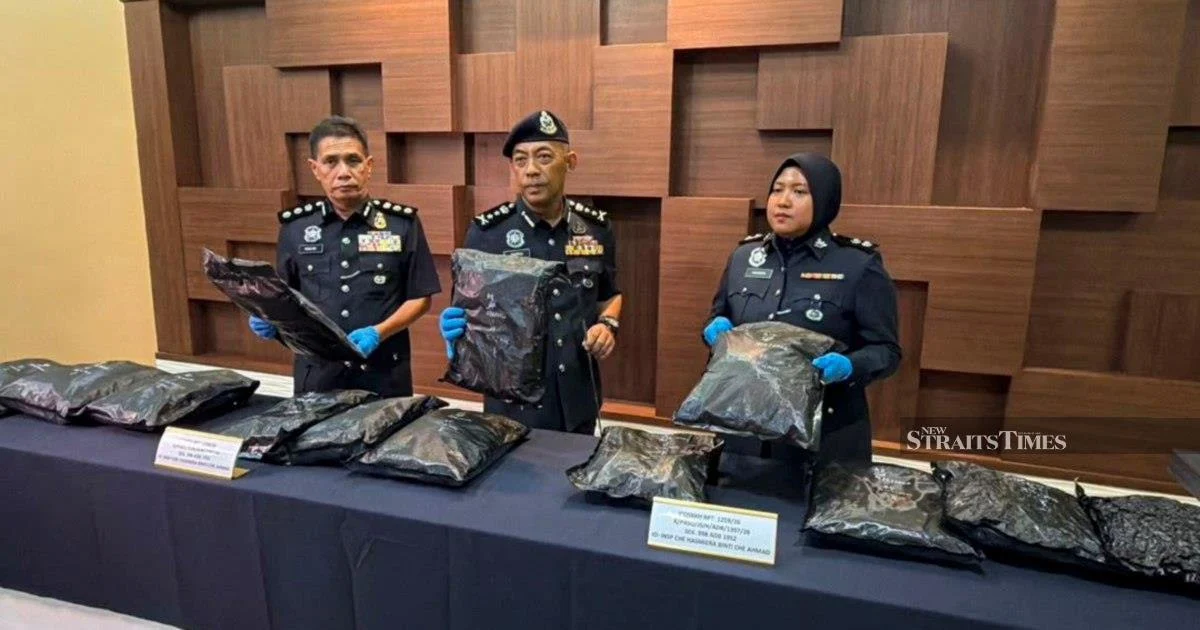
A student enrolled at a private tertiary institution in Malaysia fell into police custody on Monday after attempting to illegally transport a substantial quantity of cannabis from across the border. The 14.63-kilogram haul of cannabis buds seized at the Bukit Kayu Hitam checkpoint carries an estimated street value of RM1.17 million, highlighting the scale of narcotics operations along the Malaysia-Thailand border region.
The Bukit Kayu Hitam checkpoint, one of the primary land entry points linking Kedah to Thailand's southern provinces, has become an increasingly critical enforcement zone for anti-drug operations. Located along the heavily trafficked North-South Expressway corridor, this border crossing processes thousands of vehicles daily, making it both a vital commercial gateway and a common transit route for illegal substances destined for Malaysian markets and beyond.
The student's arrest underscores a troubling pattern: the involvement of young Malaysians, particularly those pursuing higher education, in drug trafficking networks. Their education status and typically lower profile make them attractive to smuggling syndicates seeking to move contraband with reduced detection risk. Unlike hardened criminals, students often lack substantial criminal records and may face fewer suspicions during routine border checks, making them valuable assets in the distribution chain.
Cannabis trafficking through the Malaysia-Thailand border has intensified considerably in recent years, driven by lucrative profit margins and relatively modest penalties compared to other narcotics. The substance commands premium prices within Malaysia, where demand among younger demographics continues to grow despite strict legal frameworks. The border's geographic characteristics—dense vegetation, river crossings, and multiple informal routes—have long facilitated illicit movement of contraband alongside legitimate trade.
Authoities have intensified scrutiny at Bukit Kayu Hitam and other key checkpoints following intelligence indicating a surge in cannabis importation attempts during the past two years. The volume seized in single operations has generally increased, suggesting either higher throughput or more effective interdiction efforts. This particular seizure of 14.63 kilograms represents a substantial single catch, reflecting the scale of individual smuggling operations that authorities now regularly encounter.
The monetary valuation of RM1.17 million attached to this cannabis consignment provides insight into the economics driving these criminal operations. At street-level retail prices in Malaysia, cannabis buds typically fetch between RM60 and RM100 per gram depending on quality and location. The figure assigned by authorities indicates substantial potential profit for trafficking networks, even accounting for losses to law enforcement and distribution costs along the supply chain.
The student's role as a transporter rather than an organizer suggests involvement at an operational rather than strategic level within trafficking networks. Transporters occupy vulnerable positions in drug supply chains, bearing significant legal exposure while capturing minimal profit. Sentencing guidelines for drug trafficking in Malaysia mandate harsh penalties including lengthy imprisonment, substantial fines, or both, depending on quantity thresholds and individual circumstances. Students convicted of smuggling face permanent criminal records that derail professional prospects and educational advancement.
The arrest aligns with broader enforcement priorities set by the Malaysian Anti-Corruption Commission and Narcotics Criminal Investigation Division, which have designated border checkpoints as high-priority interdiction zones. Enhanced detection technologies, intelligence sharing between customs and narcotics units, and increased physical inspections have collectively raised the operational risk for smugglers. Nevertheless, traffickers continue attempting crossings, adjusting tactics to circumvent detection while seeking expendable operatives to manage apprehension risks.
Thailand's position as a significant source country for cannabis entering Malaysia reflects both cultivation patterns in neighbouring regions and infrastructure advantages facilitating transnational movement. While cannabis remains illegal throughout Thailand, certain provinces maintain established production networks supplying regional markets. The substance travels through established trafficking corridors, with Kedah, Perlis, and Satun Province forming a particularly active smuggling triangle.
The implications for Malaysia extend beyond individual prosecutions. Student involvement in drug trafficking signals either recruitment vulnerability or financial desperation requiring policy attention. Higher education institutions should strengthen awareness programmes addressing trafficking recruitment tactics and legal consequences. Border enforcement, meanwhile, requires sustained investment in personnel and detection capabilities to maintain pressure on smuggling operations.
Authorities have not disclosed details regarding the student's intended destination, distribution network connections, or trafficking organization involvement. Investigation proceedings will determine culpability levels and appropriate charges under the Dangerous Drugs Act 1952. The case exemplifies ongoing challenges law enforcement confronts managing large-scale cannabis smuggling operations that continue exploiting international borders and recruiting vulnerable participants.