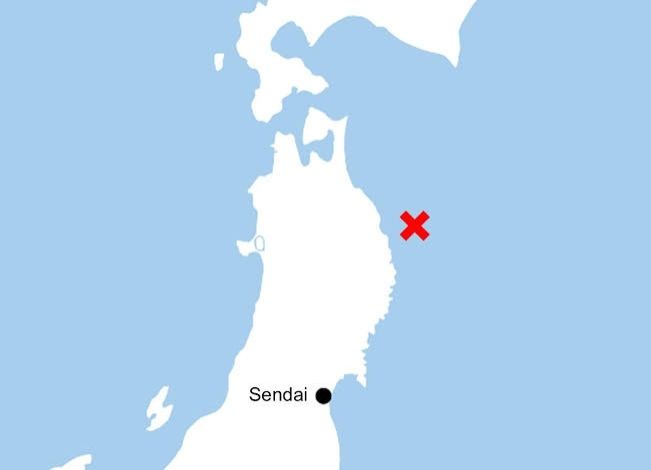
A powerful 7.2-magnitude earthquake jolted Japan's northern coastline on Thursday morning, sending tremors across hundreds of kilometres and prompting widespread precautionary measures, though authorities later confirmed no deaths or significant infrastructure damage had occurred. The undersea quake struck at 7:30 am local time off Iwate prefecture on Honshu, Japan's largest island, originating from a depth of 44 kilometres according to revised measurements from the Japan Meteorological Agency, which initially calculated the magnitude at 6.9 before upgrading it.
Residents and businesses across the affected northern regions experienced considerable shaking that disrupted daily routines and triggered safety alerts. In Aomori prefecture, where the tremors registered at the upper sixth level on Japan's seven-point Shindo intensity scale, residents reported household items cascading from storage areas and commercial establishments. One woman working at a food processing company in Hashikami described how her smartphone's earthquake alarm activated instantaneously as the ground began moving, with the shaking sensation lingering longer than typical minor tremors. While her own residence sustained only superficial damage—a picture frame dislodged from the wall—her employer's workplace suffered more significant impacts, including automatic door malfunctions and partial ceiling collapses that forced staff to remain home pending structural inspections.
Television footage captured the scale of disruption throughout the affected zone, showing kitchen cabinets emptied of contents, shelves cleared of merchandise, and commercial establishments in disarray. Emergency services responded to mounting calls from residents needing assistance, including at least four emergency dispatches to Hashikami and Hachinohe, with reports of people temporarily trapped in non-functioning lifts and doors that jammed during the shaking. A tanker truck overturned during the event, though specifics regarding its cargo or location remained limited. Some railway services, including sections of Japan's famous shinkansen bullet train network, were temporarily halted as a precautionary measure whilst operators assessed track integrity and infrastructure conditions.
The tremor's intensity prompted school closures in the immediate aftermath, with administrators in Hashikami temporarily shutting down educational facilities to allow time for safety evaluations and building inspections. However, broader views of urban centres such as Hachinohe revealed that essential services remained largely functional, with vehicular traffic continuing normally and traffic light systems operating without apparent malfunction. Prime Minister Sanae Takaichi swiftly mobilised a government response, instructing all ministries and agencies to coordinate with prefectural authorities on damage assessment and recovery efforts. Through a statement posted to social media platform X, Takaichi urged residents in heavily shaken areas to prepare for potential aftershocks of comparable intensity, recognising Japan's pattern of seismic activity where stronger initial quakes frequently trigger secondary tremors.
Government officials, particularly chief spokesman Minoru Kihara, provided regular updates emphasising that preliminary investigations had identified no human casualties despite the extensive shaking experienced across the region. The Nuclear Regulation Authority separately confirmed that no abnormalities had been detected at any nuclear power facilities in the affected area, easing public concerns given Japan's acute awareness of nuclear safety following past disasters. This immediate reporting on nuclear safety underscores the particular sensitivity surrounding seismic events in Japan, where memories of catastrophic quakes remain deeply embedded in the national consciousness.
Japan's positioning along the western margin of the Pacific Ring of Fire exposes the island nation to relentless seismic activity that shapes engineering standards, urban planning, and public preparedness protocols. Home to approximately 125 million people distributed across one of the world's most densely populated island chains, Japan experiences hundreds of measurable earthquakes annually, accounting for roughly 18 per cent of the planet's total seismic energy release. Whilst the vast majority remain minor tremors causing negligible disruption, their frequency and occasionally severe magnitude have made earthquake resilience an embedded feature of Japanese infrastructure and culture. Building codes incorporate sophisticated anti-seismic technologies, emergency response systems operate with well-rehearsed protocols, and public education emphasises individual preparedness.
The collective experience of Japan's seismic vulnerability crystallises around the devastating 2011 Tōhoku earthquake and tsunami, which registered 9.0 magnitude and triggered waves that devastated coastal communities, killing or leaving missing approximately 18,500 people whilst catastrophically damaging the Fukushima nuclear power complex. That disaster transformed how Japan approaches nuclear safety and seismic preparedness, establishing far more stringent regulatory frameworks and monitoring systems. More recently, in April 2024, a 7.7-magnitude quake struck northern Japan, injuring at least ten individuals and causing noticeable disturbance even in metropolitan Tokyo despite the considerable distance. That event prompted authorities to issue an unusual special advisory warning residents of elevated risk for earthquakes exceeding magnitude 8.0 magnitude, though the advisory was rescinded after just one week when the increased frequency did not materialise.
This latest tremor, whilst substantial enough to warrant immediate attention and precautionary responses, has not triggered comparable alarm levels or special advisories. The absence of major damage despite the substantial magnitude reflects both Japan's extensive infrastructure hardening and the fortunate characteristics of this particular seismic event—its moderate depth, location in a sparsely populated offshore zone, and relative distance from major urban centres all contributed to the limited impact. Nonetheless, Thursday's earthquake serves as a reminder of the constant seismic backdrop against which Japan operates, and the critical importance of sustained investment in earthquake-resistant infrastructure, reliable early warning systems, and continuous public education about earthquake safety.

