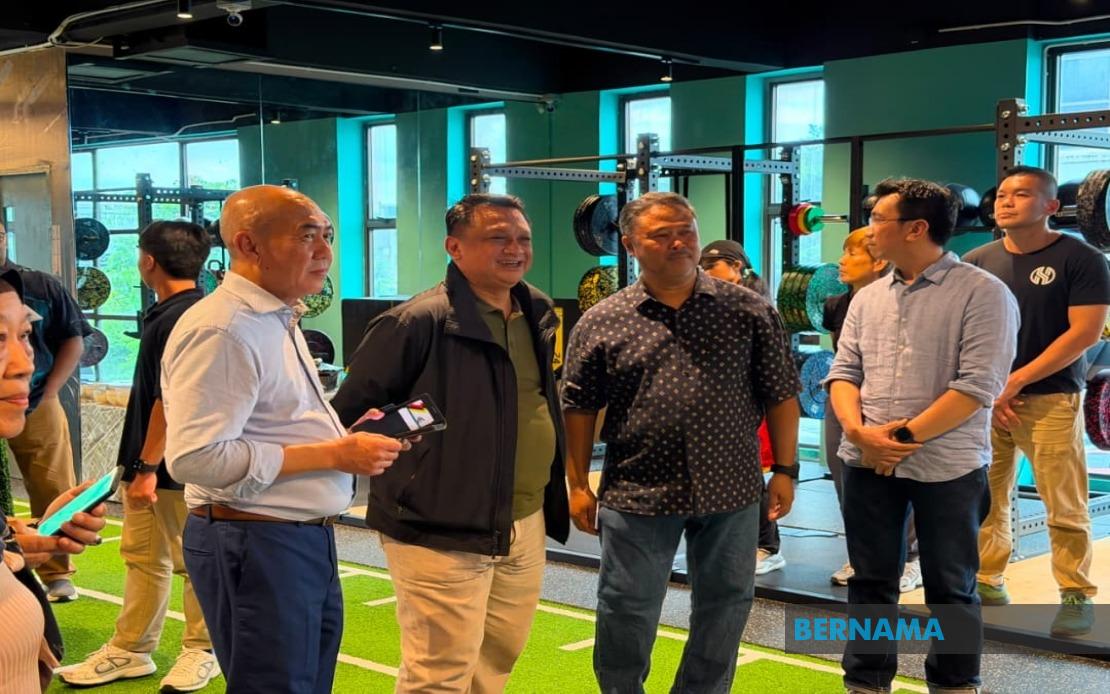
Malaysia's rapidly expanding elderly population faces a pressing but often overlooked health challenge: preventing debilitating falls that can trigger a cascade of complications. FitLab gymnasium owner Dr Adibah Ali has sounded an urgent call for greater public consciousness around muscle-strengthening exercises as a practical, evidence-based solution to this growing problem. Speaking after a royal visit by the Raja Muda of Perlis, Tuanku Syed Faizuddin Putra Jamalullail, to her Kuching facility, the consultant breast and endocrine surgeon stressed that despite Malaysia's demographic shift towards an older population, knowledge about the preventive benefits of strength training remains surprisingly limited among both seniors and the general public.
Drawn from more than two decades of hospital experience, Dr Adibah's perspective carries considerable weight. During her years working in medical wards, she witnessed firsthand the tragic human cost of preventable falls among elderly patients, many of whom required lengthy hospital admissions after suffering serious fractures. These episodes represent not merely individual tragedies but also strains on Malaysia's healthcare system, which must manage the acute and chronic consequences of fall-related injuries among a growing demographic. Her motivation to champion strength training stems directly from this clinical reality: the recognition that many falls and their devastating sequelae could be avoided through proactive physical conditioning.
The distinction Dr Adibah draws between strength training and bodybuilding is particularly important for Malaysian audiences who might dismiss the concept as irrelevant to their needs. Muscle-strengthening programmes are not about achieving athletic aesthetics or developing competitive physiques. Rather, they focus on the fundamental physiological objectives that matter most for older adults: maintaining bone density to reduce fracture risk, stabilising and protecting joints from injury, and preserving the neuromuscular control necessary for safe mobility. These benefits directly translate to practical improvements in daily functioning that seniors can appreciate immediately.
For Malaysian elderly, the functional improvements offered by strength training have immediate relevance to activities central to independent living. Climbing stairs, a routine challenge that many seniors find daunting, becomes manageable when leg and core muscles retain adequate strength and endurance. Carrying groceries, lifting grandchildren, or performing household tasks that require balance and controlled movement all depend on maintaining muscular capability. When these capacities erode through inactivity, seniors either struggle painfully through essential tasks or gradually surrender independence to family members. Strength training addresses this trajectory by preserving the physical foundation required for autonomous daily life.
Recognising the untapped potential of fitness programming for seniors, Dr Adibah has committed FitLab to developing specialised classes tailored specifically for elderly participants. This decision reflects understanding that generic fitness instruction often fails to address the particular needs, constraints, and concerns of older adults. Effective elderly-focused programming requires modified movements, appropriate intensity scaling, careful attention to safety, and attention to motivational factors that resonate with this demographic. By creating dedicated elderly classes, FitLab aims to make strength training accessible and appealing to seniors who might otherwise avoid conventional gymnasiums.
Collaboration with Pusat Aktiviti Warga Emas (PAWE) represents a strategically sound approach to expanding elderly engagement with fitness. These community centres already enjoy established trust and regular participation among Malaysia's senior population, providing ideal entry points for introducing strength-training initiatives. Through partnership with PAWE, fitness programming can reach seniors through existing social networks and trusted community institutions rather than requiring them to venture into unfamiliar commercial gym environments. This collaborative model leverages existing infrastructure and goodwill to accelerate adoption of preventive health practices.
Sarawak's Deputy Minister of Youth, Sports and Entrepreneur Development, Datuk Gerald Rentap Jabu, affirmed the importance of strengthening efforts to promote active lifestyles among Malaysians aged fifty and above, a rapidly growing segment in the state's population. His observation reflects broader demographic realities across Malaysia, where improved life expectancy and declining birth rates have substantially increased the proportion of older adults in the population. This demographic transition creates both challenges and opportunities: challenges in meeting healthcare and social support needs, but opportunities to invest proactively in preventive health measures that enhance quality of life for millions of Malaysians entering their senior years.
Rentap's emphasis on holistic activity programmes extends beyond purely physical exercise, incorporating cognitive and social dimensions essential to elderly wellbeing. Mental stimulation through activities like chess provides crucial neurological engagement that complements physical conditioning, supporting what gerontologists term "successful ageing." Isolation and cognitive decline represent distinct threats to elderly health, sometimes more damaging than physical deconditioning alone. Comprehensive senior programming that integrates physical activity, mental challenge, and social engagement addresses the multifaceted needs of older adults more effectively than single-focus interventions.
The royal visit to FitLab by the Raja Muda of Perlis, accompanied by Raja Puan Muda of Perlis, Tuanku Dr Lailatul Shahreen Akashah Khalil, and their son, Syed Sirajuddin Areeb Putra Al-Haj Jamalullail, signals official recognition of elderly health promotion as a priority concern deserving high-level attention. The extended two-hour engagement with the gymnasium facilities demonstrated genuine interest in understanding how fitness facilities can serve elderly populations. Such patronage carries important symbolic weight in Malaysian society, where royal endorsement of health initiatives can significantly influence public perception and adoption.
For Malaysian policymakers and health officials, the message from Dr Adibah and collaborating stakeholders is clear: investing in accessible, appropriate strength-training programmes for seniors represents cost-effective preventive medicine. Fall-related fractures in elderly patients often trigger prolonged hospitalisation, rehabilitation challenges, and permanent functional decline. Prevention through strength training, by contrast, involves manageable investment in fitness programming and community outreach. The economic calculus strongly favours proactive intervention over managing the consequences of preventable injuries.
The challenge ahead involves translating awareness and goodwill into scaled implementation across Malaysia's diverse urban and rural contexts. Not all communities have access to well-equipped gyms or trained instructors familiar with elderly participants' needs. Effective rollout requires training programmes for fitness professionals, accessible facilities in multiple locations, and sustained promotion to overcome cultural attitudes that might associate gyms with youth or athletics. Success also demands integration with primary healthcare systems, where physicians can actively recommend strength training to patients at risk of falls.
Ultimately, Dr Adibah's advocacy for strength training represents recognition that Malaysia's approach to elderly care must evolve beyond reactive treatment of injuries toward proactive maintenance of the physical capabilities that underpin independence and dignity. As Malaysia's population ages rapidly, investing in senior fitness becomes not merely a health sector concern but a societal imperative with profound implications for family structures, healthcare spending, and the quality of life for millions of Malaysians in their later years. The conversation she has initiated through FitLab and partnerships with institutions like PAWE offers a promising foundation for broader cultural shift toward viewing physical conditioning as central to successful ageing.

