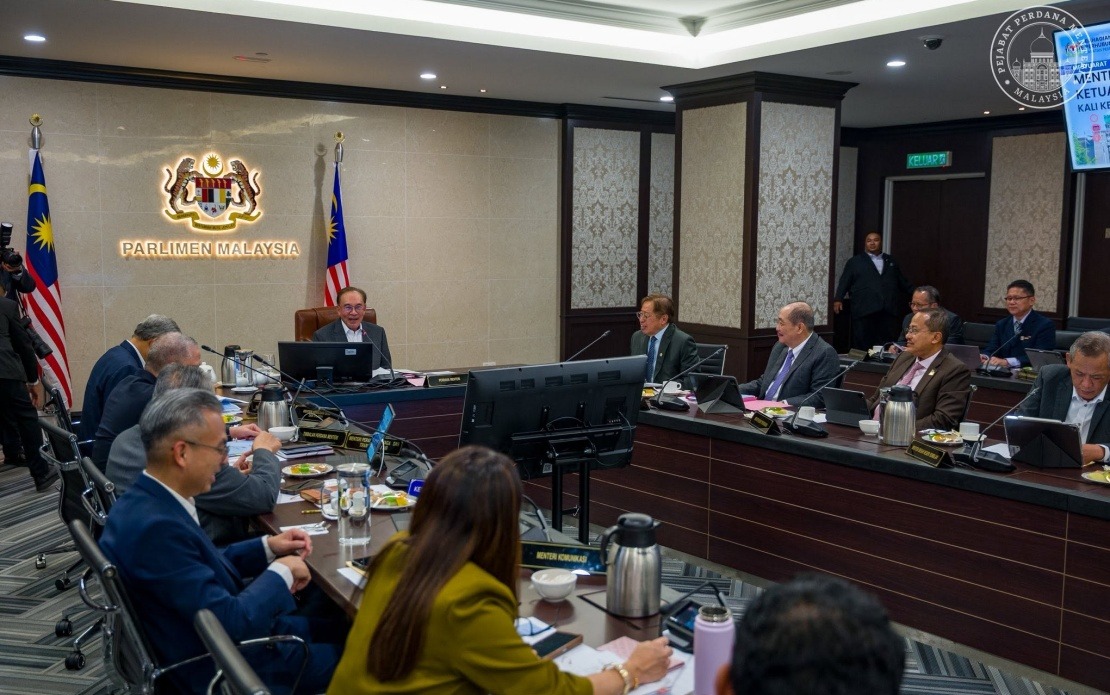
Prime Minister Datuk Seri Anwar Ibrahim brought together Malaysia's Menteris Besar and Chief Ministers at the Parliament Building in Kuala Lumpur on June 23 for their 149th collective meeting, casting it as a critical forum to synchronise the country's economic recovery strategy amid a deteriorating international backdrop. The gathering underscored growing concern within Malaysia's political establishment that external shocks—particularly the escalating conflicts in West Asia—pose tangible risks to domestic growth, investment flows, and consumer confidence at a time when the country is attempting to strengthen its competitive position in the region.
The meeting's agenda reflected a government leadership determined to move beyond rhetorical commitments to integrated action across federal and state jurisdictions. Anwar stressed that policymakers must pivot toward implementation mechanisms that transcend traditional bureaucratic silos, ensuring that economic initiatives reach citizens and enterprises with measurable efficiency rather than becoming trapped in procedural delays. This emphasis on execution carries particular weight in Malaysia's federal system, where coordination between Kuala Lumpur and the 13 state capitals has historically been inconsistent, creating friction and duplicated effort that weakens overall policy impact.
The economic dimension of the discussion reflects genuine anxiety about Malaysia's trajectory. West Asian geopolitical instability directly threatens Malaysian interests across multiple channels: shipping routes critical to trade pass through the region, petroleum and commodity price volatility affects inflation and government revenues, and business confidence weakens when global uncertainty rises. By convening state leaders, Anwar attempted to project unified messaging that Malaysia remains strategically sound despite international turbulence, a signal intended for both domestic audiences and foreign investors weighing their exposure to the country.
Equally significant was the meeting's focus on climate preparedness, specifically the anticipated El Niño phenomenon. Malaysia, with its equatorial position and dependence on monsoon rainfall for water security and agricultural output, faces material exposure to temperature and precipitation disruptions. An extended drought scenario threatens water supply to major urban centres, disrupts palm oil and other cash crop yields, potentially worsens food price inflation, and elevates public health risks from heat stress and haze episodes. By elevating this discussion to the level of state leaders, the government signalled that El Niño mitigation requires coordinated reservoir management, agricultural advisory services, and public health protocols that cannot be managed from Kuala Lumpur alone.
The language Anwar employed—emphasising consensus, togetherness, and strengthened Federal-state relations—carries political subtext beyond mere coordination mechanics. Malaysia's federal structure has been a persistent source of tension, particularly under administrations where opposition parties controlled several states. By stressing collaborative spirit, Anwar positioned himself as an integrating figure capable of transcending partisan divisions, a crucial claim as his government navigates complex coalition politics and variable support across state governments with differing political allegiances. This framing also serves to preempt opposition criticism that the federal government is overreaching or neglecting state autonomy.
The focus on people-centric policy implementation represents a rhetorical pivot toward distributional outcomes rather than simply macroeconomic metrics. Malaysia's economy has grown in aggregate terms over recent years, yet household incomes in many regions have stagnated and inequality remains elevated, particularly between urban and rural areas. By insisting that development benefits be comprehensively distributed, Anwar acknowledged popular discontent with outcomes that inflate GDP figures whilst leaving substantial portions of the electorate financially squeezed. This framing attempts to reposition the government's economic narrative from technical competence toward inclusive prosperity, a messaging adjustment required to maintain political legitimacy.
The meeting also implicit in Anwar's remarks involved recognition that Malaysia cannot insulate itself from global supply chain disruptions and geopolitical risk. The strategy therefore pivots toward attracting quality investment—a loaded phrase implying selectivity rather than indiscriminate capital inflows. This distinction matters for Malaysia's development trajectory: high-wage, technology-intensive sectors promise better employment outcomes and innovation spillovers compared to lower-value manufacturing or extraction industries. By emphasising quality over volume, the government positioned itself as committed to upskilling the workforce and climbing the value chain, though the specific mechanisms and timeline remained undetailed.
The convening of state leaders also addressed a governance gap that had widened during periods of fraught Federal-state relations. By reestablishing regular dialogue and consensus-building forums, Anwar attempted to restore channels through which state governments could flag implementation barriers, resource constraints, or local conditions that national policymakers may overlook. This information flow becomes critical when the government relies on state apparatus to deliver programmes in healthcare, education, infrastructure, and social welfare, areas where federal mandates must ultimately be executed locally.
For Malaysian businesses and foreign investors monitoring government coherence, the meeting offered modest reassurance that leadership across multiple jurisdictions could align around shared priorities. However, actions will ultimately matter far more than rhetoric; the test will be whether enhanced state-federal coordination translates into faster project execution, reduced bureaucratic friction, and measurable improvements in economic competitiveness and resilience. The economic backdrop—global uncertainty, regional geopolitical tension, climate risks, and a domestic political system that requires constant consensus maintenance—ensures that this agenda will face persistent headwinds regardless of how well-coordinated leadership declares its intentions to be.

