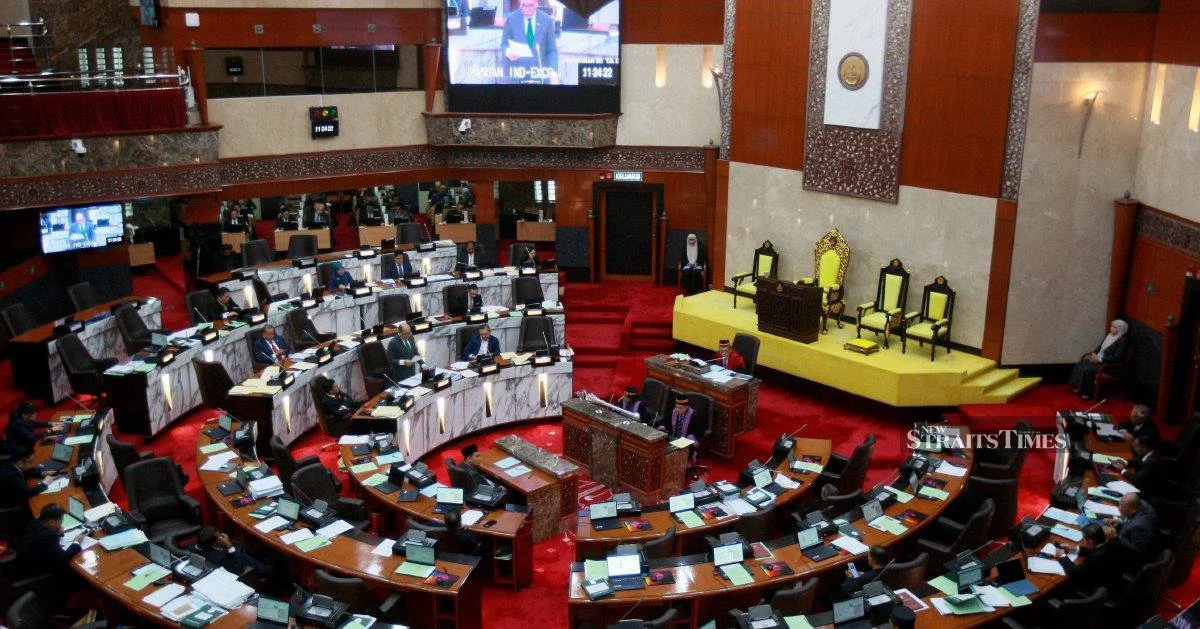
Malaysia's state legislative assemblies face mounting pressure to adopt more rigorous oversight structures and demonstrate greater transparency in their operations, according to findings released by the Parliamentary Democracy and Constituency Development Caucus. The report underscores a critical gap in accountability mechanisms that currently governs how state legislatures function, raising concerns about the quality of democratic institutions at the subnational level across the country.
The accountability deficit identified in the caucus assessment extends beyond symbolic concerns about good governance. State assemblies operate with varying degrees of institutional maturity and public scrutiny, creating a patchwork of legislative standards that can undermine citizen confidence in local democratic processes. In Malaysia's federal system, state legislatures wield substantial powers over land, agriculture, local government, and social services—areas that directly affect millions of residents. When these bodies lack adequate oversight mechanisms, the consequences ripple through entire communities.
Transparency gaps represent a particularly acute challenge. Many state assemblies maintain limited public access to legislative records, committee deliberations, and financial expenditure reports. This opacity makes it difficult for constituents to track how their representatives vote on critical issues or how government funds allocated to state-level projects are being managed. The caucus report implicitly highlights how such information asymmetries enable misconduct and erode public trust in democratic institutions.
The institutional framework for parliamentary oversight varies considerably across Malaysian states. While Selangor, Penang, and a handful of other jurisdictions have introduced relatively progressive legislative practices—including live-streamed proceedings and publicly accessible hansards—many other states lag significantly behind. This fragmentation creates uneven standards of accountability across the federation, where a constituent's democratic rights effectively depend on their state of residence.
Financial accountability mechanisms deserve particular attention. State assemblies control budgets for development and administrative purposes, yet many operate with minimal external scrutiny of expenditure decisions. Without robust audit procedures and public reporting requirements, opportunities for misallocation and inefficiency multiply. The Parliamentary Democracy and Constituency Development Caucus report recognizes that strengthening these mechanisms would not only deter wrongdoing but also improve resource management and service delivery.
The role of standing committees in state assemblies requires fundamental restructuring in many jurisdictions. Effective legislative committees provide a forum for detailed examination of bills, government policies, and departmental performance. They allow backbench members meaningful participation in governance and create accountability pressure on executive branches. Yet many state assembles maintain committee structures that are more ceremonial than functional, limiting their capacity to provide genuine oversight.
Public participation mechanisms also warrant significant enhancement. State assembly constituencies in Malaysia often lack adequate channels for residents to engage with the legislative process or raise grievances about government performance. Town halls, public consultations on major bills, and accessible complaint procedures would strengthen the democratic relationship between assemblymen and constituents while generating valuable information about ground-level concerns that might not otherwise reach legislative attention.
The caucus findings arrive at a moment when Malaysian democracy faces multiple pressures. Political volatility at the state level—including rapid shifts in party control and coalition arrangements—has sometimes distracted from institutional development. However, these very instabilities underscore why robust oversight and transparency frameworks matter more than ever. When power changes hands, entrenched procedures and transparent institutions protect outgoing officials from arbitrary retaliation while constraining incoming majorities from abusing their new authority.
Implementing stronger oversight mechanisms need not be prohibitively expensive. Many improvements involve procedural reforms—establishing regular committee schedules, publishing voting records, scheduling regular public accountability sessions—rather than substantial budget outlays. Technology offers additional opportunities; state assemblies could adopt digital platforms for document access and constituent communication at minimal cost, particularly by learning from peers who have pioneered such systems.
The implications extend beyond formal governance structures. When citizens perceive state assemblies as accountable and transparent, they develop greater confidence in democratic institutions more broadly. Conversely, assemblies seen as opaque or unresponsive fuel cynicism about the entire political system and may encourage citizens to disengage from civic participation. Strengthening state-level democracy therefore contributes to a healthier national democratic culture.
Regional comparisons offer instructive lessons. Other Southeast Asian democracies have experimented with various transparency and oversight approaches—from publicly accessible legislative software to mandatory open-data standards. Malaysia's state assemblies could adapt successful models while respecting local constitutional frameworks, creating a platform for peer learning that raises democratic standards across the federation.
The Parliamentary Democracy and Constituency Development Caucus report essentially calls for treating state assemblies as institutions worthy of serious democratic investment rather than assuming they function adequately under current arrangements. This perspective reflects growing recognition that Malaysia's democratic quality depends not just on federal-level politics but on how effectively democratic principles operate at every tier of government, reaching down to where citizens most directly experience state power.

