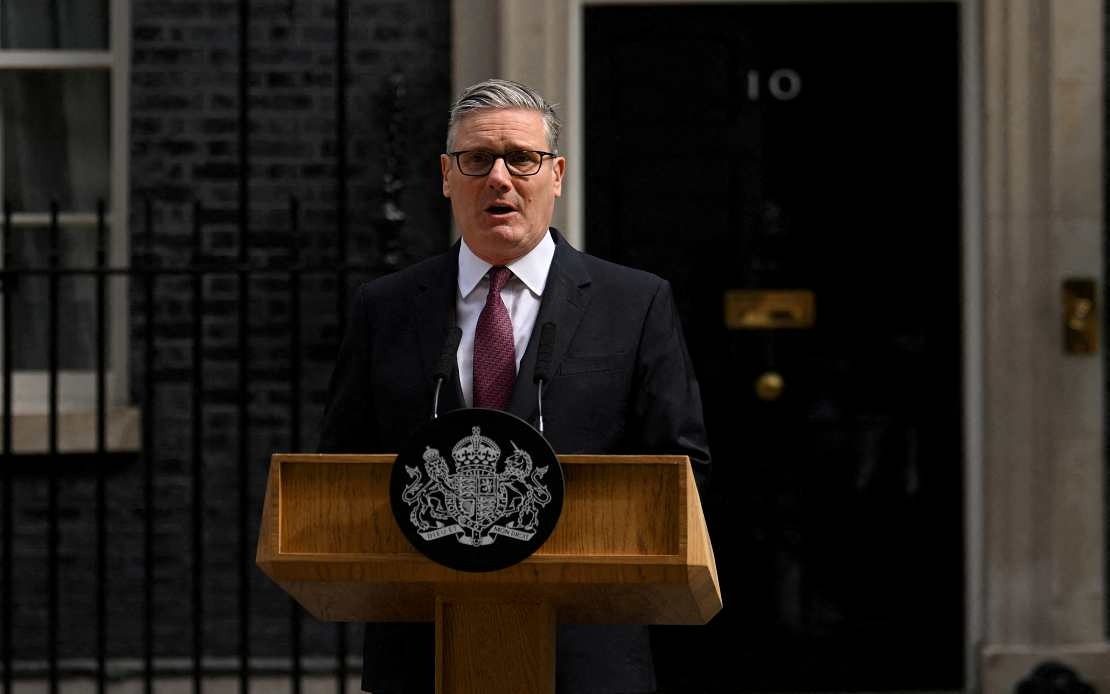
British Prime Minister Keir Starmer has announced he will resign from his position as Labour Party leader, though he will remain in office until a successor is formally chosen and in place by September when parliament returns from recess. This dramatic development comes less than two years after Starmer's historic election victory, which was supposed to restore stability to British politics after years of turbulent leadership transitions.
Starmer's decision to step aside marks a stunning reversal of fortune for a leader who campaigned on the promise of ending the chaos that had defined Westminster politics. His departure reflects the scale of Labour's decline since the 2024 election triumph, with public confidence in his leadership having eroded to historic lows. The Prime Minister has pledged his support for whoever wins the party's internal leadership contest, signalling his acceptance of the party's verdict on his tenure.
The pressure on Starmer intensified dramatically following Andy Burnham's decisive victory in a recent parliamentary by-election in Greater Manchester. Burnham, the region's mayor and a seasoned political operator with considerable media acumen, defeated a candidate from Nigel Farage's Reform UK party, which has dominated national opinion polling for over a year. This result galvanized Labour backbenchers who see in Burnham a potential circuit-breaker for their struggling party and a communicator capable of reconnecting with voters the party has lost under Starmer's leadership.
Burnham's win in a seat that should have been safely Labour demonstrates both the depth of voter disillusionment and the possibility of recovery with different leadership. His strong performance against Reform UK, which has consistently challenged Labour in polling, suggests he possesses electoral appeal beyond the traditional Labour base. For many in the parliamentary Labour Party, Burnham represents a fresh start after months of mounting dissatisfaction with Starmer's direction and inability to stem the party's decline in public esteem.
However, Burnham's policy platform remains notably underdeveloped. While he has articulated the need for fundamental economic restructuring and addressing Britain's spiralling cost of living crisis, his positions on critical areas such as foreign policy, economic management, and defence spending remain largely opaque. This lack of detailed policy definition leaves significant uncertainty about how a Burnham-led government would differentiate itself from the Starmer administration, or whether he would chart a genuinely different course.
Any incoming Labour leader will inherit an extraordinarily constrained fiscal situation. Britain currently carries the highest borrowing costs among the Group of Seven wealthy nations, hampered by elevated national debt, substantial interest payments, weak economic growth over many years, and an inability to meaningfully reduce public expenditure. Simultaneously, the government faces urgent demands for increased investment in defence and other critical infrastructure, leaving little room for the transformative spending pledges that voters are demanding.
The bond markets present another formidable challenge. Investors remain deeply opposed to any significant additional borrowing or expansionary fiscal policies that might damage market confidence. This hard constraint on government spending has proven politically damaging for Starmer and will similarly constrict Burnham's options. Despite Burnham's previous rhetoric about Britain needing to move "beyond this thing of being in hock to the bond markets," he will likely discover that market discipline is difficult to defy without triggering capital flight and borrowing cost spikes.
Economic analysts are sceptical about Burnham's capacity to deliver meaningful change within these constraints. Citibank economists warned on Friday that "a Burnham premiership would inherit a precarious fiscal situation with few tools to deliver meaningful change," capturing the grim arithmetic facing any future Labour government. The question of whether Burnham will genuinely challenge market orthodoxy or accommodate investor demands remains unresolved.
Starmer's departure will make Britain's seventh prime minister since the 2016 Brexit referendum, a remarkable turnover that reflects deeper democratic instability. This level of leadership churn, unmatched in nearly two centuries of British political history, underscores the profound challenge of maintaining electoral confidence when successive governments fail to visibly improve living standards, enhance public services, or effectively address immigration concerns. Each transition signals renewed hope for change, yet systemic constraints continue to disappoint voters.
The timing of Starmer's departure has strategic implications. The Eurasia Group noted that an announcement of resignation in September would enable Starmer to participate in a crucial UK-European Union reset summit scheduled for July, preserving institutional continuity while giving Burnham adequate preparation time before formal transition. This sequencing balances the need for immediate political renewal against the practical requirements of government operation.
For Malaysian observers and Southeast Asian political analysts, Britain's dysfunction illustrates the dangers of voter alienation and the difficulty wealthy democracies face in delivering inclusive growth. While Malaysia's political system differs substantially from Westminster's, both are grappling with public demands for tangible economic improvement and the tension between market discipline and popular expectations. The Burnham succession represents a test of whether changing leadership without addressing structural constraints can restore public trust.

