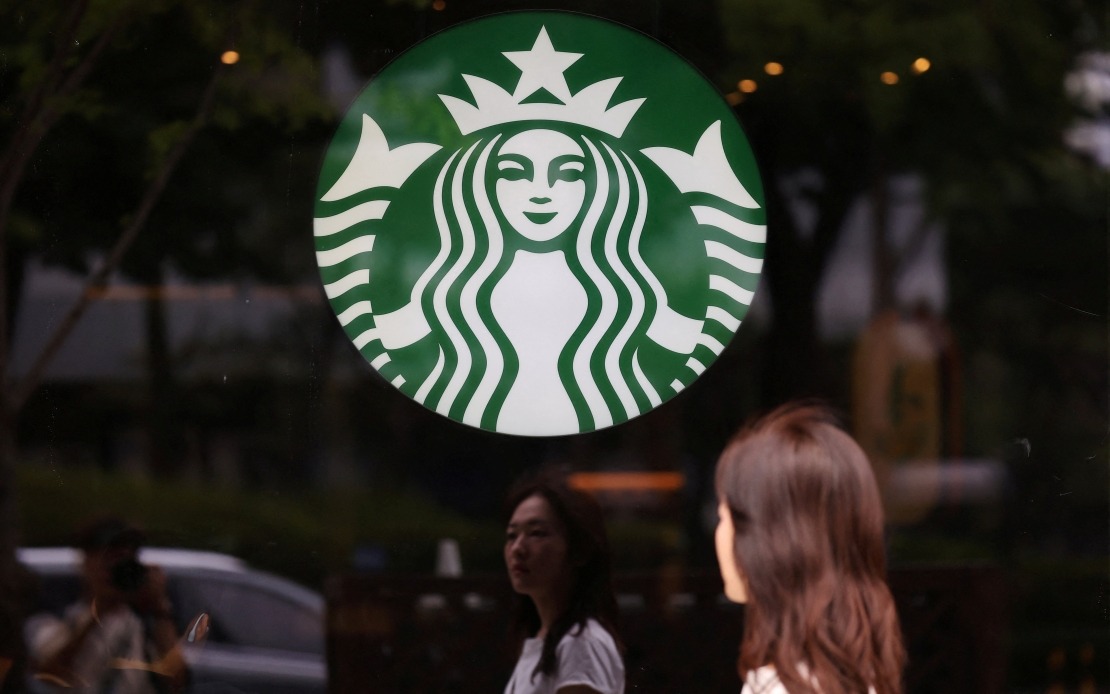
The entire Starbucks operation across South Korea came to a standstill on Monday as the coffee giant closed more than 2,000 locations nationwide, redirecting staff away from their tills and espresso machines for a compulsory afternoon training session. The unprecedented shutdown underscores the severity of a marketing misstep that has drawn fierce criticism from the South Korean public and intervention from the country's political establishment, exposing how sensitive issues surrounding the nation's authoritarian past remain potent flashpoints in corporate communications.
The controversy originated from an advertising initiative launched by Shinsegae, the South Korean retail conglomerate that holds the exclusive licence to operate Starbucks throughout the country. In May, Shinsegae introduced a promotional product called the "SS Tank," a stainless steel thermos cup designed to appeal to environmentally conscious consumers, and simultaneously declared May 18 as "Tank Day" to commemorate the launch. The company's marketing team appeared oblivious to the catastrophic historical resonance of their chosen date and terminology.
May 18 carries profound significance in South Korean collective memory as the anniversary of the Gwangju Uprising, a pivotal moment of resistance against military rule that ended in bloodshed. In 1980, the authoritarian government of the time deployed military forces, including tanks, to brutally suppress pro-democracy protesters who had gathered in the southwestern city of Gwangju. The crackdown resulted in several hundred deaths and became emblematic of civilian suffering under dictatorship. For Shinsegae to inadvertently link a consumer product named after a tank to this date triggered an immediate and visceral reaction from the South Korean population.
The backlash ignited swiftly across social media and traditional news outlets, with consumers and civil society groups calling for widespread boycotts of Starbucks locations and demanding accountability from the parent company. The campaign was halted within hours of its launch, but the reputational damage had already taken hold. Public discourse centred on whether the marketing decision reflected institutional insensitivity, corporate negligence, or something more sinister, given that the "SS" abbreviation, while technically standing for stainless steel in this context, carries additional fraught associations with Nazi paramilitary forces.
The political dimension of the scandal escalated when opposition figure and presidential candidate Lee Jae Myung publicly condemned the campaign through his social media account, expressing personal fury at what he characterised as inhumane behaviour by the business leadership responsible. His intervention highlighted how marketing failures touching on historical trauma can rapidly metamorphose into broader political discourse, particularly in an electoral environment where command of national memory represents significant political capital.
In response to the crisis, Shinsegae moved swiftly to contain further damage. The company issued a formal apology to the public and those affected by the Gwangju massacre, acknowledging the pain caused by the inadvertent reference. More dramatically, Shinsegae identified and dismissed the executive whose decisions had guided the marketing strategy, signalling to the public that accountability had been extracted at the senior management level. An internal investigation concluded that the campaign held no deliberate intention to dishonour the victims of the pro-democracy movement, framing the episode as a catastrophic failure of historical awareness rather than malice.
The decision to close all Starbucks outlets for mandatory historical training represents Shinsegae's attempt at institutional remediation. By requiring employees across the company's Korean operations to participate in structured learning about May 18 and its significance, management sought to embed greater historical consciousness throughout the organisation. The afternoon shutdown, while costly in lost revenue, communicated to the public that the company was taking corrective action seriously and would invest in preventing similar lapses in the future.
For Malaysian and Southeast Asian business leaders, the Starbucks Korea episode offers instructive lessons about the persistent power of historical memory in shaping consumer behaviour and corporate reputation. Southeast Asia, like South Korea, carries complex historical legacies involving colonialism, warfare, and social upheaval. What may appear innocuous in a boardroom brainstorm—a clever product name or a marketing date—can trigger profound sensitivities when it intersects with communal trauma or contested historical interpretation. The incident demonstrates that multinational corporations operating across Asia cannot treat history as peripheral to commercial strategy.
The case also reflects broader questions about corporate governance and the composition of decision-making bodies. That a marketing team could advance a campaign referencing May 18 and the term "tank" without any internal alarm-raising suggests potential gaps in institutional memory, diversity of perspective, or hierarchical accountability. In plural societies across the region where different communities hold different historical narratives, such gaps carry reputational and commercial consequences.
Seoul police initiated their own investigation into the circumstances surrounding the campaign, broadening the inquiry beyond corporate self-examination. This official scrutiny signals that regulatory authorities view the incident as sufficiently serious to warrant public investigation, potentially examining whether any laws regarding defamation of the deceased or exploitation of national tragedy had been breached. The police involvement adds a legal dimension to what began as a public relations catastrophe.
Starbucks' broader brand presence in South Korea and across Asia faces longer-term implications from this scandal. While the closure and retraining may partially rehabilitate Shinsegae's image among consumers seeking evidence of institutional change, rebuilding trust following an incident touching on national trauma requires sustained commitment rather than performative gestures. The episode serves as a cautionary tale for multinational corporations about the necessity of embedding historical literacy into corporate culture, particularly when operating in markets where the past continues to shape present sensitivities. As regional economies grow more interconnected and consumer activism more organised, corporations that fail to reckon seriously with local historical context do so at considerable commercial peril.

