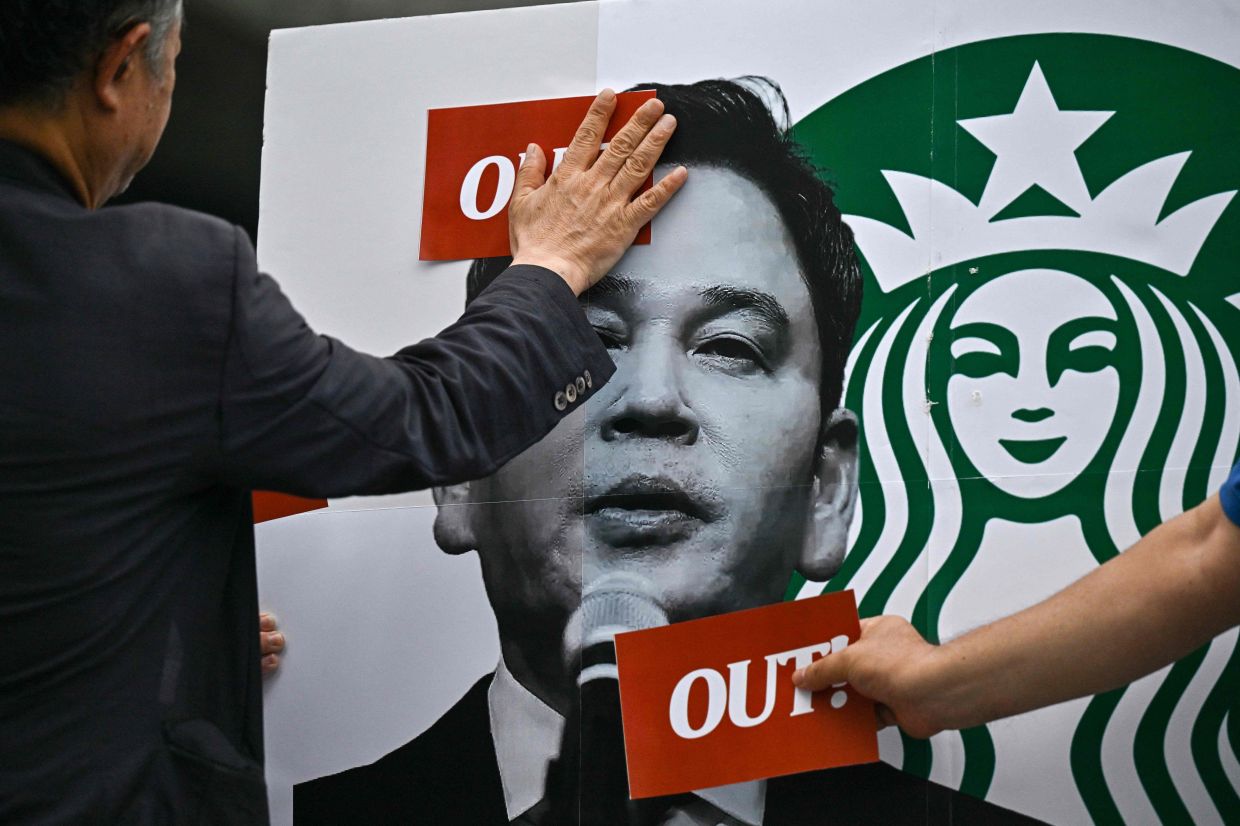
South Korean authorities are investigating one of corporate South Korea's most tone-deaf marketing mishaps after Starbucks Korea, operated by retail conglomerate Shinsegae Group, launched a reusable cup promotion on May 18 — the exact date commemorating the 1980 Gwangju uprising. The Seoul Metropolitan Police Agency has begun questioning executives, with Yang Jong-hwan, head of Shinsegae Group's audit team, recently interrogated as a witness, the company confirmed on Thursday, June 18.
The "Tank Day" campaign became a flashpoint for national outrage in South Korea, where the Gwangju uprising remains a deeply sensitive historical touchstone. On May 18, 1980, South Korean military forces violently suppressed pro-democracy demonstrations in the southwestern city of Gwangju, killing 165 civilians according to official records, though historians and civic groups contend the actual death toll was substantially higher. The timing was not accidental positioning but rather a catastrophic lapse in corporate awareness, as Shinsegae later admitted that multiple layers of approval process failed to flag the historical significance of the chosen date.
The promotional fiasco escalated rapidly once public reaction crystallised around the perceived insensitivity. Shinsegae Group's Korea chief executive was terminated immediately when the scandal broke, followed days later by an unusual public apology from group chairman Chung Yong-jin, who bowed formally to acknowledge the mistake. Yet these damage-control measures failed to contain the fallout. A civic watchdog organisation filed formal complaints against Chung and other senior executives, alleging violations of South Korea's 2016 law governing commemoration of the 1980 pro-democracy movement. The legislation includes provisions explicitly prohibiting the dissemination of misinformation about the Gwangju uprising, alongside charges of defamation and insult.
Shinsegae's internal investigation revealed systemic failures in its approval mechanisms. Officials signed off on campaign materials without adequately reviewing the design file, suggesting the company lacked basic safeguards despite operating South Korea's most prominent international coffee brand. The negligence exposed a troubling gap between Shinsegae's corporate governance standards and the historical awareness expected of major conglomerates in a nation where remembering 1980 carries constitutional weight.
The commercial consequences have been severe. Starbucks Korea, which operates more than 2,000 locations nationwide under licensing agreement with Shinsegae Group, experienced what the operator characterised as a "sharp decline in sales" in the days immediately following public disclosure of the campaign. Widespread protests erupted in Seoul and Gwangju, amplifying negative publicity and damaging brand perception among politically conscious Korean consumers for whom the Gwangju uprising represents a foundational moment in the nation's democratic development.
In response to the escalating controversy, Starbucks has scheduled a mandatory half-day closure across all South Korean outlets on the following Monday, during which staff members will participate in structured educational sessions about the 1980 crackdown and its historical significance. This remedial approach extends to company leadership: Shinsegae's chairman and other senior executives are scheduled to attend identical history lessons two days later, signalling an acknowledgment that institutional ignorance contributed to the debacle.
South Korea represents an exceptionally valuable market for Starbucks, ranking as the company's third largest globally after the United States and China. The reputational damage from the "Tank Day" incident therefore carries particular weight for the coffee chain's long-term positioning in a market where brand loyalty intersects closely with social values and historical consciousness. For Malaysian and broader Southeast Asian business observers, the incident underscores how multinational corporations operating in Asia must navigate complex historical narratives and cultural sensitivities that Western headquarters may insufficiently understand.
The police investigation adds legal jeopardy to Shinsegae's already substantial reputational crisis. While Yang Jong-hwan was questioned as a witness rather than a suspect, the inquiry signals potential criminal exposure for decision-makers involved in the campaign approval process. The 2016 law invoked in the civic complaint carries meaningful penalties, and Korean prosecutors have demonstrated willingness to pursue historical insensitivity cases when public pressure crystallises around commemorative violations.
Chairman Chung Yong-jin's formal apology, while necessary, has proven insufficient to neutralise anger among constituencies that view the incident as symptomatic of corporate indifference toward historical memory. South Korean public discourse around the 1980 uprising remains emotionally charged, with many citizens viewing commemorative obligations as non-negotiable aspects of corporate citizenship. Shinsegae's failure to embed this awareness into operational procedures raises broader questions about how conglomerates reconcile global business practices with locally grounded historical obligations.
President Lee Jae Myung publicly condemned the promotion, characterising it as "inhumane and disgraceful conduct," elevating the issue from corporate controversy to presidential-level condemnation. This political engagement reflects the Gwangju uprising's enduring significance within South Korean national identity and governance structures, making historical insensitivity a matter of state concern rather than merely corporate embarrassment.
The investigation remains fluid as police evaluate whether criminal charges should proceed against specific individuals. Shinsegae has pledged "full cooperation" with authorities and expressed hope that facts will be "clarified swiftly and transparently," language suggesting the company aims for expedited resolution. Nonetheless, reputational recovery will require sustained commitment to institutional reform, transparent accountability for responsible parties, and demonstrable integration of historical consciousness into decision-making frameworks across the organisation.
For Starbucks globally and multinational enterprises operating across East Asia, the episode delivers an unambiguous lesson: promotional calendars require rigorous historical vetting in markets where commemoration carries constitutional and emotional weight. The incident illustrates how inadequate process discipline can transform marketing execution into geopolitical liability, with consequences extending far beyond immediate sales impact to encompass brand perception, regulatory scrutiny, and stakeholder trust.