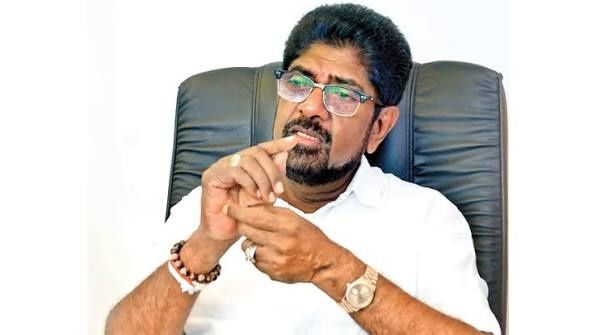
The arrest of Keheliya Rambukwella on Tuesday marks another chapter in Sri Lanka's struggle to hold senior officials accountable for misconduct during the nation's worst economic crisis in decades. The Commission to Investigate Allegations of Bribery or Corruption has charged the former minister with conspiring to steal and obstruct investigations into a historic moonstone—a centuries-old carved granite stepping stone that once formed part of the palace entrance of Veera Parakrama Narendrasinghe, the last reigning Sinhala monarch who ruled until 1739.
The moonstone is far more than an archaeological artifact in Sri Lankan cultural memory. Such objects carry deep symbolic weight in the island's Buddhist heritage and national identity, representing connections to a pre-colonial past. The alleged removal of this sacred stone in December 2022 during Rambukwella's tenure as a government minister raises serious questions about the management and protection of national heritage during a period of institutional chaos. The anti-corruption commission's statement that Rambukwella "conspired, aided and abetted the theft" while holding ministerial office underscores how governance breakdowns extended far beyond economic policy into the preservation of irreplaceable cultural property.
Rambukwella's legal troubles extend well beyond the moonstone incident. Prosecutors have simultaneously charged him with misappropriating state funds to employ six individuals for his private business interests—a straightforward case of using public resources for personal gain that reflects patterns of corruption observed across multiple government departments during Sri Lanka's crisis period. This charge demonstrates how the collapse of institutional oversight created opportunities for officials to blur the lines between state and personal advantage with apparent impunity.
Yet the most damaging allegations against Rambukwella stem from his previous role as health minister, a position he held during Sri Lanka's unprecedented medicine shortage. The country's bankruptcy declaration in April 2022 and subsequent default on its US$46 billion foreign debt created acute supply chain disruptions that left hospitals unable to procure essential medications. Rather than navigating these constraints with transparency, Rambukwella allegedly authorized the purchase of counterfeit pharmaceuticals—including a cancer drug that turned out to be merely water. Such allegations transcend typical corruption; they represent a fundamental betrayal of the public health system when citizens were at their most vulnerable.
The counterfeit medicines scandal extends beyond Rambukwella himself. Multiple senior officials within the health ministry have been indicted in connection with the scheme, suggesting systemic failure rather than isolated misconduct. This pattern indicates that corners were cut across the procurement chain, whether through negligence, collusion with suppliers, or deliberate fraud. For Malaysian observers, the parallels to regional health governance challenges are instructive—the ease with which counterfeit medicines entered state hospitals raises concerns about supply chain integrity throughout South Asia during crisis periods.
The timing of these arrests reveals how Sri Lanka's institutions are attempting to function during its ongoing recovery. The country has remained mired in political and economic turmoil following mass protests that toppled President Gotabaya Rajapaksa in July 2022. While new leadership has attempted to restore institutional credibility, the surfacing of corruption committed by the previous administration's ministers serves as both accountability and a sobering reminder of how thoroughly governance structures deteriorated. The anti-corruption commission's activity demonstrates that some institutional mechanisms persist, though questions remain about whether such measures can truly restore public confidence.
For Southeast Asia more broadly, Sri Lanka's crisis and the corruption it has exposed offer a cautionary narrative. The island's economic collapse was triggered by multiple factors—currency mismanagement, unsustainable debt accumulation, and pandemic-related disruptions to tourism revenue. Yet institutional corruption and the diversion of resources for personal or political purposes compounded these structural problems. Officials who authorized counterfeit medicines or facilitated theft of national treasures during a period of national emergency demonstrated how rapidly governance can unravel when oversight mechanisms weaken.
Rambukwella's arrest also highlights the challenge facing post-crisis societies attempting to pursue accountability. Sri Lanka must simultaneously manage economic restructuring, restore faith in institutions, and prosecute officials from the previous regime. The public nature of these charges—involving sacred cultural artifacts and literal threats to public health—means that prosecutions serve both legal and symbolic purposes. They signal that the interim leadership takes accountability seriously, yet they also risk appearing selective if pursued without consistency across all implicated officials.
The case underscores how economic crises create cascading governance failures. When Sri Lanka faced medicine shortages, the fundamental responsibility was to ensure that whatever drugs were procured met minimum safety and efficacy standards. Instead, patients received water labeled as cancer medication. Similarly, cultural heritage should have been protected through institutional mechanisms even as the broader economy contracted. That both failures occurred simultaneously under ministers like Rambukwella suggests that the crisis overwhelmed not just economic policy but also basic government functions across multiple domains.
As Sri Lanka continues its recovery negotiations with the International Monetary Fund and attempts to restore macroeconomic stability, the prosecution of corruption charges remains essential to rebuilding institutional trust. Citizens who endured the worst health and economic crisis in modern memory need assurance that leadership held officials accountable and implemented safeguards against future malfeasance. Rambukwella's arrest, though seemingly focused on a single stolen stone, represents a broader effort to establish that no official is beyond accountability—a principle that may prove more valuable to Sri Lanka's recovery than any individual prosecution.

