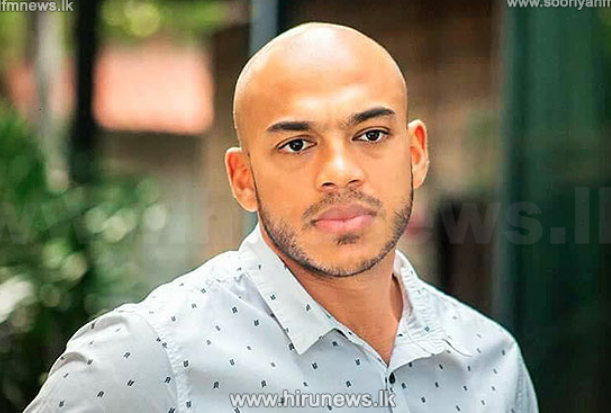
The arrest of Yoshitha Rajapaksa on Wednesday marked another significant blow to one of South Asia's most prominent political families, as Sri Lanka's newly elected government intensifies its campaign against corruption. The 38-year-old former naval officer stands accused of improperly using government resources to fund overseas military training, according to the country's Bribery Commission. His detention represents an escalating pressure campaign against the Rajapaksa clan, whose influence over Sri Lankan politics has shaped the nation's trajectory for decades.
The charges against Yoshitha specifically concern his advancement through military ranks despite lacking required qualifications, followed by state-funded attendance at Dartmouth, a prestigious British naval training institution. According to the Bribery Commission statement, investigators allege that he received opportunities unmerited by his professional standing and subsequently utilized public funds to pursue advanced training opportunities abroad. This pattern mirrors broader allegations that the Rajapaksa family leveraged political connections to secure advantages unavailable to ordinary citizens, a narrative that resonates strongly with Sri Lankan voters frustrated by decades of perceived elite privilege and institutional capture.
Prior to his formal arrest, Yoshitha had already faced multiple legal complications stemming from his family's period in power. He remained subject to a foreign travel ban and was entangled in at least two separate money-laundering investigations. These earlier cases suggested authorities had been building an extensive case portfolio against him, with Wednesday's arrest representing a coordinated escalation rather than an isolated prosecution. His previous release on bail had allowed him to remain at large, but investigators apparently gathered sufficient evidence to justify detention and formal charging.
The Dartmouth training episode itself became controversial during his father's presidency, with critics arguing that the younger Rajapaksa's placement on the prestigious course displaced a more deserving candidate. Such accusations of nepotistic access to elite opportunities fueled public resentment against the Rajapaksa administration and contributed to perceptions of systematic corruption within the armed forces hierarchy. The decision to attend the British institution while his father occupied the presidency transformed what might have been a routine military training assignment into a symbol of unequal access and political favoritism.
Yoshitha's legal troubles extend considerably beyond the current corruption charges. He faces separate criminal prosecution related to his purchase of residential property, with authorities questioning how he acquired sufficient funds for the transaction during his father's tenure from 2005 to 2015. His explanation that he raised capital by selling gemstones gifted by his grandaunt proved unconvincing to investigators, particularly given that the elderly relative could not credibly account for the origin of the precious stones herself. Additionally, criminal cases relating to his acquisition of a television network remain pending, suggesting a pattern of wealth accumulation that authorities have struggled to reconcile with his official naval officer compensation.
The renewed legal offensive against the Rajapaksa family directly corresponds to President Anura Kumara Dissanayake's 2024 electoral victory, which turned substantially on anti-corruption messaging. Dissanayake positioned himself as a reformist alternative to the entrenched political establishment, promising comprehensive accountability for years of alleged institutional abuse and misappropriation of public resources. His government's willingness to pursue high-profile prosecutions against the former first family signals a genuine commitment to delivering on those campaign pledges, though observers remain uncertain whether such efforts will extend to a comprehensive reckoning or remain selectively targeted at politically convenient targets.
The Rajapaksa family's legal predicament has expanded well beyond Yoshitha. His uncle, Gotabaya Rajapaksa, who served as president from 2019 until his forced departure in 2022, recently received his own foreign travel ban. Gotabaya's ouster followed a catastrophic economic crisis that triggered widespread civil unrest and forced the resignation of his brother Ranil Wickremesinghe, who had assumed the presidency. More significantly, Gotabaya faces potential prosecution related to the 2019 Easter Sunday bombings, which killed 279 people and exposed serious lapses in national security coordination during his tenure as defense secretary. His legal team has preemptively sought court orders to prevent his arrest, suggesting genuine concern about imminent charges.
The broader implications of the Rajapaksa prosecutions extend far beyond individual accountability. Sri Lanka's experience with post-authoritarian transition justice reveals persistent challenges in establishing credible institutional accountability while managing competing demands for reconciliation, political closure, and systemic reform. The Dissanayake administration's anti-corruption focus necessarily confronts questions about selective prosecution: whether targeted legal action against one deposed family genuinely addresses systemic corruption or simply represents victors' justice against political opponents. Southeast Asian observers watching Sri Lanka's trajectory will likely assess whether these prosecutions establish precedents for durable institutional restraint on executive power or reflect merely another cycle of political vendetta within a persistently fragile democratic system.
For Malaysia and the broader Southeast Asian region, Sri Lanka's anti-corruption momentum offers both inspiration and cautionary lessons. Countries throughout the region struggle with endemic corruption within elite networks, and the Rajapaksa prosecutions demonstrate that political will can eventually overcome institutional resistance to accountability. However, the pattern of charges remaining pending through multiple governments, combined with the family's continued political influence despite legal complications, underscores the substantial obstacles facing anti-corruption efforts in emerging democracies. Malaysia's own experience with high-profile prosecutions of former leaders has similarly revealed tensions between prosecutorial momentum and institutional constraints on judicial independence, suggesting that legal victories against prominent figures require sustained political commitment rather than merely episodic enforcement campaigns.

