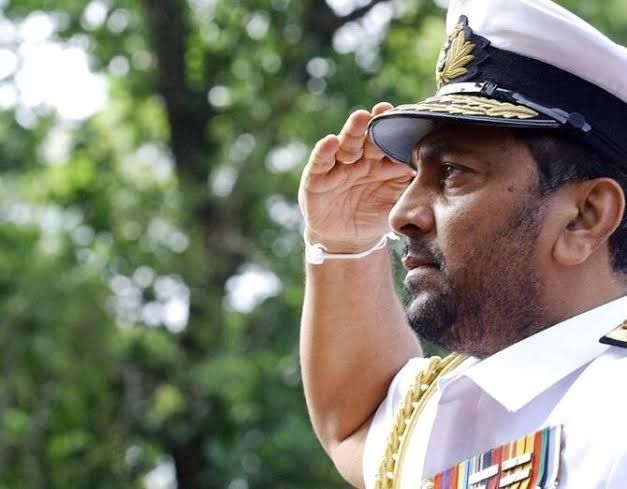
Sri Lanka has arrested Admiral of the Fleet Wasantha Karannagoda, 73, following allegations that he unlawfully facilitated the naval recruitment and international training of Yoshitha Rajapaksa, the 38-year-old son of former president Mahinda Rajapaksa. The Bribery Commission took Karannagoda into custody on Friday, marking another significant development in Sri Lanka's intensifying investigation into the sprawling Rajapaksa dynasty and their associates.
At the heart of the case lies the 2006 enlistment of Yoshitha Rajapaksa into the Sri Lankan Navy without meeting required professional standards. Karannagoda, who commanded the navy during the final phase of the country's brutal civil conflict with Tamil separatists in 2009, stands accused of abusing his authority to circumvent proper recruitment procedures. The Bribery Commission characterised his actions as "corruption in the recruitment and training of Yoshitha Rajapaksa," signalling a deliberate breach of established military protocols.
The case extends beyond recruitment improprieties. Yoshitha Rajapaksa is separately alleged to have misused public funds to secure training at Dartmouth Naval College in Britain, one of the world's most prestigious naval institutions. He was arrested last month in connection with this allegation and subsequently released on bail, though the investigation continues. The dual charges suggest a coordinated effort to circumvent both recruitment standards and fiscal accountability measures, illustrating how power was allegedly leveraged within Sri Lanka's military establishment during the Rajapaksa administration.
Karannagoda's ascent through the military hierarchy continued long after the conclusion of the civil war. He rose to the rank of admiral of the fleet in 2019, a position held after his formal retirement from active service. However, his military record extends beyond administrative advancement. He faces persistent allegations of involvement in war crimes, including accusations of serious human rights violations and extrajudicial killings. In March 2025, Britain imposed sanctions against him specifically citing these allegations, reflecting international concern about his conduct during and after the conflict.
Most gravely, Karannagoda confronts conspiracy to murder charges related to the deaths of eleven young men killed between 2008 and 2009, a period spanning the final year of Sri Lanka's armed conflict. These charges carry particular weight given their connection to the conflict era when military authority operated with considerable latitude. The charges were initially dismissed in October 2021 during the presidency of Gotabaya Rajapaksa, Mahinda's younger brother, but were revived following the election of President Anura Kumara Dissanayake in September 2024. This reversal underscores how political transitions in Sri Lanka have directly influenced legal accountability for historical grievances.
Dissanayake's administration has made tackling corruption and resolving unresolved high-profile crimes central to its governing mandate. The renewed prosecutorial activity against Karannagoda and other Rajapaksa associates reflects this commitment, though critics question whether investigations remain impartial given their political dimensions. Regardless, the revival of charges suggests a recalibration of Sri Lanka's approach to post-conflict accountability and institutional integrity.
The Rajapaksa family's legal vulnerabilities have multiplied significantly since the regime change. Multiple family members and associates face pending charges spanning diverse offences, from financial impropriety to security-related matters. These cases collectively amount to a comprehensive examination of governance practices during and immediately following the fifteen-year Rajapaksa presidency from 2005 to 2015. For Malaysian observers, the situation illustrates the complex intersection between military authority, political patronage, and accountability mechanisms in post-conflict societies, concerns relevant to Southeast Asia's regional security dynamics.
Yoshitha Rajapaksa's own legal predicament extends beyond the Karannagoda matter. He faces criminal charges after failing to adequately explain how he funded property purchases during his father's presidency. When questioned by investigators, he claimed to have raised funds by selling gemstones gifted by his grandmother, though she could not account for how she originally obtained the precious stones. The implausibility of this explanation suggests deeper concerns about untraced wealth accumulation within the immediate family circle during the exercise of state power.
Further complicating the family's circumstances, Gotabaya Rajapaksa, the former president-turned-brother, received a foreign travel ban last month. His restriction stems from alleged connections to the 2019 Easter Sunday bombings, a terrorist attack that killed 279 people and constituted one of Sri Lanka's most devastating security failures. The travel ban signals an expanding investigative perimeter encompassing not merely financial irregularities but also potential security lapses and intelligence failures.
The cumulative effect of these prosecutions represents a fundamental reconfiguration of power dynamics within Sri Lanka's political and military institutions. The Rajapaksa family, which dominated Sri Lankan governance for two decades, now faces unprecedented legal jeopardy spanning historical conflict-era allegations, financial impropriety, security-related matters, and institutional corruption. Karannagoda's arrest exemplifies how post-election transitions can prioritize previously shelved investigations, though it simultaneously raises questions about consistency in applying accountability standards across different administrations and institutional actors.

