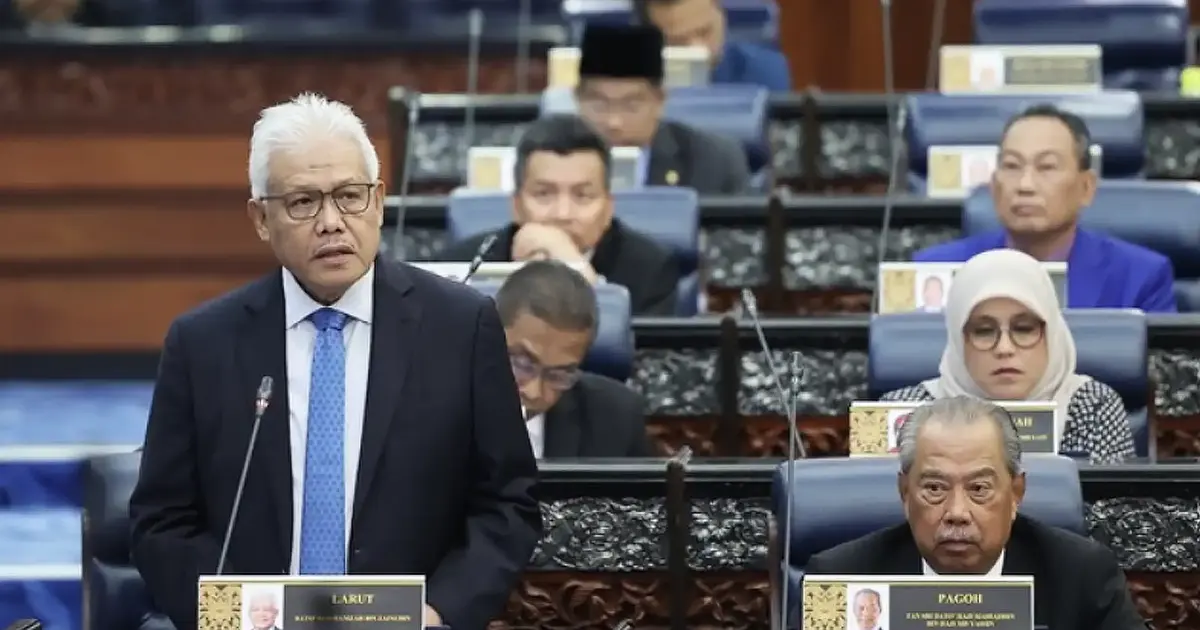
Dewan Rakyat Speaker Johari Abdul has formally acknowledged receipt of documentation confirming Larut MP Hamzah Zainudin as the nation's opposition leader, marking an official recognition of the appointment within Malaysia's parliamentary framework. The announcement comes as the Lower House continues adjusting to evolving political alignments following recent shifts in coalition dynamics that have reshaped the country's parliamentary landscape.
The speaker's confirmation carries procedural significance for parliamentary operations, as the opposition leader's position carries defined responsibilities and privileges within the chamber's functioning. Hamzah Zainudin's formal recognition establishes clear lines of accountability and facilitates structured engagement between the government and opposition benches during legislative proceedings. This institutional clarity proves particularly important given Malaysia's recent political fluidity, where coalition compositions have experienced substantial reorganisation.
Simultaneously, Speaker Johari revealed that Muhyiddin, the former Prime Minister, had requested alterations to his seating arrangement within the Dewan Rakyat. Such requests, while not uncommon in parliamentary bodies, occasionally reflect shifts in political positioning or practical considerations regarding parliamentary engagement. The nature of Muhyiddin's specific request and the reasoning behind it underscores ongoing internal adjustments within Malaysian politics as various faction alignments continue stabilising.
Muhyiddin's tenure as Prime Minister between March 2020 and August 2021 represented a turbulent period in Malaysian governance, characterised by narrow coalition majorities and frequent political manoeuvring. His subsequent loss of the premiership set the stage for the complicated political choreography that continues defining national politics today. The request for altered seating within parliament potentially signals his positioning within current parliamentary alignments and broader coalition architecture.
The opposition leadership structure carries particular weight in Malaysia's Westminster-derived parliamentary system, where the opposition leader functions as the primary alternative government voice and articulates alternative policy positions on major legislation. Hamzah Zainudin's appointment formalises the leadership of those parliamentarians representing the non-government side of the chamber, providing institutional weight to opposition scrutiny and debate. His elevation reflects decisions made within opposition coalition structures regarding strategic positioning and parliamentary representation.
For Malaysian observers, these procedural developments illustrate the ongoing stability challenges within the country's legislative branch. Parliament's capacity to function effectively depends substantially upon clear institutional structures and understood protocols—elements that the speaker's formal confirmations help establish. The repetitive need for such clarifications underscores how volatile Malaysia's political environment has become, where fundamental parliamentary positions occasionally require explicit documentation and official recognition.
The broader regional implications merit consideration as well. Southeast Asian democracies increasingly scrutinise Malaysia's governmental stability, particularly given the nation's role as one of the region's largest economies and a crucial investment destination. Parliamentary chaos or governmental instability can signal broader vulnerabilities that international partners and investors assess carefully. The speaker's efforts to establish clear procedural footing and institutional recognition therefore serve functions extending well beyond domestic parliamentary courtesy.
Hamzah Zainudin's background as Larut MP provides foundation for his opposition leadership role, though his previous involvement in government coalitions has occasionally drawn scrutiny regarding his political positioning and reliability within opposition structures. His formal confirmation as opposition leader represents a commitment from opposition members to unified parliamentary strategy and coordinated legislative engagement against government measures and proposals.
The parliamentary seating question, seemingly procedural, frequently carries symbolic weight in legislative chambers worldwide. Positioning within the chamber sometimes reflects political status, coalition alignment, or faction affiliation. Muhyiddin's request therefore potentially communicates messages beyond mere physical comfort, signalling his current political standing within broader parliamentary and coalition arrangements that continue reshaping Malaysia's political architecture.
Speaker Johari's public disclosure of these matters demonstrates the speaker's role in managing parliamentary operations transparently and ensuring that procedural matters receive appropriate institutional attention. The speaker's position requires balancing multiple constituencies—government, opposition, and parliament's institutional independence—while maintaining operational continuity and legitimacy.
Moving forward, parliamentary observers will continue monitoring how these institutional arrangements stabilise or evolve further. Malaysia's political trajectory remains subject to numerous variables, from electoral calculations to coalition negotiations that could reshape parliamentary compositions and leadership structures. The current opposition leadership configuration and seating arrangements therefore represent not permanent fixtures but temporary equilibrium points within Malaysia's characteristically fluid political environment.
These developments arrive amid broader questions regarding Malaysia's long-term governmental stability and the sustainability of current coalition arrangements. The frequency with which fundamental parliamentary positions and structures require clarification suggests underlying fragility in political consensus that bears monitoring by both domestic stakeholders and international observers assessing Malaysia's governance environment.

