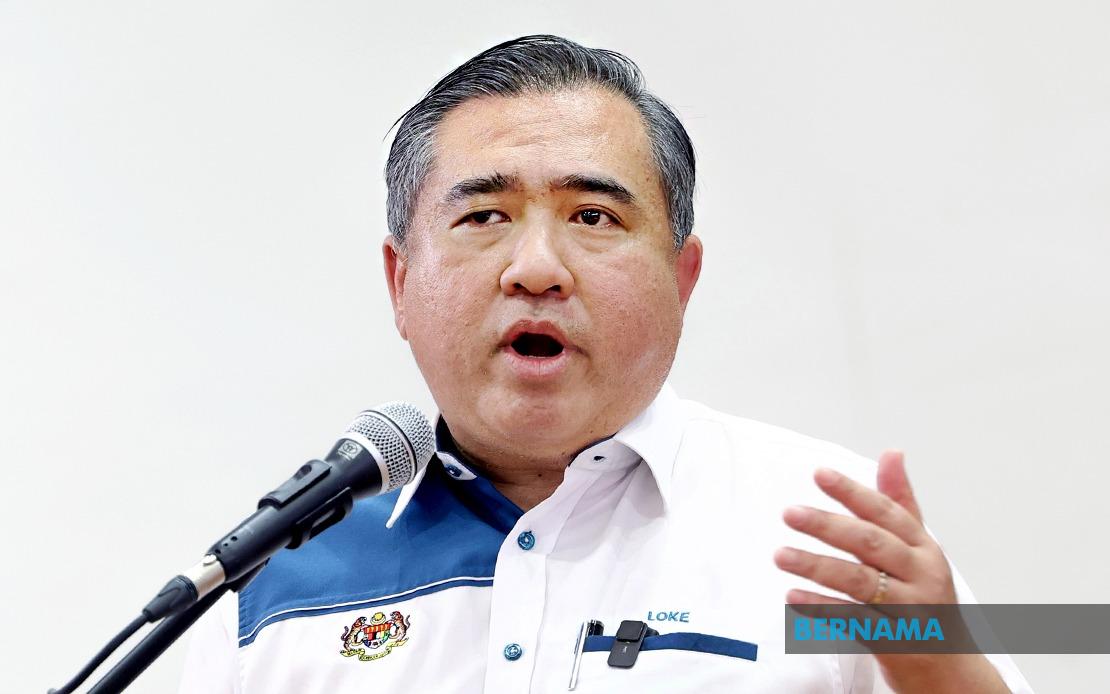
Transport Minister Anthony Loke has clarified that the Southern Shuttle service's use of diesel trains represents only a stopgap arrangement while the country awaits delivery of modern Electric Multiple Unit (EMU) trains. Speaking via Facebook on June 20, Loke addressed growing public concerns about the service's reliance on older rolling stock, emphasising that the ministry made a deliberate choice to commence operations now rather than delay service launch by two to three years pending the completion of 10 new EMU train sets.
The ministry faces a practical dilemma between serving commuters today or waiting for superior equipment. Officials recognised that enforcing a lengthy wait for enhanced services would impose an unacceptable burden on Johor residents already lacking adequate rail connectivity. By deploying existing diesel locomotives and coaches immediately, the government prioritises accessibility over technical specifications, a decision Loke justified as putting public convenience ahead of perfectionism. This pragmatic approach reflects broader efforts to expand rail coverage in southern Malaysia, a region historically underserved compared to the Klang Valley's extensive network.
Financial commitment underpins the service expansion, with the Ministry of Transport dedicating an annual subsidy ranging from RM11 million to RM15 million. This investment aims to encourage greater adoption of rail-based commuting and reduce automobile dependency across the southern corridor. The subsidy reflects government acknowledgement that fares alone cannot sustain operations while maintaining affordability for working-class passengers. Such support mechanisms remain essential in less densely populated areas where ridership may initially struggle to generate revenues comparable to urban trunk lines.
The Southern Shuttle currently connects three key nodes in the Johor urban landscape: Kulai, JB Sentral, and Pasir Gudang. Journey times have been optimised through service design, with the Kulai to JB Sentral segment requiring approximately 40 minutes, whilst the Kempas Baru to Pasir Gudang route takes 40 to 45 minutes. These travel times position the shuttle as a credible alternative to road transport for commuters navigating Johor's expanding metropolitan area. The service offers enhanced comfort and reliability compared to informal public transport options, addressing a genuine mobility gap in the state's transport hierarchy.
A significant component of this expansion involves repurposing freight infrastructure for passenger services. The Kempas Baru to Pasir Gudang corridor previously functioned exclusively as a goods line, serving industrial and port operations. Opening this route to passenger traffic marks the first time the segment has accommodated commuter travel, effectively unlocking additional capacity within existing railway networks. This dual-use strategy maximises returns on rail infrastructure investment whilst spreading fixed costs across both passenger and freight operations, a model gaining traction across Southeast Asia's developing transport systems.
The longer-term vision encompasses completion of the Gemas-Johor Bahru electrified double-tracking project, which will fundamentally transform operations in the southern corridor. Upon project completion, diesel trains will become redundant as the route transitions to Electric Train Service (ETS) operations. This progression represents a substantial modernisation programme, replacing fossil fuel dependence with electric propulsion and enabling higher frequencies, faster acceleration, and reduced operating costs. The electrification project promises to align southern rail services with standards already established on the busy KL-Ipoh and KL-Seremban corridors.
Public criticism has emerged regarding fare structures, with observers noting that Southern Shuttle pricing runs three times higher than comparable services in Kuala Lumpur and Seremban. This disparity reflects several factors including lower passenger volumes in southern markets, higher per-unit operating costs, and the premium charged for newer service offerings. However, the perception of unfairly elevated fares threatens to undermine ridership growth and may require recalibration as volumes increase. Policymakers must balance financial sustainability with affordability imperatives, particularly given the service's role as a public transport catalyst in an underserved region.
The deployment of existing diesel stock whilst awaiting EMU deliveries represents a transitional compromise familiar to developing transport systems facing competing priorities. Malaysia's experience mirrors challenges across Southeast Asia, where infrastructure modernisation projects operate on extended timelines whilst immediate mobility demands persist. The Southern Shuttle exemplifies how interim solutions can establish essential services and generate the ridership data necessary to justify permanent capital investments. Early adoption may also build constituency support for subsequent phases, including the electrification upgrades and expanded frequencies that diesel operations cannot sustain.
For Malaysian readers and transport planners, the Southern Shuttle signals expanding government commitment to rail-based alternatives beyond the Klang Valley's concentration. Johor's geographic size and industrial importance historically justified rail development, yet passenger services remained underdeveloped relative to road networks. Current initiatives suggest a strategic shift toward leveraging existing railway corridors for social utility, even when perfect technical solutions remain years away. This pragmatism may establish a template for extending rail services to other underserved regions, providing Southeast Asian peers with case studies in phased transport modernisation under resource constraints.

