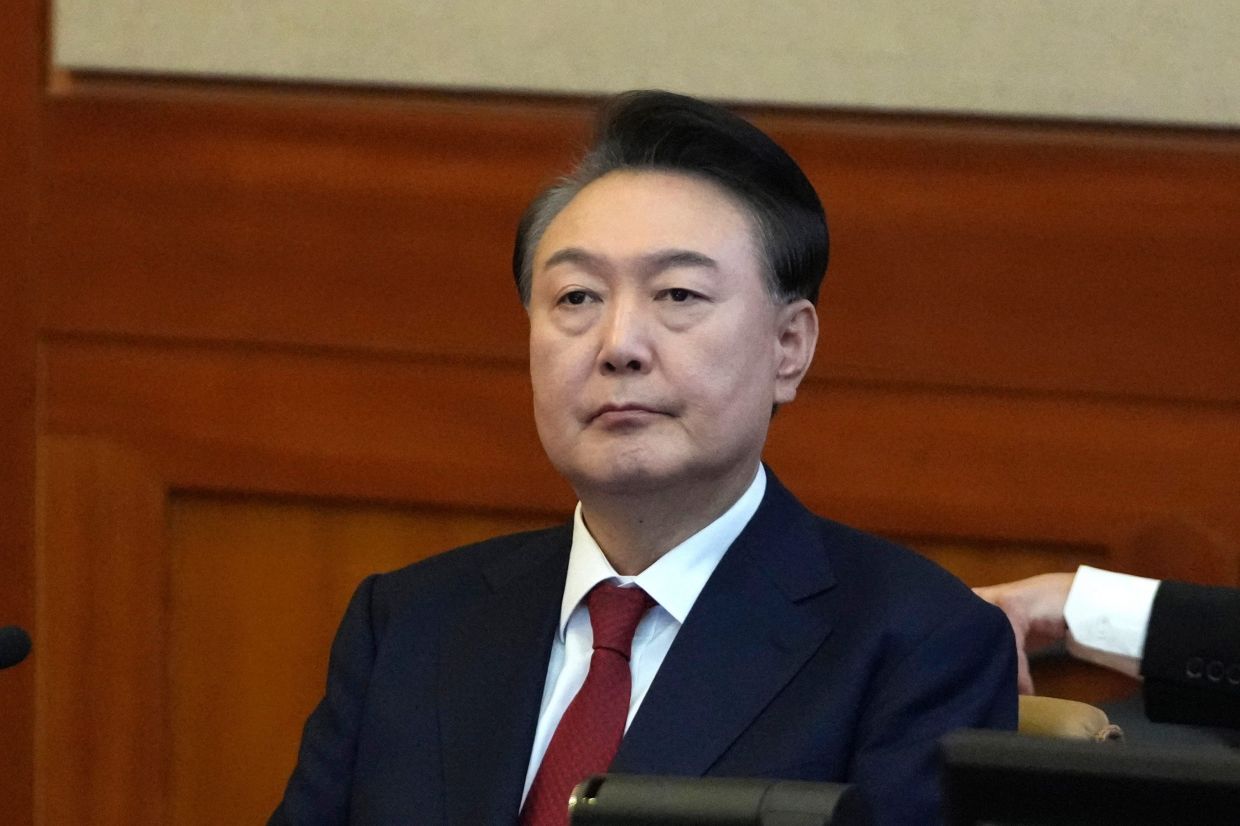
South Korea's Supreme Court has affirmed a seven-year prison term for former president Yoon Suk Yeol on Thursday, rejecting appeals from both prosecutors and his legal team over convictions connected to his ill-fated attempt to declare martial law in December 2024. The nation's highest judicial authority found no errors in the lower court's verdict, ending a cascading series of legal proceedings that have defined South Korean politics throughout 2024 and 2025. The ruling marks a decisive moment in what has become one of the most dramatic political crises in the country's modern history.
Yoon's conviction centres on multiple serious allegations stemming from the brief martial law declaration that shocked the nation. He was found guilty of obstructing cabinet deliberations by convening an artificially limited group of ministers immediately before announcing the measure, a manoeuvre designed to bypass normal democratic processes. Additionally, prosecutors established that Yoon orchestrated the creation of a fraudulent martial law decree bearing forged signatures of the prime minister, demonstrating a calculated effort to fabricate legal pretence for his actions. The court also found him culpable for instructing officials to circulate misleading information to foreign media outlets, an attempt to manage international perception during the unfolding crisis. Most significantly, evidence showed Yoon directed military personnel to delete records from secure communications channels, an apparent effort to obscure the decision-making process behind the declaration.
The Supreme Court's decision came after a journey through South Korea's judicial system that progressively strengthened the case against the former leader. In January, a lower court initially convicted Yoon and imposed a five-year sentence for most charges. When the matter reached an appellate court in April, judges upheld the conviction and added another guilty verdict relating to the misleading press release distributed internationally. This appellate decision raised the sentence to seven years, the figure that the Supreme Court has now confirmed as final and binding. Prosecutors had originally sought a more severe ten-year term, meaning the ultimate sentence falls between the opposing positions taken by the prosecution and defence.
Yoon's legal representatives responded to the Supreme Court ruling with visible frustration, contending that the justices had reached their conclusion "without sufficient deliberation" on the constitutional questions at stake. The defence team signalled their intention to challenge the ruling through constitutional grounds and indicated plans to lodge formal complaints. This combination of appeals represents a final desperate attempt to overturn what appears to be an irreversible conviction, though prospects for success appear slim given that Supreme Court rulings carry final authority in South Korea's legal hierarchy. The ex-president's continued defiance and refusal to accept judicial outcomes reflects broader tensions about whether he recognises the legitimacy of the courts now proceeding against him.
The dramatic events underlying this conviction unfolded across just several hours on a December night in 2024, when Yoon delivered a late-night national address suspending civilian rule entirely. This unprecedented move plunged South Korea into a constitutional emergency that rattled allies including the United States and unsettled global markets. However, the martial law order proved extraordinarily short-lived, lasting only approximately six hours before the National Assembly convened in emergency session and voted down the declaration through parliamentary procedure. Despite this rapid reversal, the episode inflicted significant damage on South Korea's political fabric, triggering mass public protests, triggering stock market decline, and raising international concerns about the stability of the world's thirteenth-largest economy.
Beyond the conviction now affirmed by the Supreme Court, Yoon faces additional serious legal jeopardy in separate proceedings. A court previously handed down a staggering thirty-year prison sentence in connection with Yoon's alleged dispatch of military drones into North Korean territory. According to prosecutors, this operation was designed to artificially manufacture a security crisis that would provide political justification for the subsequent martial law attempt. The combination of these multiple convictions means Yoon faces cumulative prison exposure that could keep him incarcerated for an extended period, assuming other sentences are not overturned on appeal. This layering of convictions from different proceedings demonstrates how extensively the martial law incident has become woven into the legal and political reckoning South Korea now faces.
Throughout these proceedings, Yoon has maintained that his martial law declaration served the national interest, asserting that it was pursued "solely for the sake of the nation." In contemporary statements during 2024, he defended the dramatic measure as necessary to neutralise alleged "anti-state forces" and address what he characterised as threats emanating from North Korea. These justifications have gained no traction with the judiciary, which has instead viewed his actions as unconstitutional exercises of emergency power undertaken without legitimate basis. The gap between Yoon's professed motivations and the courts' assessment of his conduct reflects fundamental disagreements about executive authority and the limits of presidential power during perceived national emergencies.
The political consequences of Yoon's martial law attempt have already reshuffled South Korea's leadership landscape. Yoon was effectively ousted following the martial law crisis in April 2025, triggering presidential elections that resulted in Lee Jae Myung of the centre-left Democratic Party assuming the presidency. This transition reflected public rejection of Yoon's governing approach and the political space created by his constitutional transgression. The change of administration has not insulated Yoon from legal consequences, as prosecutors and courts have proceeded independently to investigate and prosecute his conduct. This separation between political and judicial accountability demonstrates that South Korea's institutional mechanisms, despite being tested severely by the martial law crisis, ultimately functioned to prevent permanent constitutional damage.
For Malaysian and Southeast Asian observers, the South Korean case offers important lessons about institutional resilience and judicial independence during political emergencies. The rapid parliamentary response to Yoon's martial law declaration, combined with the subsequent functioning of the judiciary despite political pressures, illustrates how constitutional systems with established separation of powers can resist extra-legal seizures of authority. The professional judgment that South Korea's courts have demonstrated in prosecuting a former head of state, despite inevitable political implications, reflects institutional maturity that many regional democracies aspire toward. However, the Supreme Court's confirmation of Yoon's conviction also underscores the profound damage that even brief unconstitutional emergencies can inflict on national life, including economic disruption, international reputational harm, and prolonged political instability that persists long after the immediate crisis has ended.

