South Korean President Lee Jae Myung has attempted to strike a careful balance between acknowledging legitimate concerns about voting irregularities and containing what he views as dangerous conspiracy theories threatening public order. Speaking through social media on June 15, the president urged those protesting the handling of the June 3 local elections to exercise restraint and avoid restricting the freedoms of others, signalling growing concern about the intensity and direction of public anger over the electoral mishaps.
The backdrop to Lee's intervention involves widespread reports of serious administrative failures during the June 3 local elections, where ballot paper shortages forced voting stations to suspend or delay proceedings in multiple locations. These disruptions touched a raw nerve among South Korean voters, as they directly impaired citizens' ability to exercise their fundamental democratic right. Lee himself has not minimised this dimension of the crisis, describing the National Election Commission's mismanagement as a serious breach of democratic principles and acknowledging the legitimacy of public anger over compromised voting access.
However, the president drew a sharp distinction between justified criticism of the election management and what he characterised as baseless allegations of systematic election rigging. In remarks delivered during a video meeting with senior advisers from the Vatican, Lee cautioned against what he called "absurd conspiracy theories" and warned that opportunistic political actors were exploiting the ballot shortage crisis to manufacture unfounded claims of fraud. This demarcation reflects a recurring tension in post-election disputes globally: separating procedural failures from claims of intentional electoral manipulation requires both institutional clarity and public restraint.
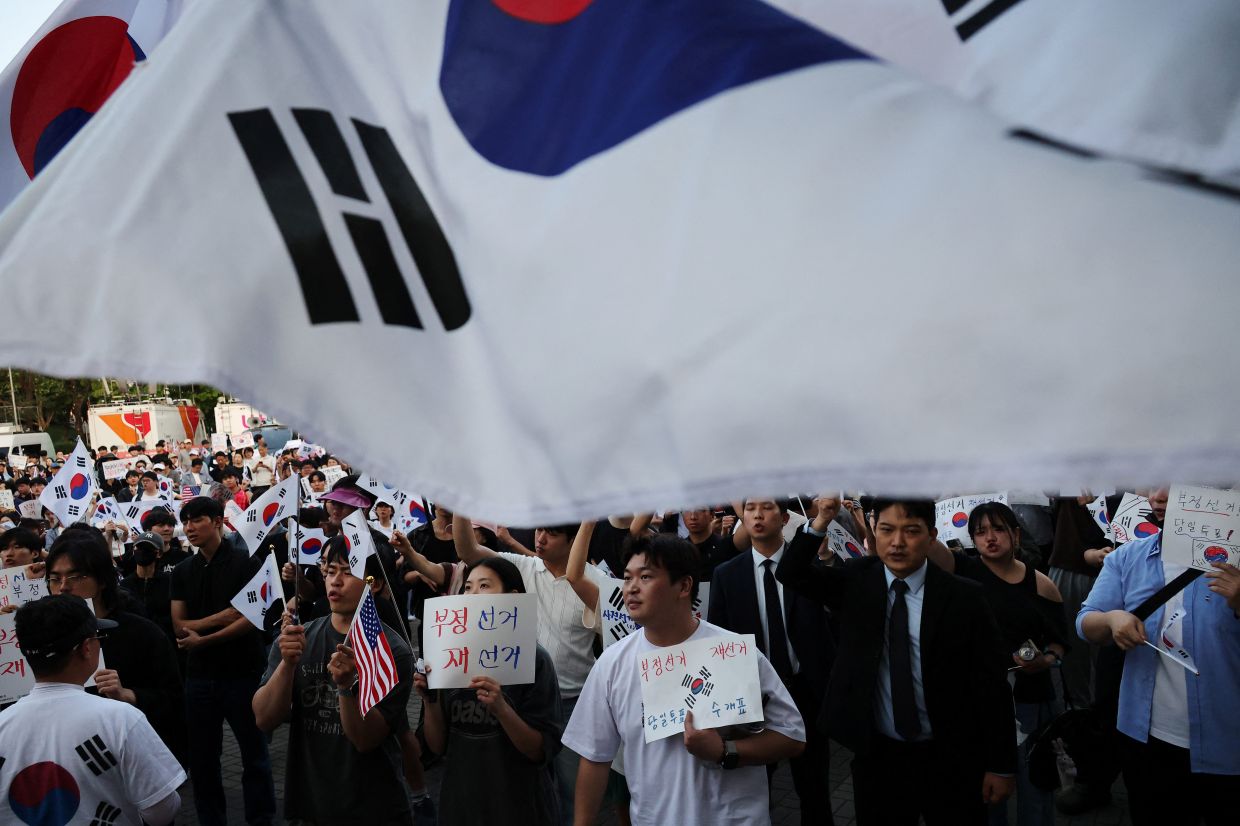
The geographic focus of the ongoing protests underscores the emotional intensity surrounding the issue. Demonstrators have maintained a presence around Olympic Park's handball arena in southern Seoul, the venue that served as the vote-counting centre during the June 3 elections and housed the ballot boxes afterwards. The continued occupation has disrupted operations at multiple sports organisations headquartered within the Olympic Park complex, preventing staff from accessing offices and hindering administrative functions that support South Korean athletes' participation in international competitions. This collateral damage to unrelated organisations has become a focal point for Lee's appeal for proportionality.
The president's statement about instructing police to investigate both those who physically obstructed access to facilities and those who conspired in such actions signals an escalating government response to protest activity. Lee's language moved beyond passive description to direct executive intervention, framing obstruction of work and blocking of civilian access as matters requiring law enforcement attention. Simultaneously, he pledged to hold those "responsible in accordance with the law and principles," attempting to position the government as defending both democratic order and accountability for administrative failure.
Lee's comments also reflected mounting concern about threats directed at law enforcement and the broadening confrontational dynamics between protesters and authorities. He noted that some people spreading election fraud allegations had threatened police officers and citizens, conducted what he termed "incomprehensible searches and inspections," and obstructed official duties. These escalations appear to have prompted Lee to recalibrate his messaging, moving from sympathetic acknowledgment of voting rights infringement toward emphasising the boundaries of acceptable protest conduct and the primacy of legal frameworks.
The call for a comprehensive, transparent investigation represents Lee's attempt to channel discontent into institutional processes rather than street-level confrontation. He urged the National Election Commission to cooperate fully with a parliamentary investigation expected to commence shortly and pressed prosecutors and police to accelerate their joint investigation into determining responsibility "without any sanctuary." This multi-level investigative architecture suggests recognition that public confidence requires visible, thorough accountability mechanisms, not merely assurances from political leadership.
Lee's invocation of "healthy criticism and constructive alternatives" signals an understanding that the government cannot simply suppress or dismiss public concerns without exacerbating underlying frustrations. By explicitly guaranteeing space for legitimate criticism while condemning conspiracy theories, the president attempted to preserve both democratic deliberation and institutional legitimacy. The formulation reveals tension inherent in responding to election crises: acknowledging genuine failures without surrendering to politically motivated distortions of fact requires careful rhetorical positioning and institutional follow-through.
For Malaysia and other Southeast Asian democracies, the South Korean case illustrates both the vulnerability of electoral administration to organisational failures and the challenges of managing public response to such failures. Ballot management, whether addressing shortages or ensuring distribution, remains a critical juncture where system credibility meets citizen experience. When voters encounter obstacles to casting ballots, confidence in electoral integrity deteriorates regardless of whether deliberate manipulation occurred. This underscores the importance of rigorous pre-election logistics planning and rapid, transparent response to discovered problems.
The South Korean situation also demonstrates how procedural failures can create space for broader claims of systemic fraud, particularly in polarised political environments. Lee's struggle to maintain the distinction between acknowledging real problems and rejecting unfounded conspiracy theories mirrors challenges faced by election officials across the region. Once public trust in electoral administration fractures, containing the narrative becomes exceptionally difficult, as competing interpretations of events proliferate through digital channels beyond institutional control.
Moreover, Lee's emphasis on legal boundaries and institutional processes reflects a broader regional pattern: democracies managing electoral crises must simultaneously validate citizen participation, maintain public order, and preserve institutional capacity. The balance is precarious. Excessive emphasis on restraint risks appearing dismissive of real grievances; excessive validation of all claims risks normalising evidence-free allegations that corrode democratic norms. Lee's attempt to navigate between these poles, though imperfect, highlights the institutional sophistication required to manage electoral disputes without either surrendering democratic accountability or descending into factional conflict.
The outcome of South Korea's parliamentary and prosecutorial investigations will determine whether Lee's call for balance succeeds in both addressing voter concerns and containing conspiratorial narratives. For regional observers, the case underscores that election commission competence, transparent investigation mechanisms, and leadership messaging all shape democratic resilience when electoral systems encounter stress.