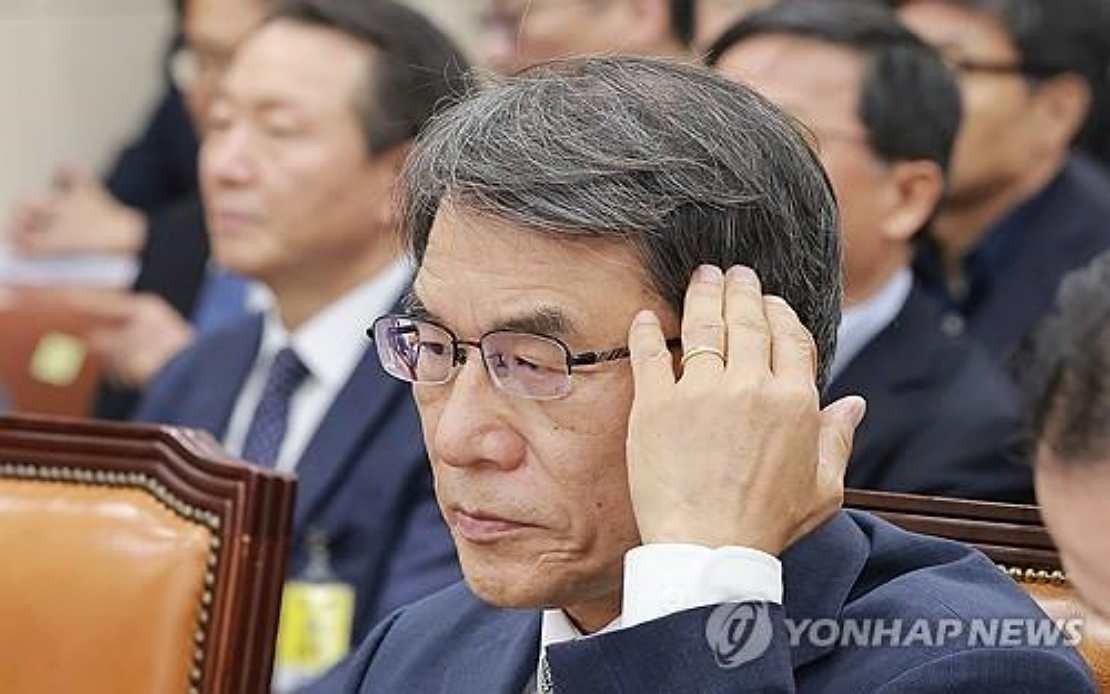
South Korean authorities launched a significant corruption investigation into the National Election Commission on Monday, with a joint police-prosecution team conducting searches at the agency's headquarters as part of an expanding probe into misconduct allegations. The operation centered on investigating former NEC chief Roh Tae-ak, who stands accused of embezzlement and misappropriation of public funds during his tenure at the country's election watchdog.
Investigators presented search warrants naming Roh and several other unnamed NEC officials as criminal suspects before commencing their examination of the commission's chairperson's office in the morning hours. While the team conducted extensive searches at the agency's premises, they notably did not include Roh's private residence in their Monday operations, signalling a potentially phased investigative approach.
The allegations against Roh involve suspicious patterns in his overseas travel records while serving as NEC chief. During his time leading the electoral body, Roh undertook three international business trips spanning multiple countries—first to Australia and New Zealand, subsequently to Germany and Estonia, and finally to Denmark and Sweden. What triggered particular scrutiny was the consistent pattern of his spouse accompanying him on all three journeys, yet this spousal presence was systematically omitted from the official post-trip reports that the NEC released publicly. Such discrepancies have raised serious suspicions of occupational embezzlement, as official trip documentation typically accounts for all participants and associated expenses.
The investigation has expanded well beyond Roh's individual conduct, however, revealing what appears to be a broader institutional problem at the election commission. Authorities are examining allegations that 461 NEC employees collectively undertook 107 overseas business trips between 2022 and June of this year to destinations that raise eyebrows regarding their official necessity. The venues in question—including the Maldives, Bangkok, Kota Kinabalu in Malaysia, and Florence—are widely recognized as leisure and resort destinations rather than typical locations for serious electoral commission business. This pattern suggests potential systemic misuse of government resources for what could amount to disguised vacation travel, a concern that adds considerable weight to broader questions about financial accountability within the institution.
The investigation gained momentum following a formal complaint filed by South Korea's main opposition People Power Party on June 19, which specifically accused Roh of occupational embezzlement. This political initiative transformed what might have remained an internal matter into a public scandal commanding widespread attention and official action.
Roh's departure from his position came in the wake of significant operational failures during South Korea's June 3 local elections. Multiple polling stations in southern Seoul experienced ballot shortages that disrupted voting procedures, creating public frustration and raising questions about the commission's competence and management. Rather than weather the political storm surrounding these electoral mishaps, Roh resigned the following month, though this exit did not shield him from subsequent legal exposure.
For Malaysian readers and observers across Southeast Asia, this case illuminates important questions about institutional integrity and governmental oversight mechanisms. Election commissions hold crucial responsibilities in maintaining democratic legitimacy, and any hint of financial impropriety or mismanagement at such agencies undermines public confidence in electoral processes themselves. The pattern of travel to tourist destinations under the guise of official business—a practice allegedly involving hundreds of employees—suggests potential weak points in accountability systems and expenditure controls that may resonate with concerns about public sector governance across the region.
The South Korean case also demonstrates how opposition political parties can serve as watchdogs for governmental misconduct, though it raises parallel questions about whether such complaints are pursued with equal vigor regardless of which party is in power. The National Election Commission's particular vulnerability to these allegations stems partly from its direct role in managing elections, making any perception of internal corruption especially damaging to institutional credibility.
As the investigation proceeds through formal legal channels, South Korean citizens and regional observers will be watching closely to see how thoroughly authorities pursue this matter and whether consequences extend beyond the former chief to address the apparent systemic culture of questionable overseas travel expenditures. The outcome could carry implications for how other government agencies approach internal discipline and financial oversight, particularly regarding international travel authorizations and documentation standards.

