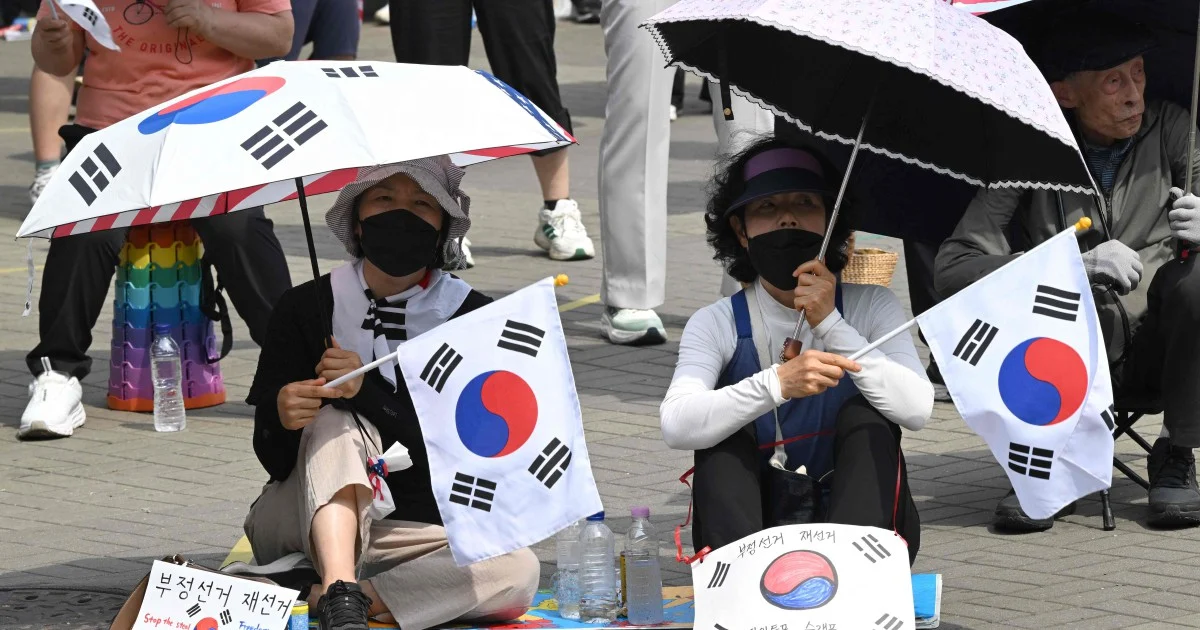
South Korea's legislative body has formally commenced a comprehensive 45-day parliamentary inquiry into the operations of the National Election Commission, driven by recurring problems with ballot supplies that undermined the integrity of the country's June 3 local elections. The decision to launch the investigation was ratified during a plenary session held on Thursday, marking an official escalation in scrutiny of electoral administration at a time when public confidence in voting systems has come under strain across the region.
The disruptions witnessed during the local elections represented a significant operational failure at a moment when South Korea's democratic institutions face mounting pressure to demonstrate competence and reliability. Ballot shortages forced delays at numerous polling locations, created confusion among election workers, and raised concerns about whether all voters had equal opportunity to cast ballots within designated timeframes. Such logistical breakdowns carry particular weight in a nation where electoral participation and procedural fairness form cornerstone principles of democratic legitimacy.
Parliamentary investigations of this nature typically examine systemic deficiencies, planning failures, and personnel accountability within electoral bodies. The 45-day timeframe provides investigators sufficient scope to conduct detailed interviews, review procurement records, analyse voter roll projections against ballot production schedules, and identify communication breakdowns between the National Election Commission and local election management authorities. Such investigations often produce recommendations for legislative amendments and procedural reforms.
The National Election Commission's management of ballot supply chains had become a focal point for political criticism following the June elections. Questions emerged regarding whether the Commission had accurately forecasted voter participation rates, adequately coordinated with printing contractors, or maintained sufficient contingency reserves. Election officials subsequently acknowledged the shortages and pledged to implement improvements, though such commitments often prove insufficient to satisfy legislators demanding systemic accountability.
For Malaysian observers, South Korea's experience underscores the technical complexity underlying election administration, even in wealthy, technologically advanced democracies. Consistent with regional contexts, managing precise ballot quantities across multiple constituencies presents genuine logistical challenges when vote-casting patterns fluctuate, polling stations remain understaffed, or contractor capacity constraints emerge unexpectedly. Understanding such vulnerabilities offers value to Southeast Asian nations continually refining their own electoral machinery.
The parliamentary inquiry mechanism reflects South Korea's robust system of institutional checks and balances, wherein the legislature maintains capacity to investigate executive agencies directly. This transparency contrasts markedly with contexts where electoral bodies operate with minimal external oversight, creating accountability deficits. The investigation's public nature also serves an educational function, enabling citizens to understand where institutional weaknesses exist and what remedies legislators propose.
Electoral system failures carry disproportionate political consequences because they touch fundamental questions about democratic legitimacy and equal representation. When voters encounter obstacles at polling stations—whether through ballot shortages, clerical errors, or facility inadequacies—trust in the system erodes regardless of whether actual election outcomes were materially affected. Perception of incompetence can undermine civic participation in subsequent elections, as voters question whether their ballots will be handled professionally.
The timing of South Korea's investigation arrives amid broader regional concerns about electoral administration. Across Southeast Asia, election commissions have grappled with resource constraints, staff training deficiencies, and infrastructure inadequacies that occasionally manifest as operational disruptions. While ballot shortages represent a relatively contained problem compared to vote-counting irregularities or ballot access restrictions, they nonetheless illuminate the importance of meticulous advance planning and robust quality assurance mechanisms.
The inquiry will likely examine whether the National Election Commission maintained updated voter registration databases that could inform ballot production quantities, whether contractors delivered supplies on schedule to all districts, and whether contingency protocols existed for rapid reprinting during voting. Such operational details may appear mundane compared to higher-profile electoral controversies, yet they fundamentally affect the voting experience for ordinary citizens and the public's perception of institutional competence.
Parliamentary findings could influence future electoral legislation, potentially requiring the Commission to maintain larger contingency reserves, implement more sophisticated demand forecasting, or establish binding agreements with multiple ballot printers to ensure redundancy. South Korean lawmakers may also examine whether sufficient resources were allocated to poll worker training and whether standard operating procedures existed for managing shortages if they emerged unexpectedly.
The investigation's conclusion within 45 days will shape expectations regarding electoral administration quality in the approaching general elections and future local contests. South Korea's parliament has demonstrated that institutional mechanisms exist to hold electoral bodies accountable when operational failures occur, a principle relevant across East and Southeast Asia as nations continue strengthening democratic institutions and electoral governance frameworks.