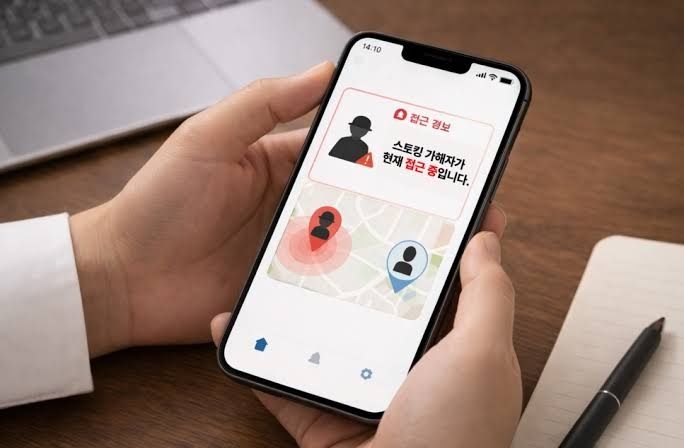
South Korea has taken a decisive step in victim protection by launching a technology-driven alert system on June 24 that grants stalking victims immediate visibility into the whereabouts of suspected perpetrators. Managed by the Ministry of Justice through a dedicated mobile application, the system represents a significant shift in how the country approaches the escalating problem of stalking-related violence, moving beyond traditional emergency alert devices that had proven insufficient in preventing serious crimes.
The new platform fundamentally changes the dynamic between victim and aggressor by allowing those targeted by stalkers to monitor not only a suspect's current location but also track their direction of movement in real time. This capability transforms victims from passive recipients of emergency assistance into active participants in their own safety management, providing psychological reassurance and practical information that could help them avoid dangerous encounters. The application operates alongside existing smartwatch-type emergency devices that have been distributed to victims for several years, creating a more comprehensive protective ecosystem.
The government's decision to implement this measure reflects mounting public concern about the adequacy of existing safeguards. Despite years of emergency alert technology deployment, the statistics paint a troubling picture of systemic vulnerabilities. Between 2021 and August 2025, at least 23 individuals who had been provided with emergency alert devices were either killed or subjected to attempted murder by stalkers, according to Representative Lee Gwang-hee of the ruling Democratic Party of Korea. These deaths and near-fatal attacks occurred under supposedly enhanced protective measures, exposing critical gaps in South Korea's stalking prevention framework and spurring government action.
The electronic monitoring infrastructure that underpins the new application was itself only recently introduced. Beginning in 2024, courts began ordering electronic ankle monitors in high-risk stalking cases as a supplementary measure to the existing emergency devices. The electronic monitoring system provides the technological backbone necessary for real-time location tracking, creating a foundation upon which the new victim-access application can operate. However, authorities recognised that simply monitoring suspects without granting victims visibility into that monitoring data significantly limited the protective value of the technology.
The rollout of this system required careful navigation of privacy considerations that could affect both victims and the monitored individuals. South Korea moved cautiously to address these concerns, with the Justice Ministry revising regulations governing electronic monitoring in December 2025 to establish clear parameters around location data sharing. These regulatory changes establish safeguards ensuring that sharing suspects' whereabouts with victims occurs within appropriate legal frameworks, protecting against potential misuse while preserving the system's protective intent.
For Malaysian and Southeast Asian readers, South Korea's approach offers instructive lessons about balancing technological innovation with privacy rights in protection systems. The region has witnessed increasing incidents of stalking and harassment, often complicated by inadequate legal frameworks and enforcement mechanisms. South Korea's willingness to grant victims technological access to monitoring data represents a philosophy that privileges victim safety even while acknowledging legitimate privacy concerns about those under court supervision.
The application's introduction also highlights how technology can redistribute power in abusive relationships and harassment situations. Rather than waiting passively for emergency services to respond, victims gain information enabling them to make real-time decisions about their movements and safety. This empowerment dimension carries particular significance in societies where victims often face systemic barriers to accessing law enforcement protection.
Looking forward, South Korea's Justice Ministry is planning even more substantial reforms to its stalking protection regime. In April 2027, the ministry intends to implement a system allowing stalking victims to petition courts directly for restraining orders, bypassing the requirement to file requests through law enforcement agencies. This reform addresses another critical vulnerability in existing systems: victims' dependence on police willingness to take action. Direct petition mechanisms can accelerate protective orders and reduce victims' exposure to institutional inertia or inadequate police response, problems documented in multiple jurisdictions across Asia.
The direct petition system represents recognition that stalking cases often involve situations where police may lack sufficient information or institutional priority to act swiftly on behalf of victims. By creating direct access to judicial restraining order processes, South Korea transfers decision-making authority from law enforcement gatekeepers to courts, potentially resulting in faster protective orders for those in immediate danger. This systemic change addresses not merely technological gaps but structural obstacles within the justice system itself.
These complementary reforms—the real-time tracking application and the future direct petition mechanism—signal South Korea's comprehensive approach to stalking prevention. Rather than relying on single interventions, the government is layering multiple protective mechanisms: electronic monitoring with victim access, direct court petition processes, and emergency alert devices. This multi-layered strategy acknowledges that stalking is a complex problem requiring interventions at different points in the protection and legal processes.
The measures also reflect evolving understandings of stalking's severity and prevalence. Historically treated as a minor offense or civil matter in many jurisdictions, stalking is increasingly recognised as a serious violent crime that frequently escalates toward physical assault or homicide. South Korea's investment in technology and legal reform demonstrates commitment to preventing this escalation by providing victims with tools to avoid dangerous situations before violence occurs.
As other countries in Southeast Asia and beyond grapple with similar challenges, South Korea's experience demonstrates that comprehensive victim protection requires coordinated investment across technological, legal, and institutional dimensions. The combination of real-time monitoring access and direct court petition mechanisms creates redundancy in protection systems, ensuring that multiple pathways exist for victims to enhance their safety rather than relying exclusively on law enforcement or emergency response.

