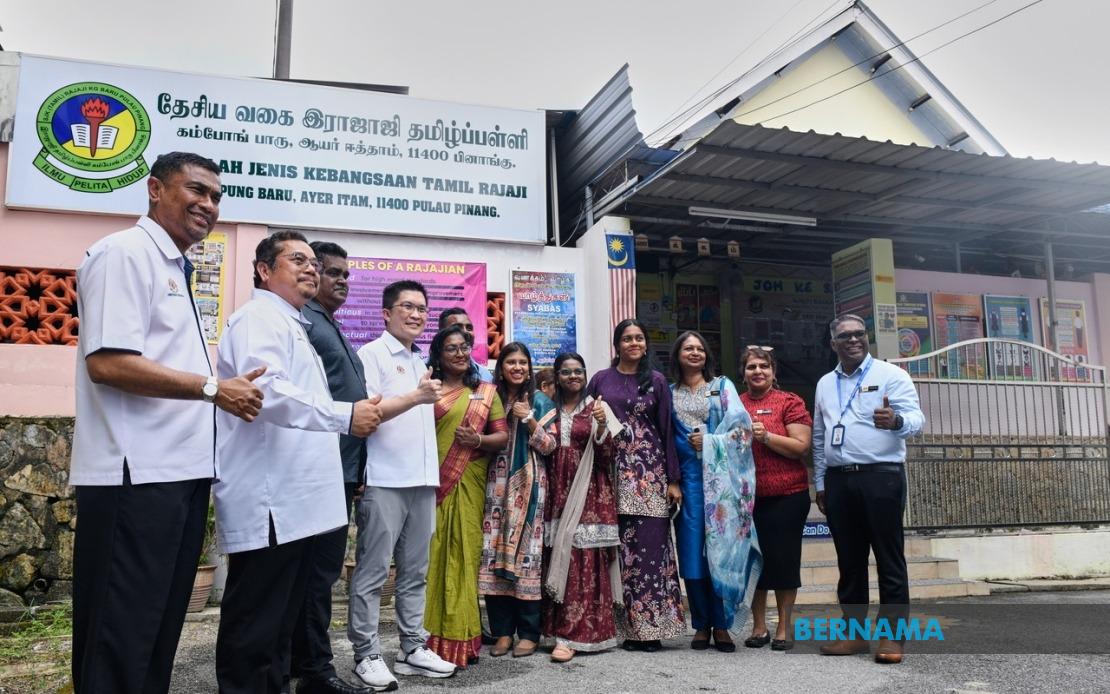
The government has greenlit a major infrastructure overhaul for one of Penang's oldest Tamil-medium primary schools. Sekolah Jenis Kebangsaan Tamil (SJKT) Rajaji, which has served the community for more than three-quarters of a century, will relocate to a purpose-built RM8 million facility in Farlim, Bandar Baru Ayer Itam, marking a significant turning point for an institution long constrained by inadequate physical resources.
Deputy Education Minister Wong Kah Woh announced the approval during a visit to George Town, noting that the 76-year-old school currently struggles under severe spatial limitations that prevent it from properly serving its enrolment of approximately 100 pupils. The current premises, which have been the school's home for decades, have become too cramped to function effectively as modern educational facilities. This development signals official recognition of longstanding infrastructure gaps affecting vernacular schools in the state.
Construction on the new building is anticipated to span 18 months from commencement, positioning the school to transition to its new campus by the 2029 academic year. The Penang state government had previously identified a 2.3-acre plot in Farlim in 2022, situating it approximately 500 metres from the current location. This proximity allows the school community to remain anchored to its established neighbourhood while accessing significantly improved facilities. The Education Ministry processed and approved the relocation application submitted by the school's board of governors after resolving outstanding coordination matters with relevant local authorities.
What distinguishes this project from conventional school development initiatives is its financing mechanism. Rather than drawing entirely on government education budgets, the construction will be fully funded through a private developer's corporate social responsibility programme. This partnership exemplifies a collaborative approach between the public sector and business entities in addressing educational infrastructure needs—a model that Wong highlighted as demonstrating effective cost-sharing in the education space. Such arrangements have become increasingly common as governments seek to stretch limited capital budgets across multiple pressing priorities.
Beyond the immediate circumstances of SJKT Rajaji, the approval reflects broader revitalisation efforts across Penang's Tamil school network. State Housing and Environment Committee chairman and Penang Tamil Schools Special Committee chairman Datuk Seri S. Sundarajoo disclosed that the state currently operates 28 Tamil national-type schools, many of which are engaged in various stages of developmental initiatives. These efforts encompass securing permanent land tenure, a perennial challenge for many vernacular institutions, and executing infrastructure projects in manageable phases to distribute financial and logistical demands.
The momentum appears significant. Sundarajoo indicated that groundbreaking ceremonies for at least three separate SJKT projects are scheduled to occur within the current year, demonstrating accelerated progress on multiple fronts. Additionally, development initiatives involving SJKT Sungai Bakap and SJKT Juru, which had previously stalled, are being resuscitated and reintegrated into the state's educational development agenda. This revitalisation underscores a policy shift toward prioritising vernacular education infrastructure after periods of relative neglect.
For Malaysia's Tamil-medium school sector—which educates tens of thousands of students nationwide while operating within historically tighter budget constraints than national-type schools—such tangible investments carry symbolic and practical weight. Many SJKT institutions operate from facilities constructed decades ago or in rented premises lacking permanence and adequate investment. Penang's demonstrated commitment to upgrading Tamil school infrastructure may establish precedents for other states to emulate, particularly those with substantial Tamil student populations.
The relocation of SJKT Rajaji also addresses a broader challenge facing primary education in rapidly urbanising areas: maintaining heritage institutions while accommodating modern educational requirements. The school's 76-year history reflects generational continuity in Tamil-medium education within George Town, yet its physical constraints had rendered it increasingly dysfunctional. The new facility promises to preserve institutional continuity while enabling pedagogical modernisation.
Sundarajoo emphasised that the state's investments in Tamil school development are proceeding without imposing financial burden on government coffers—a politically significant assertion given competing demands for state resources. By leveraging private-sector participation alongside public commitment, Penang positions itself as addressing educational equity through innovative financing rather than demanding additional taxation. This framing becomes important in a political climate where government expenditure faces scrutiny.
The 2029 target completion date provides sufficient runway for proper project management while maintaining momentum. School leadership can commence planning for the transition, including curriculum development optimisation, staff development in modernised facilities, and community engagement regarding the relocation. For the approximately 100 current pupils and their families, the new building represents transformation from crowded constraints to spacious, purpose-designed learning environments.
For policymakers monitoring education infrastructure across Southeast Asia, Penang's Tamil school initiatives offer instructive lessons in sustaining minority-language education systems through strategic partnerships and sustained political commitment. As demand for diverse educational pathways persists across Malaysia's multicultural landscape, investments like SJKT Rajaji's relocation demonstrate that vernacular schools can receive priority treatment within development agendas, provided political will exists at state and federal levels.