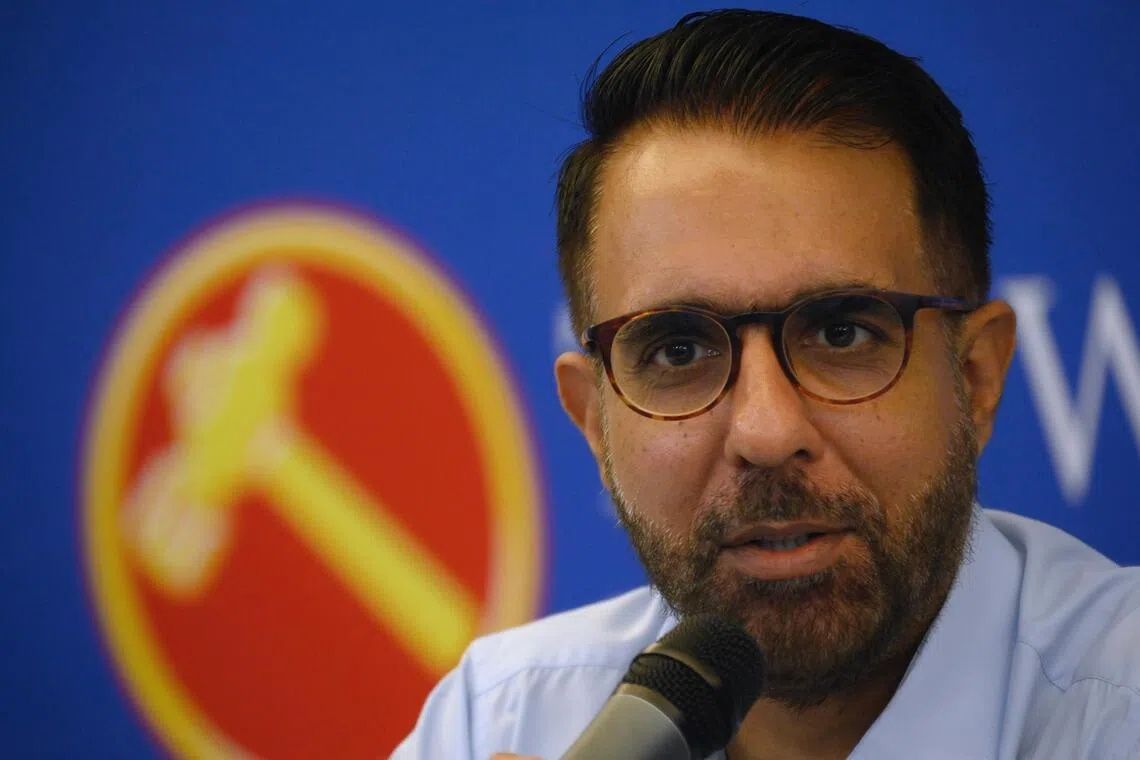
Singapore's Workers' Party stands at a crossroads as internal dissent threatens the leadership of Secretary-General Pritam Singh, with party cadres preparing to contest his position at elections scheduled for June 28. The movement to dislodge Singh has gathered momentum following a High Court judgment in December 2025 that upheld his conviction for providing false information to a parliamentary committee, an outcome that has intensified calls for his resignation among the party's inner circle of roughly 100 cadres.
The challenge to Singh's eight-year tenure represents a significant rupture within the opposition party. While the search for a replacement candidate has gained pace in recent weeks, no senior figure has yet publicly committed to running against him. Nevertheless, party insiders report that overtures have been made to several prominent Workers' Party MPs, including Gerald Giam of Aljunied GRC, Dennis Tan of Hougang, and Sengkang MPs He Ting Ru and Jamus Lim. This reticence reflects the disciplinary risks cadres face when publicly criticising party leadership—a constraint that has forced dissenters into careful, behind-the-scenes manoeuvring.
The immediate trigger for this internal revolt stems from the cadre letter submitted in December 2025 by 25 party members, many of them former central executive committee members and election candidates. Their petition triggered a special conference now set to convene alongside the party's biennial cadres' election. At the special gathering, Singh will be required to account for his actions preceding his conviction, with signatories explicitly calling for his resignation or, failing that, a secret ballot to determine his fate.
The conviction itself relates to Singh's handling of former Sengkang MP Raeesah Khan's parliamentary dishonesty. Khan fabricated an anecdote during parliamentary debate in August 2021 but did not confess the falsehood until November that year. Singh was subsequently found to have guided her in sustaining the lie rather than pressing for immediate clarification. For many cadres, this episode represents a fundamental betrayal of the party's brand identity—an opposition movement built upon integrity as its defining competitive advantage against Singapore's ruling People's Action Party.
One cadre articulated the moral dimension plainly: the Workers' Party's electoral appeal rests on voter confidence in its difference from the political establishment. When the party leader himself stands convicted of dishonesty, that distinction collapses, undermining the very foundation upon which the party's legitimacy rests. The conviction, combined with Singh's subsequent removal as Leader of the Opposition by Prime Minister Lawrence Wong in January 2026, has compounded internal frustration and raised questions about whether continued loyalty to Singh serves the opposition's broader interests.
The party's response to losing its Leader of the Opposition role has further divided cadres. When Prime Minister Wong invited the Workers' Party to nominate another elected MP to assume the position, the party declined, choosing instead to maintain unified support for Singh. Several cadres have since privately questioned this strategic decision, arguing that it unnecessarily diminished the party's parliamentary standing and weakened the broader opposition position. This debate reflects deeper concerns about whether Singh's leadership remains tenable given the reputational damage already sustained.
Since Singh's formal letter of reprimand in April 2026 for contravening the party constitution, resistance to his continued leadership has solidified. The party officially declared that no restrictions prevent Singh from seeking re-election, establishing the procedural framework for his challenge. Singh requires only a simple majority among cadres to retain his position—a threshold that hinges entirely on whether a credible challenger emerges and, critically, whether senior figures like former party chief Low Thia Khiang throw their weight behind alternative leadership.
Low Thia Khiang, who led the Workers' Party from 2001 to 2018 and secured its historic 2011 GRC victory in Aljunied, remains a towering figure within the party structure. He retains a seat on the central executive committee and, according to party rumours, voted against Singh during the disciplinary panel proceedings. If Low endorses a challenger, the calculation shifts dramatically. Observers estimate that Low's backing, combined with the 25 signatories and others aligned with the former chief, could potentially muster sufficient votes to unseat Singh. Low himself weathered a leadership challenge in 2016 from then-Aljunied MP Chen Show Mao, an effort mounted by many of these same party veterans now mobilising against Singh.
The election process unfolds across two distinct meetings. The special conference will provide Singh an opportunity to defend his actions and offer a resignation, should he choose to step down. If he remains, cadres will conduct a secret vote on his tenure. Subsequently, the biennial cadres' conference will proceed with formal elections for party positions, including the secretary-general post. One cadre noted that the dynamics of the first meeting will likely determine whether a challenger materialises at the second—a narrow victory for Singh or an outright defeat could embolden dissidents to contest again, while a comfortable endorsement might suppress further challenges.
Dissatisfaction with Singh extends beyond his conviction. The party's performance in the 2025 general election has troubled many cadres, particularly given what they regarded as a strong candidate slate that should have yielded territorial gains. The party's failure to expand its footprint disappointed those who had anticipated breakthrough results. Additionally, Singh's decision to withdraw from Marine Parade-Braddell Heights GRC on Nomination Day drew criticism from cadres who viewed it as a tactical miscalculation or sign of declining confidence.
For Malaysian and broader Southeast Asian observers, the Workers' Party upheaval illuminates the pressures facing opposition parties navigating authoritarian or semi-authoritarian political environments. The conviction of an opposition leader for parliamentary truthfulness creates cascading crises—reputational damage, internal demoralisation, loss of institutional standing—that compound leadership fragility. The Workers' Party's situation underscores how opposition movements dependent on moral authority as their primary electoral asset face existential threats when that authority is judicially compromised.
The path forward remains uncertain, hinging on decisions that have not yet crystallised. No challenger has stepped forward, and whether Low Thia Khiang will actively intervene remains unconfirmed. Yet the June 28 elections will definitively resolve whether Singh retains the cadre support necessary to lead the Workers' Party forward or whether the party opts for regeneration under new stewardship. Either outcome carries significant implications for Singapore's opposition landscape and the broader Southeast Asian struggle between incumbent governance structures and emergent democratic contestation.

