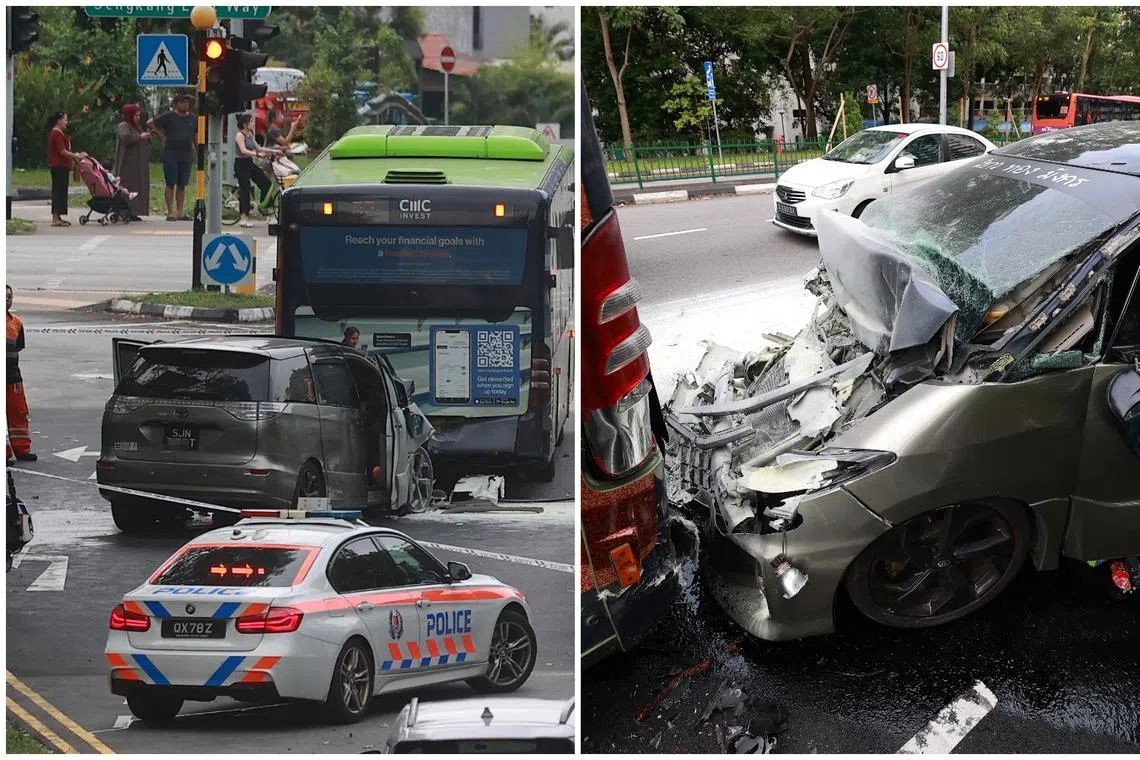
Singapore is grappling with a mounting public safety crisis as drug-impaired driving claims lives at alarming rates, with recent traffic accidents revealing a troubling pattern of substance abuse behind the wheel. Medical professionals are now warning that novel psychoactive substances—particularly etomidate-laced vaporisers marketed as Kpods—pose a serious and underestimated threat to road safety, affecting not only drivers but everyone sharing the road. The concern has intensified following a series of high-profile cases in June that saw three men charged with drug-related driving offences, each detection arising only after their vehicles collided with other traffic, buses, or fixed structures.
Clinical toxicologist Jonathan Tang from the Emergency Medicine Department at the National University Hospital has become a prominent voice on the issue, drawing from direct experience treating patients injured in drug-impaired accidents. According to Tang, etomidate creates driving impairment comparable to alcohol intoxication, fundamentally degrading the neural functions required for safe vehicle operation. The substance triggers delayed reaction times, compromises hazard perception, and frequently results in loss of vehicle control—a cascade of cognitive failures that transforms ordinary road journeys into potential disasters. Beyond these immediate physical impairments, Tang has documented psychiatric effects associated with etomidate use, including depressed mood, increased aggression, impulsivity, and even suicidal ideation, all of which further compromise judgment and decision-making behind the wheel.
The scale of the problem became starkly apparent when Coordinating Minister for National Security K. Shanmugam revealed parliamentary figures in February 2025. Between 2023 and the present, Singapore recorded 38 traffic accidents directly linked to drug and etomidate use, resulting in 19 fatalities. What makes this figure particularly alarming is the acceleration curve: of the 38 accidents, 29 occurred in 2025 alone, with 18 of those specifically involving etomidate and seven involving combinations of both drugs and etomidate. This trajectory suggests the phenomenon is not merely a persistent problem but an exponentially worsening crisis, with the potential for much more severe impacts if intervention measures are not rapidly scaled up.
One incident exemplifies the human tragedy underlying these statistics. In May 2025, a vehicle collided with a bus in Punggol, killing a 28-year-old female passenger. Police subsequently discovered 42 vaporisers and more than 1,200 pods in the vehicle, many containing etomidate. Toxicology testing confirmed the presence of etomidate in both the driver's and the deceased woman's bloodstream, underscoring how these substances affect not just the individual making poor choices but innocent bystanders who have no control over or awareness of the danger they face. The discovery of such large quantities of paraphernalia in a single vehicle suggests not isolated recreational use but potentially distribution or trafficking of these novel psychoactive substances.
Singapore's overall traffic fatality landscape has deteriorated significantly. The year 2025 recorded 149 deaths on the roads—a 10-year high compared with 141 deaths in 2016 and 142 in 2024. Simultaneously, the number of injured road users climbed from 9,342 in 2024 to 9,955 in 2025. These figures reflect both the increasing prevalence of drug-impaired driving and broader traffic safety challenges that extend beyond substance abuse. The spike is particularly concerning for a city-state with one of the world's highest vehicle densities and among the strictest traffic enforcement regimes, suggesting that even well-resourced regulatory frameworks struggle to address emerging threats posed by novel psychoactive substances.
Three men appeared in court in June 2025 facing serious charges stemming from their impaired driving incidents. Mohamed Firdouz Mohamed Akram, aged 36, faced multiple charges including dangerous driving causing injury after his vehicle collided with a taxi in Kallang, injuring both the cab driver and a passenger. He subsequently fled the scene but was apprehended with evidence of methamphetamine consumption, along with drugs, vaporisers, and weapons recovered from his vehicle. Puah Zhe Cong, 34, faced the most grave charges, including dangerous driving causing death and failure to stop after an accident, allegedly while under the influence of etomidate and responsible for one death and two injuries. Sivakandesh, 32, crashed his Mercedes-Benz into a rubbish chute in Yishun Street, striking bollards and a parked vehicle, having allegedly consumed methamphetamine; investigators notably found the registration plates removed from his vehicle after the incident.
Despite existing legal frameworks, enforcement faces inherent challenges with novel psychoactive substances. Under current Singapore law, drivers convicted of operating a vehicle while under the influence of intoxicating substances face up to one year imprisonment and fines reaching S$10,000 for first-time offences, with penalties doubling for repeat offenders. However, these deterrents appear insufficient, particularly given the proliferation of substances like etomidate through vaporiser delivery systems that may evade conventional drug testing protocols and public awareness. When Traffic Police assess motorists involved in accidents, they now conduct tests for impairment; if drug or etomidate use is suspected, blood testing becomes mandatory. Yet the reactive nature of this approach means detection occurs only after accidents have already happened and potential harm inflicted.
The challenge extends beyond Singapore's borders and into a broader Southeast Asian context relevant to Malaysian observers. The use of novel psychoactive substances delivered through vaporisers represents a transnational phenomenon, with drug manufacturing and distribution networks often spanning multiple countries in the region. Malaysia's own road safety challenges and the increasing prevalence of designer drugs suggest that the etomidate-Kpod phenomenon present in Singapore could eventually emerge or may already be present in Malaysian urban centres. The clinical insights gained from Singapore's emergency medicine departments offer valuable information for Malaysian healthcare and law enforcement professionals preparing to address similar threats.
From a public health perspective, the emphasis Tang places on the psychiatric and cognitive effects of etomidate highlights a critical gap in harm awareness and public messaging. Most road safety campaigns focus on alcohol and traditional drugs, leaving substances like etomidate in a regulatory and informational void where users may not fully understand the driving impairment risks. Vaporisers themselves carry a deceptive veneer of legitimacy or diminished danger compared with other consumption methods, potentially lowering users' perceived risk. Educational initiatives targeting young drivers and recreational users remain limited, creating an environment where these substances proliferate with relatively low social stigma or understanding of consequences.
Looking forward, Singapore's authorities face pressure to implement more proactive measures beyond post-accident detection and prosecution. Enhanced roadside testing capabilities, expanded driver education programmes specifically addressing novel psychoactive substances, stricter regulation of vaporiser sales and ingredient labelling, and inter-agency coordination between health, law enforcement, and traffic authorities become essential. The spike in 2025 accidents suggests a window is closing—the longer these substances remain inadequately addressed through public health and prevention channels, the more deeply embedded they may become in certain user populations and the harder subsequent control efforts will prove.
For Malaysia and other Southeast Asian nations observing Singapore's struggle, the situation serves as both warning and case study. The rapid emergence and proliferation of etomidate-based vaporisers demonstrates how novel psychoactive substances can infiltrate markets and user communities with surprising speed, outpacing regulatory responses. Investment in early detection systems, cross-border intelligence sharing, and coordinated public health messaging becomes prudent policy even in jurisdictions where such substances have not yet created visible crises. The human cost—measured in lives lost, families devastated, and innocent bystanders harmed—underscores the urgency of treating this not merely as a law enforcement problem but as a multifaceted public health emergency requiring sustained, coordinated, and creative responses.

