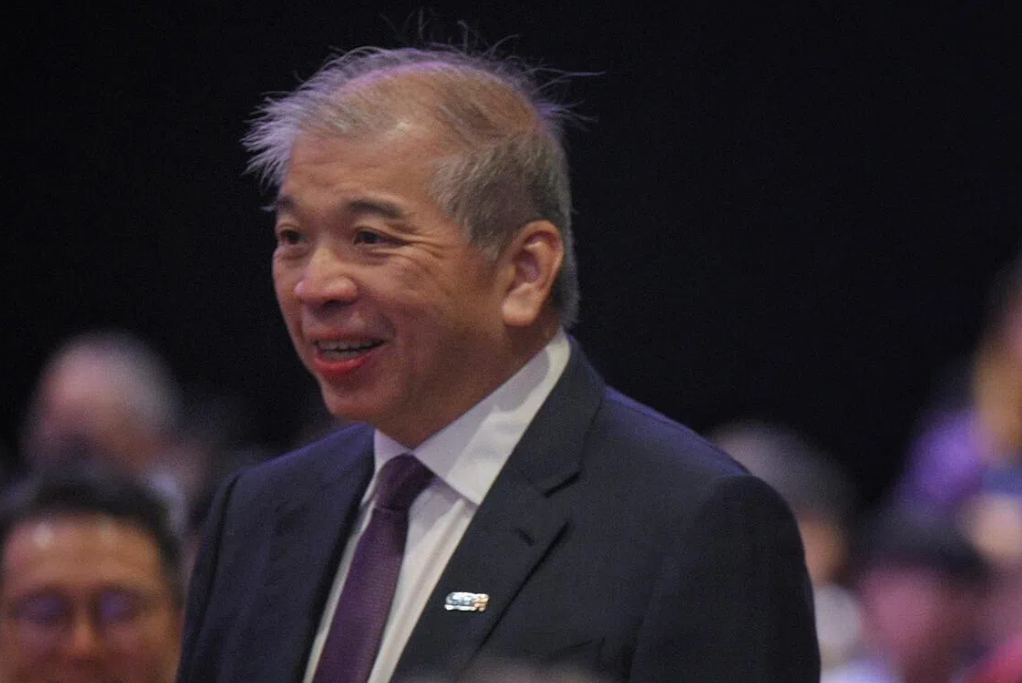
A major legal challenge to Singapore's prominent shipping magnate Teo Siong Seng has emerged in the United States, with two separate civil lawsuits now targeting him and other executives allegedly involved in a shipping container price-fixing scheme. Filed in California's federal court, these private litigation cases represent a significant escalation beyond the criminal charges already brought against the industry figures, signalling that affected businesses are now seeking substantial financial compensation for alleged losses stemming from coordinated price manipulation.
The civil complaints were initiated by two American firms—manufacturing company C.A. Spalding Company and transportation business Daybreak Express—who filed their cases on June 2 and 9 respectively in the District Court for the Northern District of California. Both companies are pursuing millions of dollars in damages, contending they were harmed by artificially inflated container prices over an extended period. This parallel legal strategy is typical in American antitrust cases, where criminal prosecution by government authorities is often followed by class-action and individual civil suits seeking treble damages—triple the actual financial losses—a punitive mechanism designed to deter corporate wrongdoing.
The lawsuits draw directly from a criminal indictment filed in January and unsealed in May by the US Department of Justice, which accuses five major container manufacturers of orchestrating a coordinated scheme to restrict global supply and drive up prices. The companies implicated are China International Marine Containers (CIMC), Shanghai Universal Logistics Equipment, CXIC Group Containers, Singamas Container Holdings—where Teo serves as chief executive—and two unnamed manufacturers. According to investigators, these firms collectively produce approximately 95 per cent of the world's standard dry containers, giving them enormous market power and the ability to influence global shipping costs.
The alleged conspiracy operated through remarkably deliberate mechanisms designed to maintain production discipline across manufacturing networks. Prosecutors contend that company executives agreed to limit the number of shifts and operating hours on each production line, creating artificial scarcity of containers. Most strikingly, the cartel allegedly installed 87 video surveillance cameras across 49 production lines at various factories to monitor compliance with agreed output restrictions, demonstrating the systematic nature of the alleged coordination. This surveillance apparatus suggests executives maintained constant vigilance to ensure no member defected by exceeding production quotas.
The financial impact of this alleged manipulation was substantial. Court documents reveal that standard 20-foot container prices more than doubled during the three-year period from 2019 to 2021, climbing from approximately US$1,600 to US$3,500. This represents a 119 per cent increase in a fundamental component of global supply chains, affecting importers and exporters worldwide. For maritime-dependent economies like Malaysia, such price movements have cascading effects on trade competitiveness and business costs, making this case of particular regional relevance.
The cartel members themselves captured enormous profits from these inflated prices, suggesting the scheme was highly profitable for participants. CIMC's container manufacturing profits surged dramatically, increasing from approximately 137 million yuan in 2019 to 1.99 billion yuan in 2020, then exploding to 11.3 billion yuan in 2021. Singamas Container Holdings, where Teo holds the top position, demonstrated even more dramatic financial turnaround, shifting from a 110 million US dollar loss in 2019 to a 186.8 million US dollar profit just two years later. These figures substantially exceed industry-wide profit growth rates and suggest the companies benefited disproportionately from the alleged price-fixing arrangement.
The legal mechanism of treble damages substantially raises the stakes for defendants. If the companies and executives are found liable, courts could order them to pay three times the verified losses suffered by American businesses. This penalty structure is intentionally severe, designed to make antitrust violations economically catastrophic and thereby discourage future coordination. For multinational companies with significant US operations and assets, the potential exposure extends far beyond the immediate damages, potentially affecting their global operations and access to American markets.
Court records show that summonses were formally issued on June 8 and 11, requiring all named defendants to submit formal responses within 21 days of service. Failure to respond could result in default judgments, meaning courts would accept the allegations as proven and proceed to damages calculations. The defendants named alongside Teo include Mai Boliang, former CIMC president and chief executive who became chairman in August 2020; Huang Tianhua, CIMC vice-president; Wan Yongbo, general manager of CIMC's Operation Management Centre; Li Qianmin, general manager of Shanghai Universal Logistics Equipment; and Zhang Yuqiang, chief executive of CXIC Group Containers. Additionally, Singamas marketing director Vick Ma is named, though he is currently detained in France awaiting extradition to the United States following an April arrest.
Teo has declined to comment publicly on the civil lawsuits, maintaining silence beyond brief statements regarding his legal situation. The 71-year-old has taken leave from multiple high-profile positions since being named in the US indictment, including his roles as executive chairman of Pacific International Lines, chairman of the Singapore Business Federation, board member of Enterprise Singapore, and pro-chancellor of the National University of Singapore. These withdrawals underscore the reputational damage and potential liabilities that major antitrust accusations carry in Singapore's business community and internationally.
Significantly, Teo announced on May 28 that he will not seek reelection as Singapore Business Federation chairman when his term concludes on June 24, 2025. His election to this prestigious position occurred just eight days earlier on May 20, making his brief tenure and rapid departure a reflection of how swiftly serious legal allegations can destabilize leadership positions in Singapore's closely-watched business establishment. He previously served as SBF chairman from 2014 to 2020, completing three consecutive two-year terms with apparent distinction before this dramatic reversal.
In his sole public statement addressing the accusations, issued on May 28, Teo remarked that he had proactively decided to take leave from his various roles to afford himself adequate time to manage the legal matter and to protect the interests of the organizations he represented. This measured statement avoided any admission or denial of wrongdoing, instead emphasizing his preference for addressing the allegations outside the public spotlight. For Malaysian business circles and regional trading partners, Teo's situation represents a cautionary tale about the increasingly aggressive enforcement of antitrust laws across different jurisdictions and the reputational and financial risks that senior executives face when accused of participating in cartel activity.