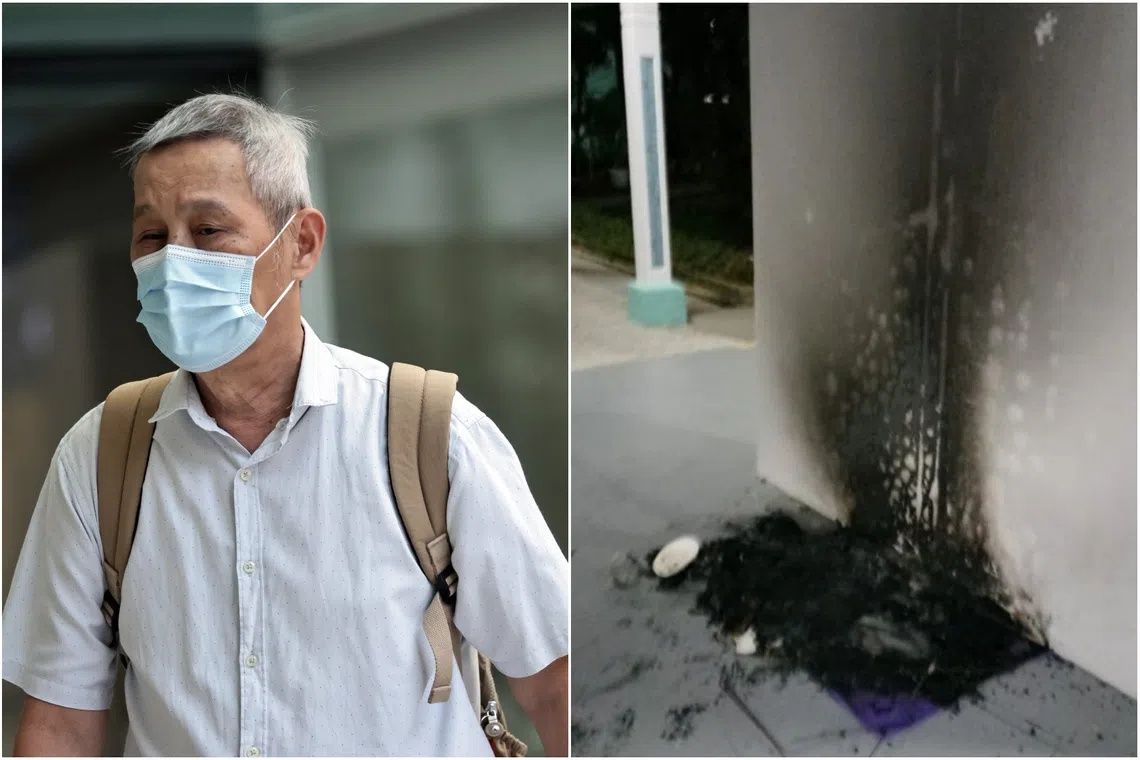
A Bukit Batok retiree has been handed a three-month custodial sentence after deliberately igniting cardboard shelters designed to house community cats near his home, resulting in structural damage that required costly repairs. Koh Teng Boo, 68, pleaded guilty to committing mischief by fire during Tuesday's court hearing, marking the culmination of a dispute that originated from his frustrations with the animal welfare initiative in his residential area.
The dispute began when Koh observed cardboard cat houses being installed around a pavilion and void deck adjacent to his Bukit Batok East Avenue 4 residence in September 2025. These structures, maintained with provisions of food and water, served to provide refuge for the neighbourhood's stray feline population. Rather than accepting the community initiative, Koh grew increasingly bothered by what he perceived as problematic consequences of the arrangement.
According to Deputy Public Prosecutor Stephen Yeo's submission to the court, Koh believed the cat houses attracted birds and other unwanted pests to the vicinity. He expressed particular concern about hygiene standards, noting that residents were disposing of litter directly into the shelters. Seeking resolution through official channels, Koh lodged a complaint with his Member of Parliament, expecting the authorities to take decisive action to remove the structures.
When no visible response materialised to address his grievances, Koh took matters into his own hands in October 2025. He collected three cardboard cat houses and deposited them into an incense burner bin before setting them ablaze. However, his actions merely prompted the installation of replacement shelters, demonstrating that the community cats initiative would persist regardless of his objections.
Undeterred by the reappearance of the cat houses and interpreting the situation as institutional indifference to his concerns, Koh made another appeal to his MP in November 2025. During this second approach, he reiterated his opposition to the practice, emphasising that his complaint stemmed from hygiene considerations rather than any personal animosity towards cats themselves. The distinction proved immaterial to the outcome.
On November 19, following an evening of alcohol consumption, Koh walked home in the early hours of the morning and resolved to take action once more. At approximately 1.30am, he produced a lighter and deliberately ignited another cat house before departing the scene without extinguishing the flames or alerting anyone to the fire's presence. The circumstances surrounding how the fire was eventually brought under control remained unclear following subsequent investigations.
The situation escalated the following day when Koh, galvanised by fury at the continued presence of the shelters, set fire to yet another cat house on November 20. On this occasion, two individuals passing through the area observed the burning structure and intervened to suppress the flames before significant escalation could occur. These witnesses proved instrumental in the subsequent investigation, and Koh was apprehended the same day.
The financial toll of Koh's actions extended beyond the destroyed cat houses themselves. The Jurong-Clementi-Bukit Batok Town Council incurred S$913 in expenditure to rehabilitate the flooring and wall surfaces in the vicinity of the burnt shelters. In a demonstration of accountability, Koh satisfied his financial obligation by making complete restitution to the town council, potentially influencing the court's sentencing determination.
The legal framework governing such offences carries substantial penalties. Individuals convicted of committing mischief by fire with deliberate intent to damage property face potential imprisonment of up to seven years alongside financial fines. Koh's three-month sentence therefore represents a relatively measured application of the available sentencing range, likely reflecting his guilty plea, his age, and his decision to compensate the council for damages incurred.
This case illuminates broader tensions within urban residential communities regarding animal welfare initiatives and environmental management. While community cat programmes aim to address stray animal populations humanely, residents harbouring concerns about hygiene, pest attraction, or aesthetic impact may pursue alternative remedies. The incident demonstrates the importance of dialogue between residents, elected representatives, and community organisers when implementing welfare programmes that affect shared living spaces. Had genuine efforts been made to address Koh's legitimate sanitation concerns through modification of the cat house maintenance protocols, the escalation to criminal conduct might have been averted, suggesting that community engagement remains essential even when individual objections seem unreasonable to others.

