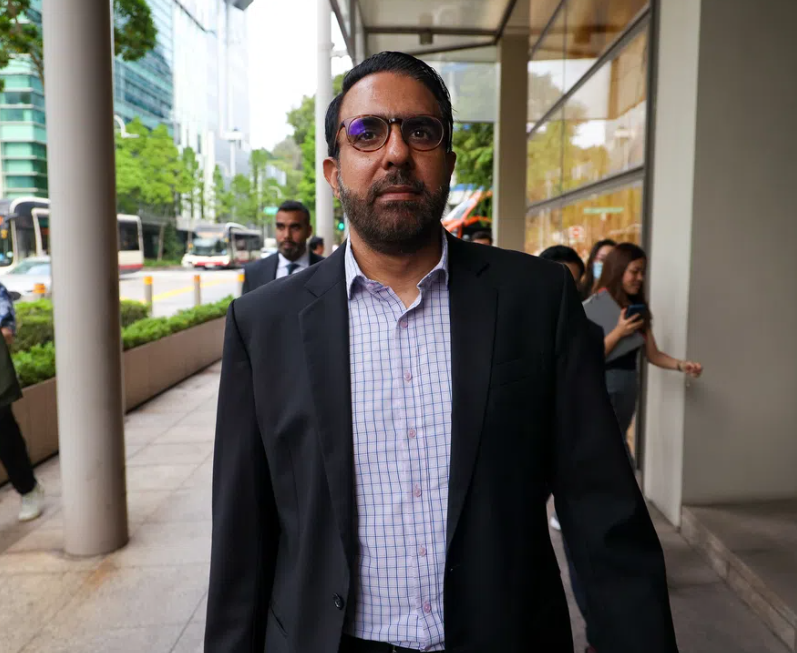
Singapore's legal regulator will formally request the removal of Workers' Party chief Pritam Singh from the lawyer's register at a disciplinary hearing scheduled for August 13, marking the culmination of a drawn-out process stemming from his conviction on perjury charges. The non-practising lawyer and Aljunied GRC MP faces potential disbarment before Singapore's highest disciplinary body for legal professionals, a development that underscores the severe consequences courts impose on members of the judiciary and legal fraternity who breach fundamental principles of honesty and integrity.
Pritam's legal troubles began with a parliamentary scandal in 2021 when fellow Workers' Party MP Raeesah Khan made false statements in Parliament regarding an alleged sexual assault case she claimed was mishandled by police. The incident triggered parliamentary inquiries and investigations that eventually revealed Pritam had given dishonest testimony to the Committee of Privileges while attempting to address the fallout from Khan's misleading statements. In February 2025, he was convicted on two counts of lying under oath, a verdict that subsequently triggered the Law Society's mandatory disciplinary action against him.
Although Pritam mounted a legal challenge, the High Court dismissed his appeal in December 2025, and he was ordered to pay a $14,000 fine. The judicial system's handling of his case has demonstrated consistency in applying stringent standards to legal professionals who misrepresent facts to official bodies. The Law Society, bound by the Legal Profession Act, has no discretion in bringing disciplinary proceedings once a lawyer has been convicted of offences involving fraud or dishonesty—making the August hearing a formal process rather than a decision on whether to prosecute.
The Court of Three Judges, comprising Chief Justice Sundaresh Menon, Justice Kannan Ramesh and Justice See Kee Oon, will preside over Pritam's case as the highest disciplinary tribunal for Singapore's legal profession. This court wields considerable authority, capable of imposing sanctions ranging from suspension lasting up to five years and fines reaching $100,000 to complete removal from the rolls. However, judicial precedent in Singapore has established that striking off—or disbarment—functions as the presumptive penalty for misconduct involving dishonesty, a standard that applies unless exceptional circumstances warrant deviation.
Recent jurisprudence reinforces this approach. In July 2026, a lawyer convicted of deceiving police officers regarding a drink-driving incident was struck off the rolls after the court determined no exceptional grounds existed to justify a lighter punishment. This consistency in applying disbarment for dishonesty-related offences suggests Pritam faces an uphill battle to convince the three-judge panel that his case warrants departure from established precedent. Legal analysts in the region note that Singapore's judiciary has maintained a particularly stringent stance towards legal professionals who breach fiduciary duties or mislead official bodies, reflecting the profession's foundational reliance on trustworthiness.
The implications extend beyond Pritam's personal circumstances. His case illustrates the intersection between parliamentary accountability, criminal law and professional regulation in Singapore's system. Politicians who are also lawyers occupy a unique position, subject simultaneously to electoral accountability, parliamentary discipline, criminal courts and professional oversight. When these overlap, as they have in Pritam's situation, the cumulative consequences can prove severe and career-ending.
Within Singapore's political landscape, the Workers' Party has already demonstrated its own accountability mechanisms. On April 30, following the court conviction, the party's central executive committee issued a formal letter of reprimand after its disciplinary panel found that Pritam had violated two articles of the party's Constitution. This internal discipline preceded the Law Society's external proceeding, suggesting the party sought to address the matter through its own governance structures while the legal process unfolded separately.
For the broader Southeast Asian legal community, Pritam's disciplinary case carries cautionary weight. Lawyers across the region navigating complex political environments face similar scrutiny regarding their professional obligations versus their political roles. Singapore's unambiguous application of disbarment for dishonesty-related convictions sets a clear standard that transcends political consideration or public office, reinforcing that membership in the legal profession demands adherence to standards of truthfulness that cannot be compromised by other roles or circumstances.
The August 13 hearing will likely prove brief in substance, given that the Law Society has already secured conviction evidence and judicial precedent strongly favours the presumptive sanction. The real question confronting the three-judge panel involves whether Pritam can identify exceptional circumstances sufficient to persuade the court that disbarment would be disproportionate. Legal observers suggest such arguments appear unlikely to succeed given the established jurisprudence and the gravity of lying under oath to a parliamentary committee.

