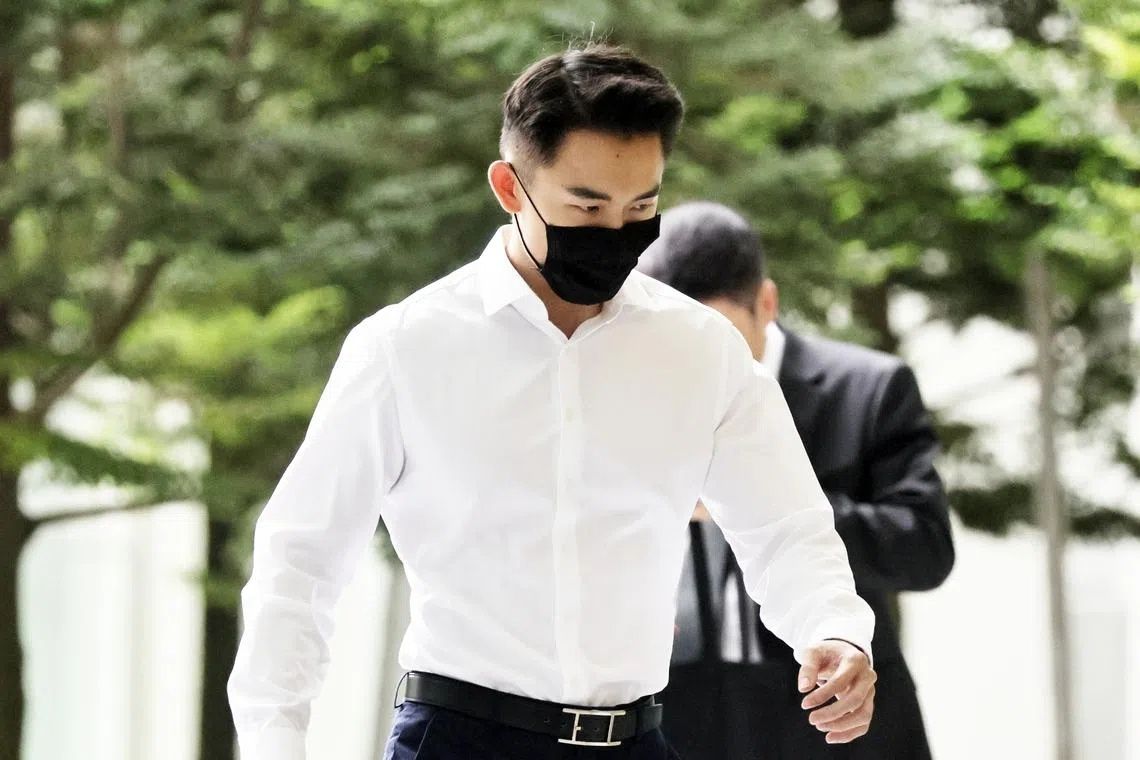
A medical professional in Singapore has been convicted of drug consumption after authorities discovered him at a private gathering that descended into a narcotics operation. Rayson Lee Rui Sheng, 36, faced conviction for consuming MDMA, commonly known as ecstasy, at an event held within a villa at the Sofitel Singapore Sentosa in August 2023. The ruling, delivered on June 30, marked the conclusion of legal proceedings that hinged on competing narratives about voluntary consumption versus involuntary ingestion of controlled substances.
The incident began when police responded to information about suspicious activity at the upscale hotel property. Officers arrived at approximately 5.30am on August 9, 2023, and discovered materials consistent with controlled drug use. The Central Narcotics Bureau was subsequently mobilised, expanding the operation into a comprehensive investigation that would ultimately ensnare 49 male attendees ranging in age from 21 to 46 years old. During the search, authorities recovered substances identified as ecstasy and ketamine, along with equipment used in drug administration. The scale of the operation underscored the seriousness with which Singapore's drug enforcement agencies treat such incidents.
Alongside Lee, a 29-year-old identified as Tan Li Ming was also convicted of a single count of drug consumption. Both men submitted biological samples for analysis, with the Health Sciences Authority detecting MDMA in their urine and traces of both ecstasy and ketamine in their hair samples. These findings provided objective evidence of substance intake, though the legal battle centred on the critical question of consent and awareness. The prosecution team, represented by Deputy Public Prosecutors Jocelyn Teo and Dhiraj G Chainani, constructed their case around these laboratory results, treating them as definitive proof of consumption rather than as a starting point for interpretation.
The defence strategy pursued by both defendants diverged sharply from this biochemical clarity. Both men contested the charges vigorously, asserting that their beverages had been tampered with without their knowledge. Lee claimed to have consumed three drinks provided by individuals he did not recognise, while maintaining he observed no pills, drug paraphernalia, or overt drug use during the evening. Tan offered a more elaborate account, describing a scene in which he allegedly witnessed unknown individuals using syringes to inject liquids into plastic cups at a pantry area. According to his testimony, he questioned one of these individuals about the substance being administered, receiving a cryptic response about something called "G-water" that would produce intoxication.
District Judge A Sangeetha proved unmoved by these narratives. The judge noted a fundamental inconsistency in the defendants' positioning: both men claimed their drinks had been spiked, yet they continued consuming additional beverages throughout the evening despite their supposed realisation that something was amiss. This behavioural contradiction undermined their credibility substantially. More damaging still, the judge found that hair analysis revealed prior drug consumption patterns, indicating neither man was unfamiliar with controlled substance use. The judge's remarks that "neither man was a stranger to drug use" functioned as a summary judgment on their character and reliability as witnesses in their own defence.
The prosecutors systematically dismantled the spiking narrative by highlighting the absence of specific identifying details. If the men had genuinely been victims of individuals who doctored their drinks, the Crown argued, they should have retained concrete particulars about their alleged perpetrators. Instead, the defence relied upon vague references to "unknown men" and "unidentified foreign nationals," painting scenarios that prosecutors characterised as hypothetical and speculative rather than evidentially grounded. The charge that the defence strategy amounted to presenting "hypothetical scenarios and unexplained possibilities" reflected the prosecution's assessment that the account lacked the texture of genuine recollection.
A particularly telling element emerged in Lee's cross-examination when he acknowledged having consumed pills on two separate occasions while travelling in Thailand in June 2023, just two months before the Sentosa incident. This admission provided the prosecution with a foundation for arguing that Lee possessed experience with recreational drugs and would have been capable of recognising genuine intoxication, thereby undermining his claim of surprise or unawareness at the hotel gathering. The temporal proximity between his Thai drug use and the Sentosa party suggested a pattern of behaviour rather than isolated lapses in judgment.
The defence team, led by lawyer Tania Chin, faced an additional evidentiary hurdle. The men contested certain aspects of the police investigation, suggesting that authorities had failed to preserve critical evidence in the form of plastic cups that might have contained drug residue. However, the prosecutors effectively countered this argument by noting that even if such cups had tested positive for controlled substances, this would merely confirm that the men had consumed drug-laced beverages rather than proving consumption occurred without their knowledge. The logical flaw in the defence position proved fatal to their case: they could not simultaneously argue that their drinks were spiked while maintaining their ingestion was entirely involuntary.
The circumstances surrounding Lee's arrival at the villa also undermined his credibility. He had attended a birthday celebration at the same location beginning at approximately 8pm on August 8, mingling with acquaintances before departing for a nightclub in the Clarke Quay district. There he encountered Tan for the first time, and the two men subsequently made their separate ways back to the villa during the early morning hours. By the time Lee returned, the gathering had expanded to include numerous individuals he did not recognise, creating an environment markedly different from the original birthday celebration. His decision to accept drinks from strangers in this altered setting, combined with his prior Thai drug experience, painted a portrait of someone making deliberate consumption choices rather than being unwittingly victimised.
For Malaysian observers and legal professionals, the case illustrates Singapore's stringent approach to drug-related offences and the evidentiary standards applied in prosecutions involving controlled substances. The decision to rely on biological evidence while simultaneously scrutinising the credibility of defendants' narrative accounts reflects a judicial methodology that privileges objective scientific findings but remains attentive to patterns of behaviour and witness reliability. The conviction of a medical professional carries particular weight within the professional community, potentially influencing perceptions of drug use within Singapore's higher-income demographic segments.
The broader implications extend to regional discussions about organised social gatherings where controlled substances circulate. The arrest of 49 individuals suggests a level of drug availability and normalisation that concerns public health authorities across Southeast Asia. Singapore's decisive enforcement response, from the dawn raid through to conviction, demonstrates the consequences that both regional and global visitors face when engaging in such activities. The case simultaneously raises questions about the adequacy of consent-based defences in jurisdictions with strict liability frameworks for drug possession and consumption, a tension that reverberates through several common law systems in the region.
Looking forward, the conviction establishes precedent regarding the credibility of spiking claims in Singapore's courts. Future defendants asserting similar narratives will face heightened judicial scepticism, particularly if their accounts lack specificity about alleged perpetrators or if biological evidence suggests prior drug familiarity. The case underscores the Crown's burden of proof while simultaneously demonstrating how thoroughly Singapore's courts will examine defensive claims that rest primarily on speculation rather than concrete evidence. For professionals working in regulated sectors such as medicine, the consequences extend beyond criminal conviction to encompass professional sanctions and reputational damage that fundamentally alter career trajectories.

