Singapore's Internal Security Department has moved against two citizens for extremism connected to the ongoing Israeli-Palestinian conflict, marking the latest enforcement action in what authorities describe as a worrying trend of domestic radicalisation among youth. Cyrus Dzulqarnain Al-Shahriar, 19, received a restriction order on June 24, whilst Tarmizi Mohd Taha, 30, faces a detention order. Both cases illustrate the diverse pathways through which individuals arrive at violent extremist positions, a concern increasingly relevant to security agencies across Southeast Asia grappling with online radicalisation.
Cyrus's journey into extremism began in 2022 when he joined online religious groups to deepen his Islamic knowledge, a reasonable pursuit that took a troubling turn. Exposure to inflammatory content featuring anti-Western and anti-LGBTQ messaging led him to produce social media posts that actively encouraged violence against LGBTQ individuals. The trajectory accelerated following Hamas's October 2023 attack on Israel, when algorithmic recommendation systems and peer reinforcement exposed Cyrus to narratives presenting Hamas's killing of civilians as legitimate jihad. His initial inclination to travel to Gaza to fight alongside Hamas only dissolved due to practical constraints—lack of funds and personal fear—rather than moral conviction.
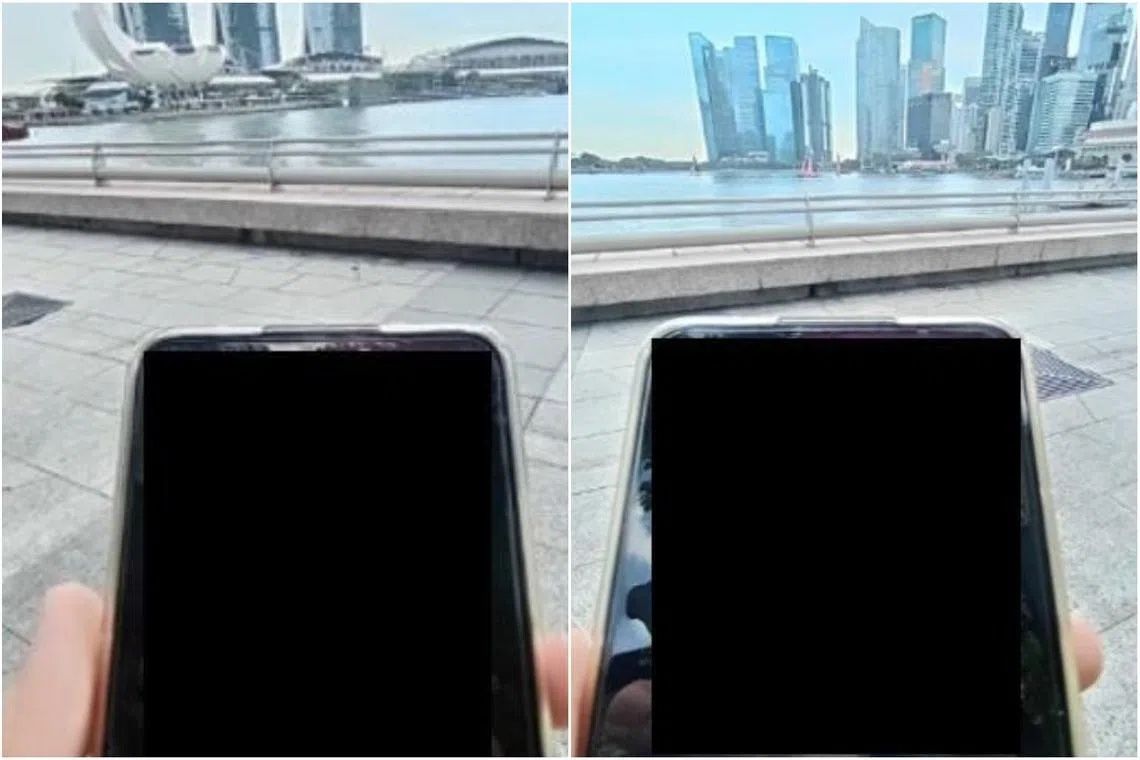
The case takes a darker turn in 2024 when Cyrus encountered an niche online Islamist extremist community practising what authorities term "composite violent extremism" or a "salad bar" approach to ideology. This group fused accelerationist theory, anti-Western sentiment, and a conspiratorial worldview positioning Singapore and other developed nations as extensions of American power and Zionist control. Cyrus's digital engagement rapidly intensified. He began posting content glorifying Al-Qaeda's September 11 attacks and the 2002 Bali bombings, acts that killed thousands of civilians across multiple nations. In November 2025, he pledged formal allegiance to the extremist group by publicly posting photographs he had taken near Marina Bay Sands—images deliberately framed to showcase Singapore's iconic skyline alongside group propaganda.
Beyond jihadist narratives, Cyrus's extremism absorbed incel ideology, a concerning convergence that signals the hybrid nature of contemporary radicalisation. After consuming content about mass shooter Elliot Rodger, who killed six people in California in 2014, Cyrus identified with incel subculture—communities of predominantly young men who blame society and women for romantic rejection. Within this framework, he posted explicit threats of violence and sexual assault against women, employing dehumanising language such as "foid." He developed fantasies about committing mass violence in school settings targeting LGBTQ students and heterosexual couples, though these thoughts never progressed to planning or preparation stages. The intersection of jihadist extremism with misogynistic violence represents a particularly volatile ideological synthesis.
Tarmizi Mohd Taha presented a starkly different profile yet arrived at comparable conclusions regarding violence. The 30-year-old customer service officer admitted willingness to execute attacks in Singapore if Hamas issued direct orders. His prior experience as a logistics assistant during National Service with the Singapore Police Force heightened the security concern—he possessed specific skills potentially applicable to militant operations and intimate knowledge of law enforcement procedures. His aspiration to contribute to Hamas derived from a belief that such commitment would facilitate his achievement of martyrdom, revealing how extremist narratives reframe violence as spiritual advancement.
Authorities emphasised that whilst the two cases operated independently, the Gaza conflict served as the radicalising trigger for both individuals. They represent the seventh and eighth Singaporeans processed under the Internal Security Act specifically due to radicalisation stemming from the October 2023 Israeli-Palestinian escalation. This figure underscores the capacity of geopolitical conflicts thousands of kilometres distant to catalyse security threats in small, diverse, multicultural societies. The digital transmission of inflammatory narratives and the algorithmic amplification of extremist content mean that geographic proximity to conflict zones is increasingly irrelevant to radicalisation processes.
Cyrus's adoption of composite violent extremism reflects a troubling expansion in how young radicals construct their worldviews. Rather than adhering to coherent ideological frameworks—traditional jihadism, far-right nationalism, or anarcho-communism—these individuals assemble hybrid belief systems by selectively drawing from multiple extremist traditions. They might combine anti-Western jihadist narratives with accelerationist violence theory, incel misogyny with ethnic supremacism, or Hamas apologetics with concerns about Jewish influence. The Internal Security Department noted this represents Cyrus as only the second individual processed under composite violent extremism frameworks, suggesting authorities may be encountering this pattern with increasing frequency among self-radicalised youth.
The rehabilitation prospects for both detainees remain uncertain. Cyrus will undergo a structured regime addressing his radical beliefs, though the confluence of multiple ideological strands and his documented capacity for online agitation presents formidable challenges. His willingness to serve as a publicist for extremist groups, producing propaganda content and harassing opposing voices across social media, suggests deep ideological commitment rather than superficial engagement. The fact that he concealed these activities from family and schoolmates indicates awareness that his positions transgressed community norms, yet this awareness produced no deterrent effect.
For Malaysia and the broader Southeast Asian region, these cases carry direct relevance. Singapore's sophisticated security apparatus and dense surveillance infrastructure detected both individuals relatively quickly, yet similar radicalisation pathways clearly exist throughout the region. The digital networks facilitating extremist recruitment transcend national boundaries, and youth in Malaysia, Indonesia, and Thailand face identical exposure to Gaza-related inflammatory content, jihadist messaging, and incel communities. Regional intelligence agencies must anticipate rising composite violent extremism cases rather than treating them as isolated incidents.
The role of social media platforms and encrypted messaging groups deserves scrutiny. Cyrus's entire radicalisation journey unfolded primarily through digital platforms with minimal oversight. He joined religious groups, encountered extremist content, joined niche accelerationist forums, participated in private chats, and pledged allegiance to militant networks—all online, leaving digital traces that Singapore's authorities eventually detected but which remain invisible to most content moderation systems. The platforms' algorithmic recommendation engines likely amplified extremist material as Cyrus's engagement patterns signalled interest, a documented phenomenon across major social networks.
The incel component of Cyrus's radicalism particularly warrants attention from Southeast Asian researchers and policymakers. Whilst incel ideology has attracted considerable academic study in Western contexts, its proliferation among young men in Asia remains understudied. The overlap between misogynistic violence rhetoric and jihadist extremism creates volatile combinations, as individuals may shift between communities or fuse their ideological commitments. Schools and youth services across the region should develop capacity to identify concerning online activity mixing these elements.
Singapore's continued reliance on administrative detention without trial under the Internal Security Act reflects the perceived severity of these threats. Unlike criminal prosecutions requiring evidence presentation and legal argument, ISA orders permit prolonged restriction or detention based on classified intelligence assessments. For Cyrus, a 19-year-old whose violent ideations remained at the fantasy stage, this represents significant state intervention in the life of a young person. The rehabilitation regime offers potential for ideological disengagement, yet success remains contingent on Cyrus's genuine willingness to abandon extremist frameworks rather than superficial compliance.
Moving forward, the emergence of composite violent extremism among Southeast Asian youth demands coordinated regional responses combining intelligence-sharing, enhanced digital literacy programmes, and community-based intervention approaches. The cases of Cyrus and Tarmizi demonstrate that radicalisation threats in the region are neither monolithic nor static. They evolve, hybridise, and incorporate emerging ideological movements from global extremist communities. Security agencies and civil society organisations must develop increasingly sophisticated understanding of these processes whilst maintaining commitment to rehabilitation and preventing further radicalisation rather than approaching detained individuals solely through punitive frameworks.

