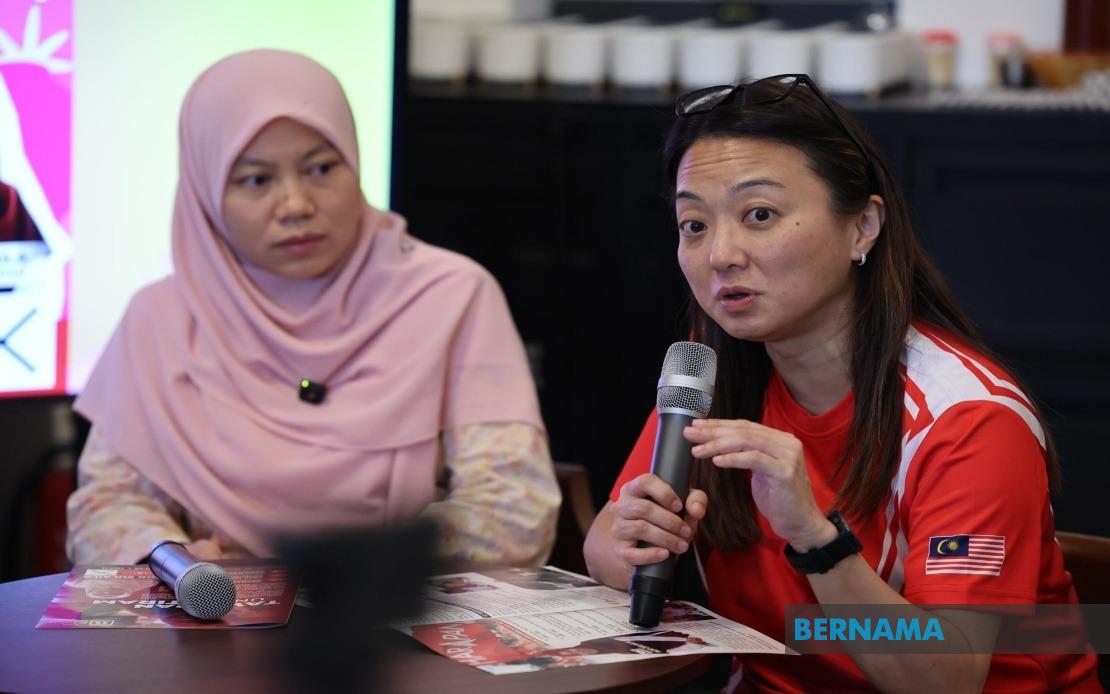
Hannah Yeoh, the DAP's deputy secretary-general and Minister in the Prime Minister's Department for Federal Territories, has pushed back against criticism suggesting that manifestos unveiled by competing parties in the Johor state election are merely duplicated documents lacking originality. Speaking in Johor Bahru after attending a women's engagement programme and launching a community initiative, she reframed the conversation around what identical messaging actually signals about democratic responsiveness.
The controversy surrounding overlapping policy pledges emerged after observers noted substantial commonalities between the Pakatan Harapan coalition's manifesto and that of their Barisan Nasional rivals ahead of the 16th Johor state election. Rather than viewing this convergence as evidence of lazy campaigning, Yeoh argued it demonstrates that parties across the political spectrum are genuinely attuned to the electorate's most pressing concerns. This interpretation reflects a broader political philosophy that mandates and manifestos should spring from constituent demands rather than ideological distinctiveness alone.
Yeoh identified several key policy domains where near-universal agreement makes logical sense. Welfare provisions consistently rank among voter priorities, she noted, as do housing affordability and accessibility—issues that transcend partisan divides because they affect citizens regardless of political affiliation. When nearly every contesting party addresses identical themes, she suggested, this reveals not unoriginality but rather alignment with what communities genuinely need from their elected representatives. The natural consequence is that manifestos addressing the same fundamental problems will inevitably share thematic and policy overlap.
This perspective carries particular weight in Malaysian politics, where state elections often turn on bread-and-butter issues rather than fundamental ideological disagreements. Voters in Johor, like those elsewhere, evaluate candidates primarily on their capacity to deliver tangible improvements to daily life—whether through job creation, improved public services, or enhanced social safety nets. When manifestos converge on these points, they reflect democratic responsiveness rather than a failure of imagination or distinction among competing coalitions.
Beyond defending manifesto similarities, Yeoh highlighted DAP's approach to candidate selection, particularly regarding gender representation. The party has fielded eight women among its 17 candidates across the state, a decision she framed as evidence of commitment to dismantling barriers within Malaysia's political structures. This representation matters not merely for symbolic reasons but because women legislators bring different perspectives and priorities to policymaking, ultimately enriching governance outcomes.
Yeoh's remarks about female candidates carried implicit criticism of entrenched stereotypes within Malaysian politics that persistently underestimate women's capacity for high office. She asserted plainly that women candidates possess the skills and experience necessary not only to hold significant parliamentary portfolios but potentially to serve as Menteri Besar—the chief executive of the state—if voters grant them that mandate. This statement challenges conventional assumptions about which candidates merit serious consideration for leadership positions.
The minister highlighted Nor Zulaila Abd Ghani, DAP's candidate in the Tiram constituency, as a concrete example of the calibre of female representation the party is promoting. Abd Ghani brings twelve years of administrative experience accumulated across municipal, state, and federal government levels—a professional background that positions her among the more seasoned candidates in the contest. Her background demonstrates that women candidates are not tokens but substantive contributors with genuine expertise in public administration.
Yeoh further noted that Abd Ghani's personal background—with a Malay mother and Chinese father—embodied the kind of intercommunal bridge-building that Malaysian politics requires. In a context where racial sensitivities remain potent political factors, candidates who transcend ethno-religious boundaries through lived experience carry symbolic and practical value. Such individuals can help normalize cross-community conversations and model the kind of harmonious pluralism that the nation aspires toward.
The Tiram contest itself demonstrates the competitive intensity of the 16th Johor state election, with Abd Ghani facing opposition from Barisan Nasional, Parti Bersama Malaysia, and Perikatan Nasional candidates in a four-cornered race. This fragmentation reflects shifting political alignments in Johor, where the traditional two-coalition framework has splintered, creating opportunities for both established and emerging political players.
Packatan Harapan is mounting a comprehensive statewide campaign, contesting all 56 seats up for election. The coalition's decision to contest universally reflects confidence in its platform and candidates, though it also spreads resources across a broad geography. Polling day is scheduled for July 11, with early voting beginning on July 7, giving voters multiple opportunities to participate in what analysts view as a consequential electoral moment for Johor.
The election occurs amid broader shifts in Malaysian politics, including realignments within Malay-Muslim constituencies and evolving urban-rural voting patterns. Johor, as one of Malaysia's largest and most economically significant states, holds outsize importance for national political trajectories. Results from the state election will likely signal whether Pakatan Harapan can rebuild support following their 2023 federal electoral setback, or whether Barisan Nasional and other coalitions have successfully consolidated opposition to the federal government.

