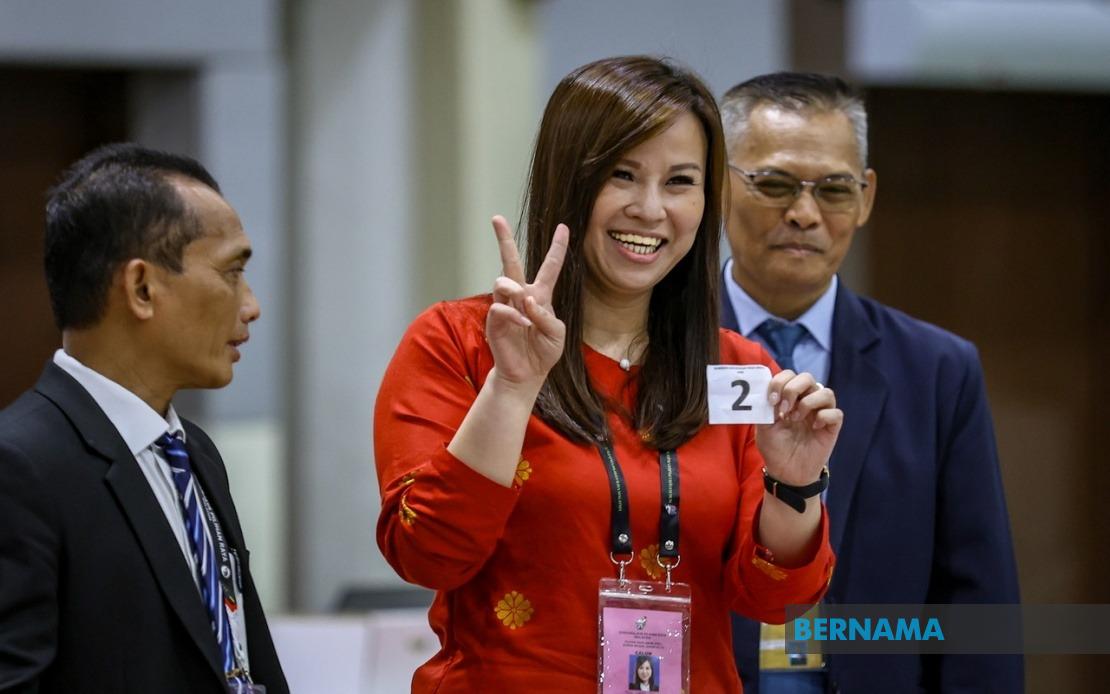
The 16th Johor state election race in Permas is taking shape as Pakatan Harapan candidate Sharon Teo sets her sights on dislodging incumbent Baharudin Mohamed Taib, with infrastructure quality and community welfare forming the twin pillars of her electoral strategy. At the nomination proceedings held at Dewan Muafakat in Taman Mawar, Teo outlined her priorities drawing directly from grassroots feedback gathered during constituency visits, signalling an approach rooted in constituent engagement rather than pre-formed policy positions.
The chief of Johor Amanah Women's Youth has identified road safety and maintenance as a cornerstone issue demanding immediate action. In her remarks to the media, Teo emphasised that deteriorating road conditions represent more than mere inconvenience—they constitute a genuine public safety hazard affecting daily commutes and emergency response times. This focus on basic infrastructure reflects a broader pattern in Malaysian electoral politics where state-level candidates increasingly campaign on bread-and-butter issues rather than abstract ideological positions, particularly in urban and semi-urban constituencies like Permas where motorists depend heavily on local road networks.
Teo's background includes previous experience as an aide within the Pulai parliamentary constituency under the late Amanah deputy president Salahuddin Ayub, providing her with exposure to legislative processes and constituency management at the federal level. This experience informs her understanding of how state assemblypersons can leverage their platforms and budgets to drive tangible improvements in their jurisdictions. Her team has committed to releasing a comprehensive manifesto that will detail specific proposals for Permas voters, though details remain under wraps pending an official launch.
The incumbent BN candidate faces a more complex electoral landscape than during his 2022 victory. Baharudin Mohamed Taib has adopted a notably cautious tone heading into polling day, acknowledging that each of his three opponents presents distinct competitive challenges. Rather than projecting confidence, he has framed the contest as inherently demanding, requiring sustained grassroots effort and systematic campaigning to retain his mandate. This somewhat defensive posture contrasts with the proactive messaging from Teo's camp, potentially suggesting internal BN polling may be tighter than publicly acknowledged.
Barahudin's decision to forgo a personal manifesto in favour of relying on the broader Barisan Nasional party platform represents a strategic calculation—whether motivated by party discipline or simply by confidence in the BN brand's electoral appeal remains unclear. In Malaysian state elections, such choices often reflect calculations about which branding resonates more strongly in particular constituencies. Whether voters in Permas will view this as principled unity or as a candidate lacking distinct vision for the constituency remains to be determined.
The four-way contest significantly reshapes electoral dynamics from previous cycles. Beyond Teo and Baharudin, T. Vela represents Perikatan Nasional while Dr Zamil Najwah contests for Parti Bersama Malaysia, fragmented opposition potentially benefiting the BN incumbent if anti-government votes split across multiple challengers. However, the presence of a fourth candidate also signals broader shifting voter preferences in certain Malaysian constituencies, with neither PH nor BN commanding unified opposition or support as decisively as in previous electoral cycles.
Permas sits within the Pasir Gudang parliamentary constituency and commands 113,963 eligible voters for this state election, making it a mid-sized assembly seat with considerable political significance. The electorate's size provides sufficient margin that victory margins could range substantially depending on turnout patterns and vote distribution. Urban and semi-urban constituencies in Johor have demonstrated increasing volatility in recent cycles, with voters willing to switch allegiances based on perceived local performance and constituency-specific issues rather than purely national political considerations.
The July 11 polling date follows early voting on July 7, providing a compressed campaign window of less than two weeks from the nomination date for candidates to consolidate support and address voter concerns. This compressed timeframe favours incumbents with established machinery and name recognition, though it also limits opportunities for the incumbent to recover if negative sentiment has already crystallised among voters. For challengers like Teo, the short campaign period necessitates focused, efficient messaging concentrated on bread-and-butter issues with immediate voter resonance.
Road conditions and welfare support resonate particularly strongly in constituencies like Permas where many residents depend on daily vehicular commutes to employment centres and where lower-middle-income households stretch tight budgets. These issues transcend partisan divides and appeal across demographic groups, providing Teo with territory where she can build cross-factional voter coalitions. Conversely, Baharudin's relative silence on concrete policy offerings creates space for opponents to define the election narrative around governance effectiveness and local improvement initiatives.
The Permas election represents a microcosm of broader state-level dynamics across Malaysia, where traditional two-coalition politics have fractured into more complex multi-candidate contests. Voters increasingly signal sophistication in evaluating candidates on local merit rather than simply following party affiliation, particularly in constituencies where government service delivery directly affects daily quality of life. For both Teo and Baharudin, success hinges less on national political winds and more on demonstrating credible capacity to address the potholes and welfare concerns that matter to constituents navigating Permas daily.

