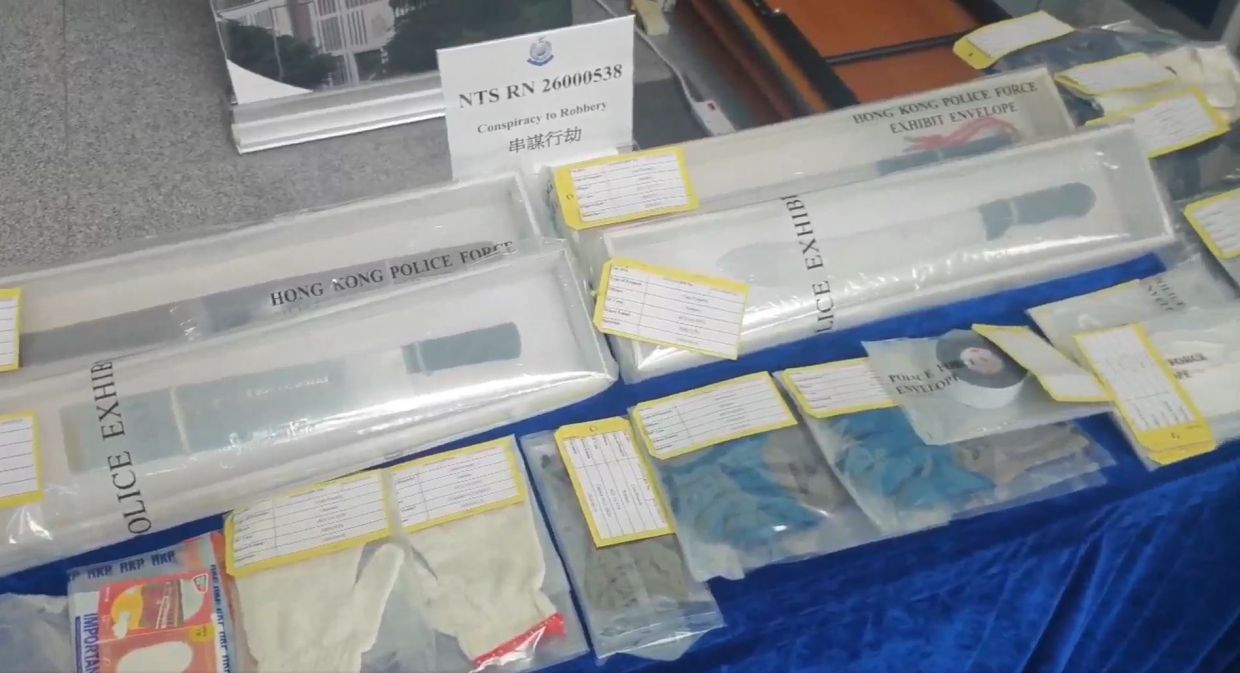
Hong Kong authorities have moved swiftly to dismantle a criminal network responsible for a broad daylight robbery that saw a man stabbed multiple times and relieved of HK$7 million in gold bars at Hong Kong International Airport's car park on Thursday. The rapid apprehension of seven suspects—comprising four men and three women aged between 20 and 39—underscores police efficiency in tracking down perpetrators of high-value theft crimes, with arrests coming within 12 hours of the incident being reported to officers.
The victim, who had travelled from Bali in Indonesia, became a target whilst transporting six gold bars inside his backpack through the airport complex. Intelligence gathered suggests the man was carrying the precious cargo on behalf of a businessman with interests in mainland China. According to police accounts, as the traveller made his way towards the airport car park 3 to retrieve his vehicle, three assailants wearing masks descended upon him in a coordinated attack designed to overwhelm and incapacitate.
The assault was deliberately violent. Armed with knives, the trio inflicted stab wounds to the victim's left hand and foot, demonstrating a willingness to cause serious injury to achieve their criminal objective. Once they had secured the backpack containing the gold bars, the perpetrators made their escape in a seven-seater vehicle, suggesting a level of preparation and organisational sophistication beyond a spontaneous mugging.
Investigative work by Hong Kong police proved effective in the immediate aftermath. Officers recovered both the vehicle used in the getaway and the knives employed in the attack, locating these items in the Tsuen Wan district. Such swift recovery of crime scene evidence typically aids prosecutors in building prosecutorial cases and establishes clear forensic connections linking suspects to the incident.
The victim received medical treatment at Princess Margaret Hospital, where doctors assessed his injuries as stable despite the multiple knife wounds sustained during the robbery. The injuries, whilst serious enough to require hospitalisation, appear not to have posed life-threatening risks to the man's immediate health, though recovery and rehabilitation may take considerable time.
What distinguishes this case from typical street crimes is police assessment that the robbery was far from random. Investigators have concluded that an "insider" likely participated in the planning stages, providing critical intelligence about the victim's flight arrival time and the specific car park location where he would be vulnerable. This element of premeditation and insider knowledge transforms the crime from a petty theft into an organised operation, elevating its significance and warranting more serious conspiracy charges.
Among those arrested, several individuals carry backgrounds connected to triad organisations, Hong Kong's traditional organised crime syndicates. Their involvement suggests connections to broader criminal networks capable of financing and executing sophisticated theft operations targeting high-value assets. Such organisational structures enable criminals to compartmentalise operations, reduce individual risk exposure, and maintain operational security through established hierarchies and protocols.
Police work has extended beyond Hong Kong's borders, as investigators determined that certain suspects involved in planning or executing the robbery have evaded capture by fleeing to mainland China. This cross-border dimension of the case prompted Hong Kong authorities to seek cooperation from mainland law enforcement agencies, reflecting the practical reality of modern crime that frequently transcends administrative boundaries. The willingness of suspects to abandon their home jurisdiction suggests confidence in mainland authorities' reluctance or inability to facilitate extradition back to Hong Kong.
For Malaysian and Southeast Asian readers, this incident illustrates evolving patterns in organised crime affecting the broader region. Cross-border mobility of criminal networks, the targeting of valuable commodities in transit through major transport hubs, and the involvement of organised crime syndicates in orchestrating sophisticated robberies represent growing challenges for regional security. Hong Kong's status as a major international aviation and financial centre makes it particularly vulnerable to such operations, yet the swiftness of police response demonstrates that determined law enforcement action can achieve rapid results.
The insider element raises uncomfortable questions about security vulnerabilities at major airport facilities and the potential for trusted individuals—whether airline staff, logistics personnel, or others with access to flight information—to become compromised through financial incentives or coercion. Malaysian airports and other regional transportation hubs confront similar risks, requiring constant vigilance and updated security protocols to protect high-value shipments passing through terminals.
The incident also underscores the persistent role of triad organisations in orchestrating major crimes despite decades of law enforcement efforts. These hierarchical structures, deep community roots, and established criminal supply chains continue enabling serious offences across Hong Kong and the wider region. Regional cooperation between authorities remains essential for disrupting such networks and pursuing fleeing suspects across jurisdictional lines, a challenge that will likely define law enforcement priorities in Southeast Asia for years to come.

