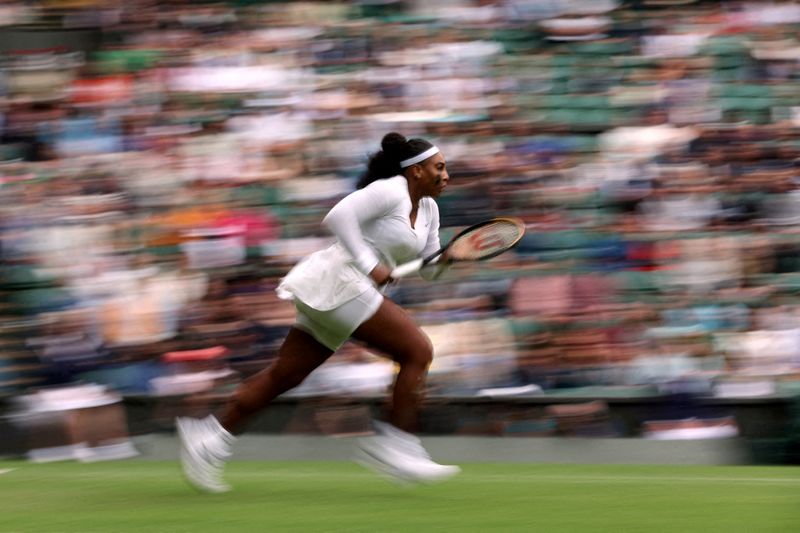
The All England Club's decision to award the final women's singles wildcard at Wimbledon to American tennis icon Serena Williams was never truly in doubt, though the announcement came after a period of speculation. At 44 years old, Williams has engineered a comeback that will instantly recast the entire tournament, transforming what could have been another year of generational transition into a narrative centred entirely on one of sport's greatest athletes. Her acceptance of the invitation represents far more than a player seeking one more chance at competitive glory; it signals the return of a global sporting phenomenon whose influence extends well beyond the tennis court.
Williams' career achievements remain unmatched in the modern era. With 23 Grand Slam singles titles to her name and seven Wimbledon championships, she has dominated the women's game in ways few athletes have managed in any sport. Beyond the statistics lies a legacy of cultural significance that has transcended tennis entirely. The narrative surrounding Williams and her sister Venus has captivated audiences across generations and continents, making their story as much about breaking barriers and redefining excellence as it is about winning matches. Her return to Centre Court therefore carries symbolic weight extending far beyond the immediate tournament context.
The competitive landscape has shifted markedly since Williams made her emotional exit at the U.S. Open in 2020, announcing she was evolving away from tennis. World number one Aryna Sabalenka, defending champion Iga Swiatek, and British hope Emma Raducanu have all carved out significant positions in women's tennis during her absence. Yet the arrival of Williams fundamentally reshapes the tournament's narrative hierarchy. These emerging forces, despite their impressive credentials and recent achievements, will inevitably occupy secondary positions in media attention and public consciousness once Williams takes to the court. This dynamic shift underscores the enduring magnetic quality of her presence at any major tournament.
Williams' preparation for this comeback has been characterised by methodical planning and physical transformation. She used a GLP-1 weight-loss drug to shed 34 pounds, citing her desire to feel healthier and stronger while training intensively. Her recent appearance at Queen's Club alongside Victoria Mboko in doubles competition demonstrated that she remains capable of striking the ball with considerable power and precision. Former world number one Andy Roddick, a respected voice in contemporary tennis, has emphasised that her weapons remain formidable, particularly her serve, which clocked speeds exceeding 120 miles per hour even during her warm-up competition. However, Roddick and other analysts have flagged movement and court positioning as the critical variables determining her singles prospects against younger, quicker opponents.
The psychological dimension of Williams' return cannot be overlooked. Roddick articulated this concept by referencing the "Tiger effect" in golf, suggesting that merely facing Williams across the net carries psychological implications, particularly for less experienced opponents. The aura surrounding a player of her stature, combined with her demonstrated competitive intensity and championship pedigree, creates a distinctive dynamic in matches. Younger players entering Centre Court against Williams will carry the weight of confronting not merely another competitor but a living legend whose accomplishments dwarf those of most players in the draw. This intangible advantage remains one of her most potent assets.
Williams has publicly stated she has nothing to prove, framing her return primarily around personal motivations. She expressed a desire for her daughters Olympia and Adira to watch her compete, suggesting that family considerations have influenced her decision to return. Nevertheless, observers should harbour no illusions about her competitive intentions. Her decision to pursue a singles entry, rather than confining herself to doubles with Venus, indicates a genuine belief that she can compete at the highest levels. The extensive preparation period, extending back to planning stages near the end of 2023, suggests this has been a carefully considered campaign rather than an impulsive decision.
The implications for Wimbledon 2024 extend beyond individual match outcomes. The tournament has faced questions about its narrative coherence following retirements of Federer, Nadal, and Andy Murray, combined with injuries affecting younger stars like Carlos Alcaraz. The men's game continues its generational evolution, yet the women's competition risked becoming overshadowed by other sporting events, particularly in markets where tennis audiences compete for attention against football's World Cup narrative. Williams' participation directly addresses these concerns, providing a compelling story that transcends traditional tennis demographics and captures mainstream media interest globally.
The statistical possibility of Williams equalling Margaret Court's record of 24 Grand Slam singles titles adds another dimension to her return. Having last won a Grand Slam nine years ago, achieving this milestone would represent one of sport's most remarkable comebacks. While observers should maintain realistic expectations about the physical demands facing any player of her age competing against athletes in their athletic prime, the possibility remains genuine enough to have captured the imagination of media and fans alike. Mary Joe Fernandez, providing commentary for ESPN, described the comeback as "remarkable" and emphasised her excitement about assessing Williams' current capabilities.
The draw ceremony on Friday will reveal the competitive architecture of Williams' path through the tournament. Regardless of her opponent positioning, every player remaining in the draw faces the possibility of confronting her. The uncertainty surrounding her movement on court, her stamina across best-of-three set matches, and her ability to handle the pace of contemporary players creates genuine unpredictability. Some analysts harbour legitimate doubts about whether singles competition represents an overly ambitious undertaking for a player who has been away from sustained competition at this level for such an extended period. The gap between exhibition doubles and Grand Slam singles competition remains substantial, particularly when facing opponents who have honed their games against contemporary competition continuously.
Beyond the immediate tournament context, Williams' return carries implications for professional tennis' broader narrative. Her comeback demonstrates that the sport's greatest champions can maintain credible competitive aspirations well into their fifth decade, provided they maintain physical conditioning and mental sharpness. This challenges conventional wisdom about athletic aging in tennis and opens discussions about longevity, training methodologies, and the role of medical support in extending careers. The debate surrounding her use of weight-loss drugs, while initially controversial, has been contextualised by experienced voices as a legitimate training and injury-prevention tool rather than performance enhancement.
The intersection of Williams' personal journey and the sport's larger narrative creates the genuine potential for transformative television and compelling storytelling regardless of on-court outcomes. Whether she progresses deep into the tournament or faces early elimination, the matches will carry inherent drama stemming from her comeback attempt. Television executives, tournament organisers, and sponsors have received an enormous boost from her participation, transforming what could have been a transitional year into an unmissable sporting event. The resonance of her story extends across geographical boundaries and demographic segments in ways few contemporary athletes can generate.
Williams' presence at Centre Court will fundamentally alter the atmosphere and significance of this year's Wimbledon. Her achievements, cultural impact, and enduring competitive spirit combine to create a narrative that supersedes conventional tournament storylines. The outcome of individual matches becomes secondary to the broader significance of her participation, yet the uncertainty surrounding her current capabilities ensures genuine competitive interest remains. For Malaysian and Southeast Asian viewers accustomed to following tennis through digital platforms, her return offers a rare opportunity to witness one of sport's greatest athletes competing in a comeback attempt that transcends traditional sporting narrative.
Ultimately, Williams' return to Wimbledon represents far more than a veteran athlete seeking one final chapter. It embodies questions about resilience, the nature of competitive excellence, and the enduring appeal of authentic sporting drama. Her name alone on the draw transforms the entire tournament, guaranteeing that regardless of other storylines and emerging talents, Wimbledon 2024 will be defined by the comeback of a true tennis titan.

