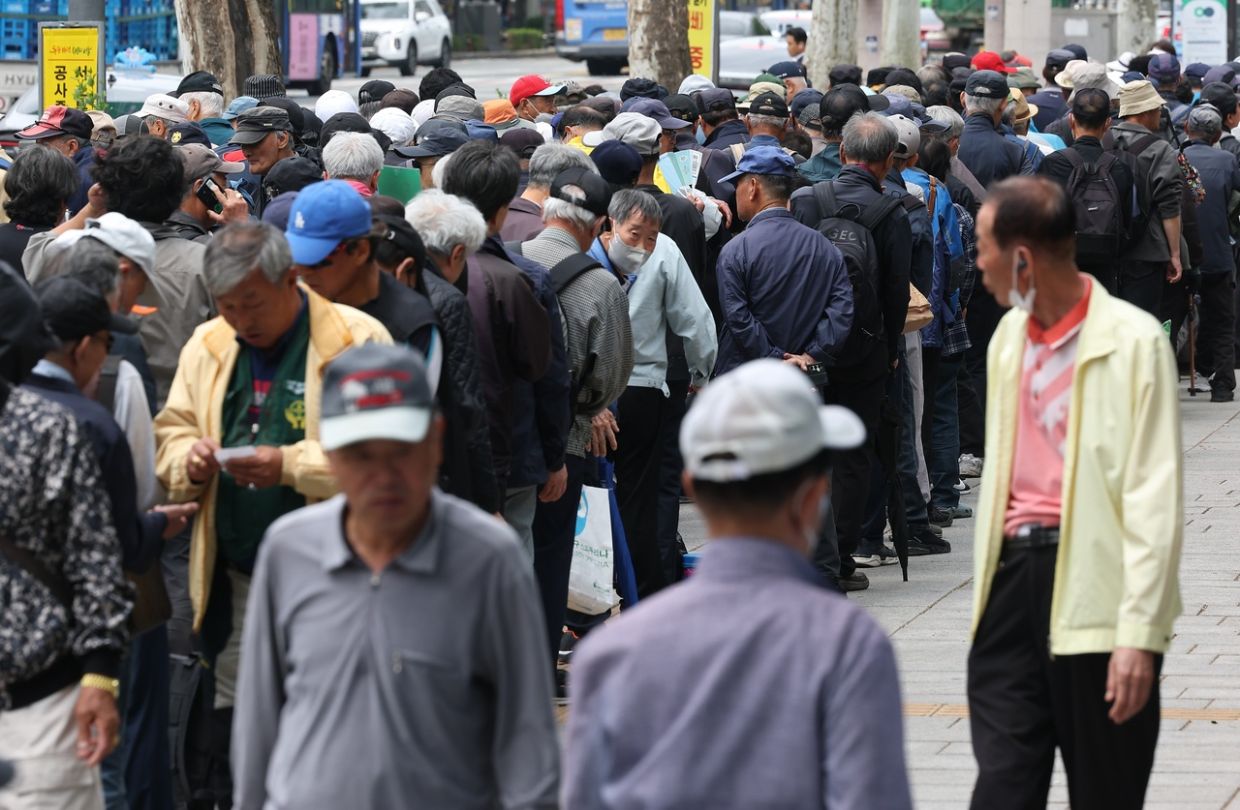
Seoul's city council is moving toward establishing free or subsidised bus travel for residents aged 70 and above, potentially extending decades of free subway access currently granted to those 65 and older. The measure passed a committee vote on Monday (June 15) and awaits a full council decision on Wednesday (June 17), though the plan would only cover regular city and neighbourhood buses, excluding express and intercity services. The timing aligns with a campaign pledge made by Seoul Mayor Oh Se-hoon during June's local elections, reflecting growing political pressure to expand elderly welfare benefits as the city's demographic profile shifts dramatically.
The proposal has ignited considerable debate within Seoul's administration and among fiscal watchdogs, primarily because the city already shoulders substantial financial burdens supporting its ageing population. Currently, 21.2 per cent of Seoul's residents are seniors, a proportion expected to increase significantly in coming years. While free subway travel for those aged 65 and above is politically popular and deeply embedded in Seoul's social safety net, the subway operator has repeatedly argued that these lost revenues constitute one of its primary financial headaches, with losses averaging 364.5 billion won annually over the past five years and reaching 448.8 billion won in 2025 alone.
The financial projections for expanded bus subsidies are substantial. Seoul Metropolitan Council calculations indicate that providing free bus rides to all residents aged 70 and above would cost approximately 104.7 billion won (US$68 million) in the first year, assuming implementation begins in 2027. As the city's population aged 70 and above grows from roughly 1.27 million currently to an estimated 1.63 million by 2031, annual costs would balloon to 127.5 billion won. Over a five-year period, the cumulative expenditure could reach nearly 579 billion won. These figures compound an existing 450 billion won annual subsidy that Seoul already provides to private bus operators to cover their operating losses.
What complicates Seoul's fiscal situation further is the broader context of South Korean labour law developments. Recent court rulings regarding ordinary wages are expected to increase labour costs substantially across the bus industry, adding another layer of financial pressure to municipal budgets already stretched thin. For a city that already contends with significant transportation subsidies, the timing of this proposal raises questions about budgetary priorities and long-term sustainability. Critics argue that Seoul is attempting to expand benefits without demonstrating clear ability to fund existing commitments, creating a mismatch between political promises and fiscal reality.
However, the proposal is not unprecedented in South Korea. Other major cities have already moved in this direction, providing a template for Seoul's consideration. Daegu launched free bus rides for seniors in 2023 and plans to gradually lower the eligibility age from 75 to 70 by 2028, effectively deepening the subsidy over time. Daejeon already offers free bus rides to those aged 70 and older, while Incheon intends to launch a comparable programme for residents aged 75 and above this year. These examples suggest that Seoul would not be charting entirely new territory, though each city faces distinct fiscal circumstances and population dynamics.
Proponents of Seoul's measure emphasise that the current system creates inequities among the elderly population. Residents aged 65 to 69 receive free subway access but must pay for bus travel, and this distinction disproportionately affects those living farther from subway infrastructure or depending primarily on buses for mobility. The gap between free subway and paid bus fares effectively creates a two-tier transportation benefit system that disadvantages seniors in neighbourhoods with limited metro coverage. From this perspective, expanding bus subsidies represents a logical extension of existing policy rather than an entirely novel intervention, ensuring consistency across Seoul's transportation network.
A critical concern raised by policy analysts is the political and institutional difficulty of ever rolling back such benefits once implemented. Sohn Jong-pil, a senior researcher at the Fiscal Reform Institute, warned that welfare programmes involving direct payments or subsidies become entrenched in public expectations and prove extraordinarily difficult to curtail without triggering significant political backlash. Once voters experience free bus rides, eliminating or restricting them would provoke considerable resistance. This dynamic creates a ratchet effect, where benefits can only expand over time, making careful initial design and funding mechanisms essential for long-term fiscal management.
The Seoul Municipal Government has attempted to assuage concerns by emphasising that the ordinance does not mandate unlimited free rides for all seniors aged 70 and above. Instead, it establishes a legal framework that grants the city flexibility in implementation. Policymakers could begin by targeting low-income seniors exclusively, impose caps on the number of subsidised trips per person, restrict support to off-peak hours, or provide partial fare discounts rather than complete fare elimination. This staged approach might allow Seoul to pilot the programme with controlled costs before potentially expanding it. A city official framed the ordinance as creating institutional infrastructure rather than committing to immediate universal benefits.
Yet critics question whether such flexibility would survive contact with political reality. Once a benefit framework exists, constituent pressure to extend coverage tends to overcome initial restrictions. The tension between fiscal discipline and electoral incentives creates persistent pressure for programme expansion. Moreover, the Seoul Metro Corporation's ongoing financial difficulties mean that every won devoted to bus subsidies is a won unavailable for transit infrastructure investment or service improvements that might attract younger riders and broaden the funding base. The decision Seoul faces reflects broader challenges confronting wealthy cities worldwide as ageing populations demand expanding welfare commitments while fiscal resources remain finite.
The debate also raises questions about intergenerational equity and social spending priorities. A growing elderly population receiving subsidised transportation inevitably shifts municipal resources away from younger demographics, whether through reduced investment in other infrastructure, constrained education spending, or deferred maintenance. Seoul's decision-makers must weigh the genuine mobility challenges facing seniors against the opportunity costs of major transportation subsidies. Regional transport officials in Malaysia and other Southeast Asian countries facing similar demographic transitions may find Seoul's experience instructive as they contemplate comparable policy questions about affordability and sustainability.
The ordinance's likely passage would not immediately translate into free bus rides, as Seoul would require additional time to establish implementation details, determine eligibility criteria, calculate subsidy levels, and secure necessary funding approval. Even if the council approves the measure this month, the actual programme launch remains conditional on resolving these administrative and financial questions. This interim period provides Seoul an opportunity to study implementation experiences from Daegu, Daejeon, and Incheon, potentially adopting lessons learned from their programmes. Nevertheless, the fundamental fiscal challenge remains unresolved: Seoul must determine whether its municipal budget can sustain another major transportation subsidy while continuing to claim inability to cover free senior subway losses without central government assistance.

