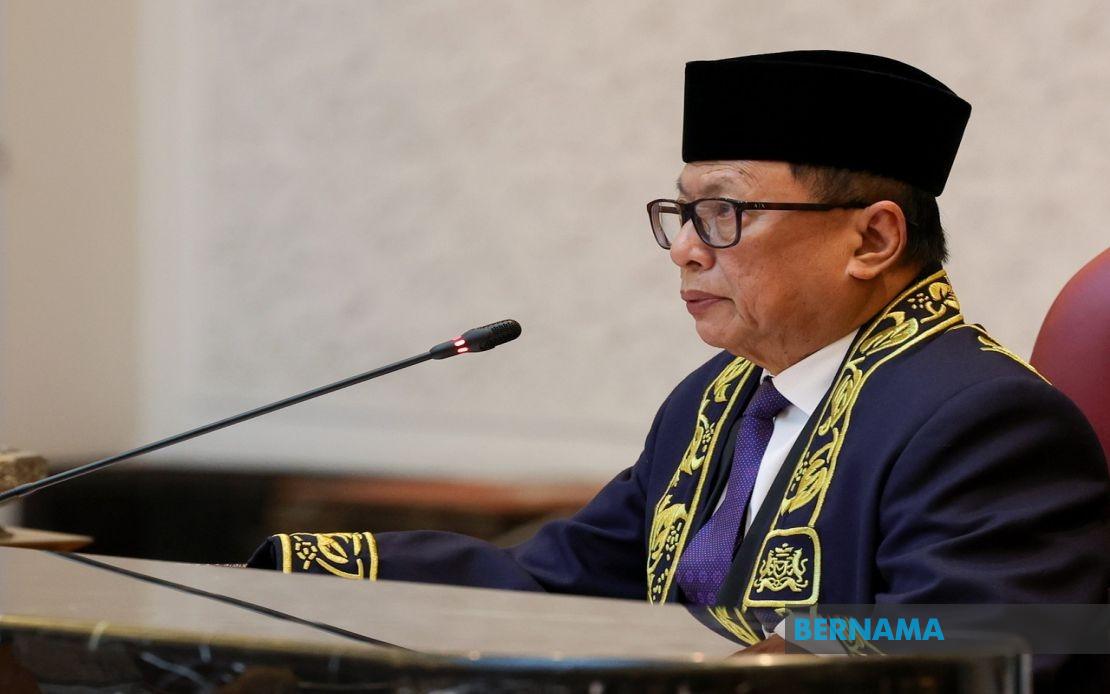
Datuk Dr Mohd Puad Zarkashi, a Supreme Council member of UMNO, announced his immediate departure from the party on June 25, citing the need to speak freely on matters he views as critical to the organisation's future. The Rengit state assemblyman released his resignation statement via Facebook, emphasising that the decision came entirely of his own volition rather than under any external pressure or party coercion. By preemptively stepping down, he sought to spare UMNO the procedural burden of an expulsion process while simultaneously removing any ambiguity about his ability to criticise the party's direction without accusations of disloyalty.
The resignation carries particular weight given Mohd Puad's standing within UMNO's hierarchical structure and his track record of significant roles both within the party and the broader Malaysian government. Beyond his current position as both a Supreme Council member and state assemblyman, he previously served as the Johor State Legislative Assembly Speaker, a post that placed him in direct oversight of parliamentary proceedings and procedures. His prior tenure as Batu Pahat Member of Parliament, Deputy Education Minister from 2009 to 2013, and Director-General of the Special Affairs Department from March 2015 to April 2018 demonstrate a career spanning multiple layers of political influence and administrative responsibility across nearly two decades.
In his statement, Mohd Puad levelled specific accusations at Onn Hafiz, evidently referring to Johor's top UMNO leadership, characterising him as a "pak turut"—a colloquial Malay term for a yes-man or unthinking follower. This terminology, while colourful, signals deep frustration with perceived subordination of leadership principles to higher authority. The metaphor of reducing Johor UMNO to a "tethered puppet" extended the critique further, suggesting that the state party machinery has lost autonomy and capacity for independent decision-making. Such language from a senior council member reverberates beyond routine political disagreement, instead pointing to fundamental structural concerns about how power functions within the party at the state level.
The catalyst for Mohd Puad's departure appears rooted in what he termed irregularities within the Barisan Nasional candidate selection process for the forthcoming Johor state election. On the day preceding his resignation announcement, he had cryptically referenced an important disclosure he planned to make, hinting at procedural concerns in how BN candidates were vetted and nominated. This timing suggests his exit represents not a sudden emotional decision but rather the culmination of accumulating frustrations with nomination processes and, by extension, the governance structures governing them.
Previously, Mohd Puad had publicly announced his intention not to defend the Rengit state seat he won in the 2022 Johor state election, a decision he framed as creating space for younger party members to emerge as candidates. However, the stated motivation for stepping aside appears more complex than simple generational rotation. His explicit refusal to remain involved while witnessing what he characterises as wrongdoing suggests a principled objection rather than planned retirement, transforming his departure from the legislature into part of a broader exit from the party itself.
Mohd Puad's parliamentary history provides additional context for understanding his current position. In the 12th General Election, he successfully captured the Batu Pahat parliamentary seat with a commanding majority of 12,968 votes, defeating a PAS candidate and demonstrating considerable electoral appeal. However, his subsequent defence of this seat in the 13th General Election proved less successful, losing to PKR candidate Datuk Mohd Idris Jusi by a narrower margin of 1,524 votes. This electoral reversal occurred within the broader climate of shifting voter sentiment across Malaysian politics during that period, though it nonetheless represented a significant setback for someone of his seniority and experience.
The substance of Mohd Puad's accusations relates to fundamental questions about party integrity and decision-making processes that extend beyond merely Johor or even UMNO. When senior party figures resign specifically to critique the quality and autonomy of leadership, they signal potential vulnerabilities within broader governance frameworks. The notion that state-level UMNO operations might function as dependent entities rather than partner organisations raises implications for how power consolidates within Malaysia's dominant political coalition, particularly as the nation prepares for electoral contests.
Mohd Puad's characterisation of his resignation as an act of "political courage" deliberately frames his departure as morally motivated rather than driven by personal grievances, though the two categories are rarely entirely separable in political environments. His explicit denial that personal interests factored into the decision appears designed to deflect potential criticism suggesting sour grapes or wounded pride following electoral setbacks. Nevertheless, his extensive administrative and political experience would presumably afford him positions and influence beyond any single legislative seat, suggesting his primary concern genuinely relates to institutional functioning rather than personal advancement.
The broader implications for UMNO and Barisan Nasional warrant careful observation as state-level election campaigns intensify. Departures of senior figures carrying administrative experience and insider knowledge can impact organisational effectiveness, particularly regarding messaging coherence and internal coordination. Furthermore, Mohd Puad's willingness to proceed through a public resignation rather than maintaining silence or negotiating privately demonstrates confidence in the persuasiveness of his grievances. For Malaysian political observers, the incident underscores ongoing tensions within UMNO between centralised authority and state-level autonomy, issues that periodically resurface but rarely achieve lasting resolution.

