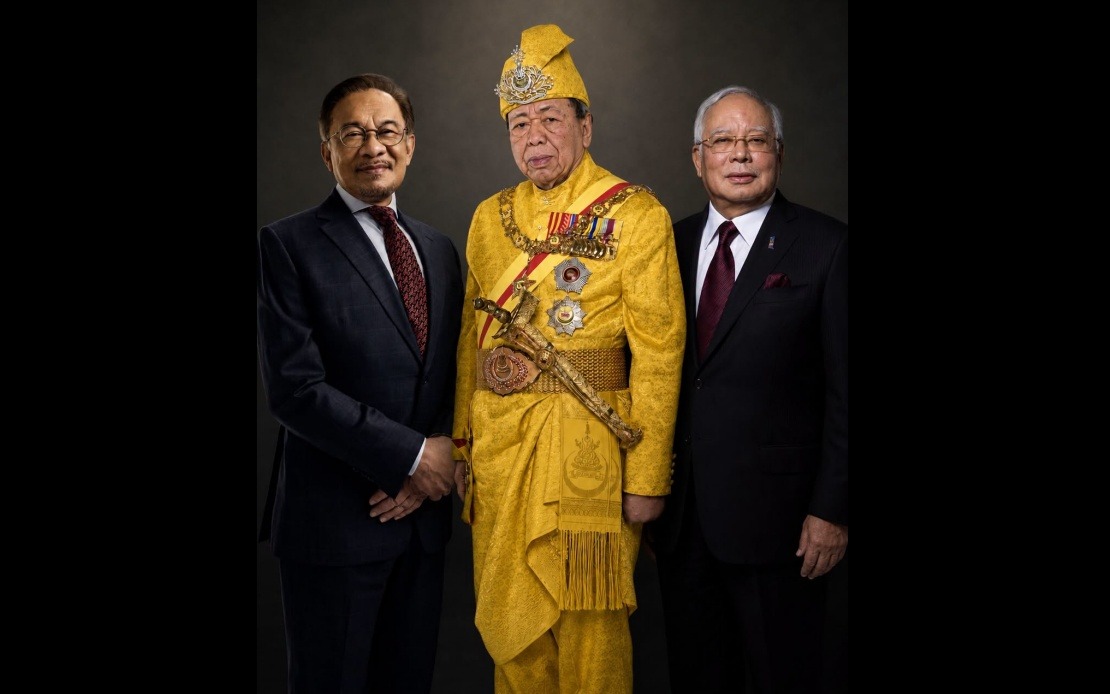
The Sultan of Selangor, Sultan Sharafuddin Idris Shah, has publicly acknowledged Prime Minister Datuk Seri Anwar Ibrahim's instrumental role in delivering the Shah Alam Line LRT3, which commenced operations on Monday, marking a significant milestone in the country's public transport infrastructure. In a statement released from Shah Alam, the Sultan expressed particular gratitude for the Prime Minister's decisive action to reinstate five stations that had been shelved under previous administrations, alongside fresh proposals to develop affordable housing developments adjacent to LRT3 stations to maximise accessibility and community benefit.
The genesis of the LRT3 initiative emerged from genuine public grievances that reached the palace, with the Sultan recalling that complaints centred on the severe traffic congestion strangling the Klang valley corridor. Housewives, in particular, frequently raised concerns about their husbands returning home progressively later as peak-hour congestion worsened, illustrating how transport challenges directly threatened family life and work-life balance in this densely populated region. This grassroots feedback catalysed the Sultan's vision for a dedicated rail link that could bind Klang, Shah Alam and Kuala Lumpur into an integrated metropolitan transport network, addressing a critical urban planning deficiency.
During his previous tenure, former Prime Minister Datuk Seri Najib Tun Razak responded to the Sultan's appeal by sanctioning the project's development. At that juncture, the Klang River crossing bottleneck was acute, with only two bridges available to carry traffic across the waterway during rush hour. To provide immediate relief whilst the longer-term rail solution proceeded, Najib's government dismantled the Batu Tiga and Sungai Rasau toll plazas in 2018, a measure designed to expedite vehicle flow temporarily. However, such surface-level interventions proved insufficient for addressing the underlying structural deficit in public transport capacity serving the sprawling outer metropolitan region.
The project's trajectory proved turbulent following the 2018 change of government, when implementation stalled for over eighteen months as new administrations reassessed priorities and funding arrangements. Compounding these political delays, the COVID-19 pandemic imposed a further nineteen-month interruption stretching into 2021, during which the project languished amid pandemic-related constraints and fiscal pressures. The accumulated disruptions necessitated design compromises that reduced station footprints, diminished the number of train coaches per unit, and most significantly, led to the cancellation of five planned stations originally conceived to serve intermediate demand centres along the alignment. These cutbacks represented a departure from the original vision, though they reflected the fiscal realities imposed by extended project timelines and inflation.
When Anwar Ibrahim assumed the dual roles of Prime Minister and Finance Minister in 2022, reversing the cancellation of those five stations became a stated priority, signalling political commitment to restoring the project's original geographic scope and service ambition. The Sultan's public commendation reflects appreciation not merely for completing infrastructure, but for restoring a vision that had been diminished by prior budgetary constraints. Beyond station reinstatement, the government's proposal to facilitate affordable housing near LRT3 interchanges represents a sophisticated integrated approach to urban development, recognising that transport infrastructure gains maximum social utility when aligned with residential density and economic opportunity.
The Sultan pointedly emphasised that the LRT3 should never be construed as a prestige mega-project designed primarily for institutional aggrandisement, but rather as a utilitarian infrastructure responding to authentic community need. This framing carries particular significance in Malaysian governance discourse, where large capital projects occasionally attract criticism for being pursued more for political symbolism than practical benefit. By anchoring the LRT3 in the tangible problem of commuter congestion and family welfare, the Sultan reframed the infrastructure within a distinctly public-interest paradigm, resisting any temptation towards triumphalism or partisan attribution.
Indeed, the Sultan explicitly cautioned against any single individual or political party claiming exclusive credit for the project's eventual completion. His statement underscored that the LRT3 represented a continuum of planning, resource commitment and inter-governmental cooperation spanning multiple administrations, each contributing essential elements across different policy cycles. This deliberate magnanimity reflects constitutional monarchy principles emphasising national unity transcending partisan boundaries, whilst also subtly emphasising that infrastructure success depends on sustained commitment beyond electoral cycles. For Malaysian policymakers, this message carries weight: major transport projects require bipartisan or multi-administration support to withstand political transitions.
The operational launch promises significant quality-of-life improvements for residents across the Klang valley's suburban and semi-urban zones. The LRT3 line will provide a faster, more comfortable and fundamentally safer transport alternative compared to the congested road networks currently dominating commuter patterns. Commuters navigating between Klang and Kuala Lumpur, or between Shah Alam and the capital, will enjoy dedicated transit infrastructure insulated from the traffic delays that have historically plagued surface roads. This shift carries environmental implications as well, potentially reducing vehicle-kilometres travelled and associated emissions from the corridor's large daily commuter population.
The Sultan's hope that Prasarana Malaysia Bhd maintains rigorous service standards underscores an important governance reality: infrastructure delivery represents only the initial phase of a longer cycle encompassing operations, maintenance, asset management and continuous improvement. For Malaysian commuters, system reliability proves as critical as initial opening day fanfare; sustained ridership depends on trains operating punctually, stations remaining clean and accessible, and safety protocols receiving consistent attention. The Sultan's explicit expectation of maintenance excellence sets a benchmark that the operator must meet to vindicate the substantial public investment.
Looking forward, the Sultan articulated confidence that the LRT3 will catalyse broader economic dynamism across the Klang valley, strengthening connectivity between several national growth hubs including Kuala Lumpur, Petaling Jaya, Shah Alam and Klang itself. Transport infrastructure frequently generates multiplier effects through improved business accessibility, expanded labour market participation, real estate value appreciation in transit-oriented locations, and commercial agglomeration benefits. The corridor's emergence as an economically efficient region depends partly on whether the LRT3 successfully reduces friction in the movement of workers, goods and services. For Malaysian policymakers monitoring national productivity growth, the LRT3's economic impacts warrant careful evaluation.
The broader significance of the Sultan's intervention extends beyond infrastructure tributes into the terrain of institutional balance in Malaysian governance. The Selangor monarchy's public voice regarding major state development initiatives reflects the constitutional role of the Ruler as guardian of state welfare and public interest. The Sultan's emphasis on grassroots complaints as the project's legitimating foundation—rather than technocratic planning divorced from community concerns—offers a counter-narrative to top-down infrastructure approaches. This people-centric framing, grounded in the original household complaints about commute times, demonstrates how constitutional monarchs can reinforce public accountability in governance.
As the LRT3 begins its operational phase, the project enters a critical evaluation period. Its success will be measured not by opening ceremonies or political accolades, but by whether millions of commuters find it genuinely preferable to private vehicle use, whether traffic congestion measurably declines across the corridor, and whether the integrated housing developments materialise to create genuine transit-oriented communities. For Southeast Asian observers, the LRT3 represents an instructive case study in infrastructure persistence across multiple political administrations—a quality increasingly essential as demographic pressures drive urbanisation throughout the region. The Sultan's measured, inclusive framing of credit-sharing offers a diplomatic model for how major transport projects can transcend partisan ownership, ultimately serving the enduring interests of the population they are designed to serve.

