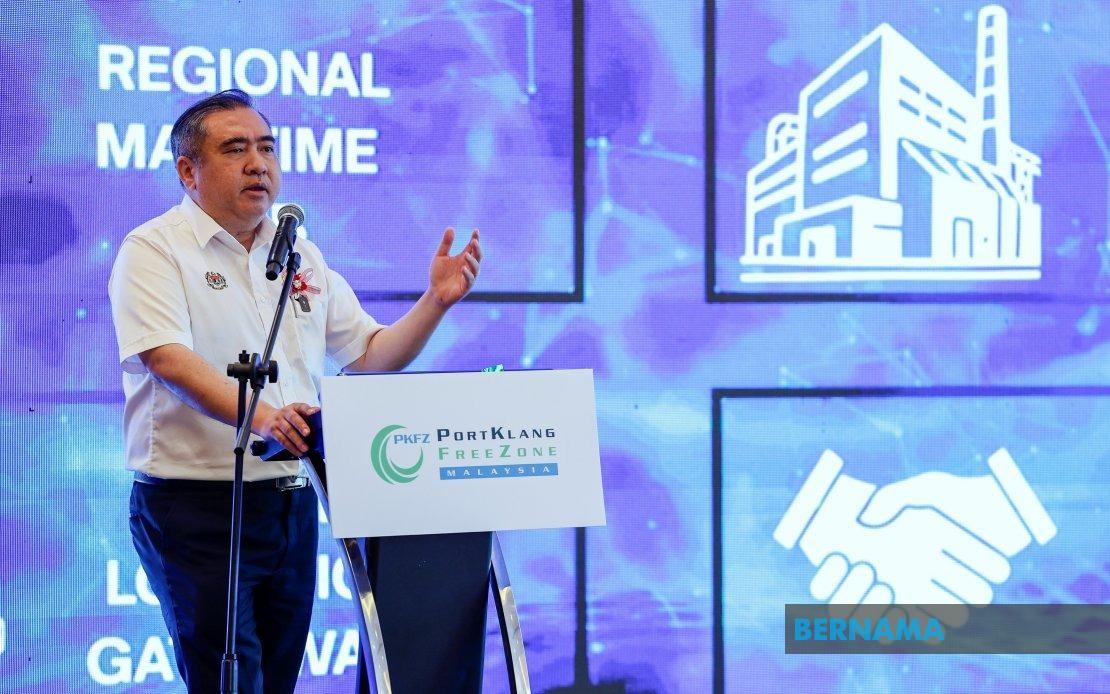
The Selangor State Government is moving swiftly to untangle the land ownership complexities surrounding the Port Klang Third Terminal development on Carey Island, marking a critical step forward in one of Malaysia's most strategically significant port expansion initiatives. Transport Minister Anthony Loke revealed that the administration is coordinating with both state authorities and private sector partners to finalize arrangements under a concession framework, with the ultimate goal of commencing construction work by the end of this year.
The project's importance to Malaysia's broader economic agenda cannot be overstated. Located on Carey Island in the Kuala Langat district, the third terminal represents a substantial infrastructure investment designed to enhance the nation's competitive standing in global maritime trade and logistics. Prime Minister Datuk Seri Anwar Ibrahim has personally directed all responsible agencies to accelerate progress, signalling the federal government's commitment to transforming Port Klang into a more efficient and expansive regional hub.
Landholding complications have historically delayed numerous Malaysian infrastructure ventures, and this initiative is no exception. According to Selangor Menteri Besar Datuk Seri Amirudin Shari, the state government has designated a total of 1,699.68 hectares across Pulau Carey for the port's expansion. This comprises two distinct land categories: 1,011.71 hectares of seabed territory managed by the Selangor State Development Corporation (PKNS), and 687.96 hectares of coastal property administered by Yayasan Selangor. Resolving usage rights and compensation frameworks for such multi-stakeholder arrangements typically consumes considerable time and negotiation.
The development methodology chosen for this venture reflects contemporary approaches to major Malaysian infrastructure projects. Rather than relying entirely on government capital, authorities are pursuing a Build-Operate-Transfer model whereby private operators will finance, construct, and run the facility before eventually transferring ownership back to the state. Loke emphasised that this approach balances financial responsibility while attracting experienced maritime operators with proven track records in container terminal management and port operations.
The concession framework under discussion involves detailed negotiations spanning transport ministry officials, state administrators, and private sector entities seeking operational rights. This multi-layered approval process, while sometimes frustrating to observers, ensures that contractual terms adequately protect public interests and taxpayer investments. The complexity increases when land ownership involves multiple government-linked entities and charitable foundations, each with distinct mandates and governance structures that must be harmonized.
Port Klang's current operational capacity has become increasingly constrained as Malaysian trade volumes continue expanding, particularly given the country's role as a crucial Southeast Asian transshipment hub. The existing facility processes millions of containers annually, but regional competitors including Singapore's PSA International and Port Tanjung Pelepas are continually expanding infrastructure. A third terminal at Port Klang would significantly augment handling capacity and allow the port to accommodate larger modern vessels that increasingly call at South East Asian ports.
Beyond the port terminal itself, the broader Port Klang Free Zone ecosystem is experiencing notable momentum. Loke presided over several investment activations worth a combined RM566 million, including the Wisma Golden Horse labour quarters facility and manufacturing expansions by Suntek Materials and Golden Horse Rubber. These developments underscore growing commercial confidence in the Port Klang vicinity and its emerging status as an integrated logistics and industrial zone attracting both traditional and technology-driven enterprises.
The free zone authorities are simultaneously advancing a Smart Intelligence Industrial Park initiative designed to integrate digital technologies and industrial operations. This modernization aligns with Malaysia's broader Industry 4.0 ambitions and reflects global trends toward connected, data-driven port and logistics ecosystems. Such integration enhances supply chain visibility and operational efficiency for user companies, potentially attracting higher-value logistics operators.
Complementing infrastructure investment, the government is simultaneously addressing workforce capability challenges pervasive throughout Malaysia's transport and logistics sectors. Loke announced a memorandum of understanding between Port Klang Free Zone authorities and Perhebat, the Armed Forces Ex-Servicemen's Affairs Corporation, to integrate military retirees into skilled logistics roles. This initiative responds to persistent shortages of qualified heavy vehicle operators and experienced port workers, demographic gaps that have constrained sector growth and profitability.
The military veteran employment programme represents pragmatic social policy addressing multiple challenges simultaneously. Military retirees typically possess discipline, technical aptitude, and operational experience transferable to demanding logistics environments. Earlier measures introduced specialized licensing pathways allowing qualified veterans to obtain Class E heavy vehicle endorsements, removing regulatory barriers that previously prevented career transitions. Such initiatives create dignified employment pathways for former servicemembers while alleviating industry labour constraints that ultimately impact Malaysia's competitive economic positioning.
For Malaysian stakeholders in import-export businesses, logistics providers, and manufacturing enterprises dependent on port services, the Port Klang Third Terminal development carries direct operational implications. Expanded capacity translates to reduced vessel waiting times, lower port congestion fees, and improved shipping schedule reliability. For regional manufacturers using Port Klang as their primary gateway, such efficiencies directly impact supply chain costs and competitiveness against producers utilizing competing Southeast Asian ports.
The project's advancement also carries broader regional significance as Malaysia repositions itself within evolving Asia-Pacific trade patterns. Supply chain diversification away from China, nearshoring trends favouring Southeast Asian production, and expanding intra-regional trade necessitate robust port infrastructure. A strengthened Port Klang enhances Malaysia's attractiveness as a manufacturing and logistics location, potentially attracting foreign direct investment from companies seeking reliable, efficient regional distribution capabilities.
As the Selangor government finalizes land settlement frameworks and concession negotiations progress through successive bureaucratic stages, stakeholders remain cautiously optimistic regarding the stated construction timeline. Successful resolution of competing land claims and regulatory approvals will determine whether this ambitious port expansion materializes as scheduled, ultimately shaping Malaysia's maritime competitiveness through the coming decade.