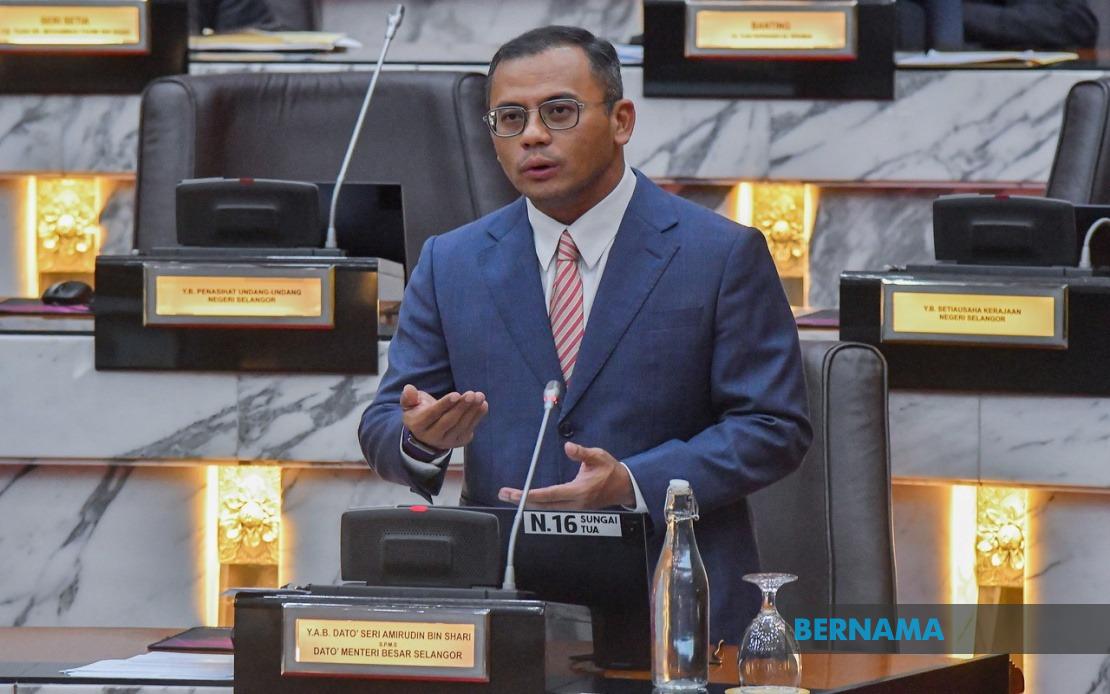
Selangor's leadership has demanded an urgent overhaul of how the state's public transport system connects with surrounding communities, signalling growing frustration with accessibility gaps that have become increasingly visible on social media. Menteri Besar Datuk Seri Amirudin Shari issued the directive to all local authorities during a legislative assembly debate on the state's resilience package, emphasising that connectivity issues require serious attention and concrete solutions rather than defensive responses to viral complaints.
The intervention follows mounting public complaints about first-mile and last-mile connectivity, particularly around the LRT3 corridor, which have gained traction across digital platforms. Rather than viewing these concerns as isolated incidents, the state government recognises that poor connections between transit hubs and residential or commercial areas undermine the entire purpose of investing in public transport infrastructure. Amirudin acknowledged that when people face difficulties reaching stations or continuing journeys after alighting, they default to private vehicles, negating the state's broader mobility objectives.
The state has committed to providing additional financial resources to support this transformation, though Amirudin was careful to frame investment as targeted rather than limitless. He stressed that improving walkway safety, expanding pedestrian infrastructure, and enhancing accessibility should occur through smart planning rather than wasteful spending. This reflects a recognition that Southeast Asia's rapidly urbanising states must balance transportation ambitions with fiscal responsibility, particularly in a state like Selangor where urban sprawl continues to create new connectivity challenges.
Central to the strategy is a collaborative mapping exercise involving all public transport operators across Selangor. The state government has tasked Ng Sze Han, chairman of the Investment, Trade and Mobility Committee, with convening operators to create a comprehensive service map identifying specific connectivity gaps. This systematic approach represents a departure from reactive problem-solving, instead establishing a data-driven foundation for targeted interventions that address genuine market failures rather than assumed problems.
Subsidies will play a supporting role in this restructuring, though Amirudin made clear they are not a panacea. He expressed frustration that subsidies alone cannot solve connectivity if operators fail to extend service hours or optimise routes based on demand patterns. This tension between government support and operator responsibility reflects broader challenges facing public transport systems across the region, where financial incentives often prove insufficient without corresponding operational discipline and customer-centric planning.
The Menteri Besar's comments implicitly criticised local authorities for becoming reactive rather than proactive. He urged them to cease waiting for social media campaigns to surface problems and instead maintain regular dialogue with elected representatives, business councils, and community stakeholders who can identify emerging issues before they escalate. This reflects a broader governance principle: effective public administration requires constant engagement rather than episodic response to public pressure.
For Selangor residents and businesses, the significance lies in acknowledging that connectivity shapes transportation choices at a fundamental level. A person might enthusiastically support modal shift towards public transport in principle, but will revert to driving if the actual journey involves excessive walking, unsafe pedestrian conditions, or complex transfers between services. The state government's recognition of this reality suggests a maturing approach to urban mobility that goes beyond simply building more transit infrastructure.
The initiative also carries implications for operators struggling with declining ridership or profitability. By mapping service gaps systematically, the state can identify where operational adjustments might unlock demand that currently remains suppressed. Extended evening service hours near residential areas, better signage, or improved lighting and shelter facilities at connection points may trigger modal shift without requiring massive capital expenditure. This efficiency-focused approach appeals to both fiscally constrained governments and operators facing margin pressures.
Regionally, Selangor's approach offers a model for other Malaysian and Southeast Asian metropolitan areas grappling with similar connectivity challenges. Cities like Kuala Lumpur, Penang, and Johor Bahru face analogous problems where transit networks operate efficiently in isolation but fail to integrate seamlessly with surrounding communities. By making connectivity a deliberate policy priority supported by government resources and operator coordination, Selangor signals that fragmented transport systems require comprehensive, systematic solutions.
The timeline for implementation remains unclear, but the political commitment appears genuine. Amirudin's willingness to allocate budget and empower committee leaders suggests the state views this as a priority rather than a rhetorical exercise. Success will ultimately depend on execution—whether local authorities conduct thorough reviews, operators embrace service expansion, and communities see tangible improvements in their ability to access transit services safely and conveniently.

