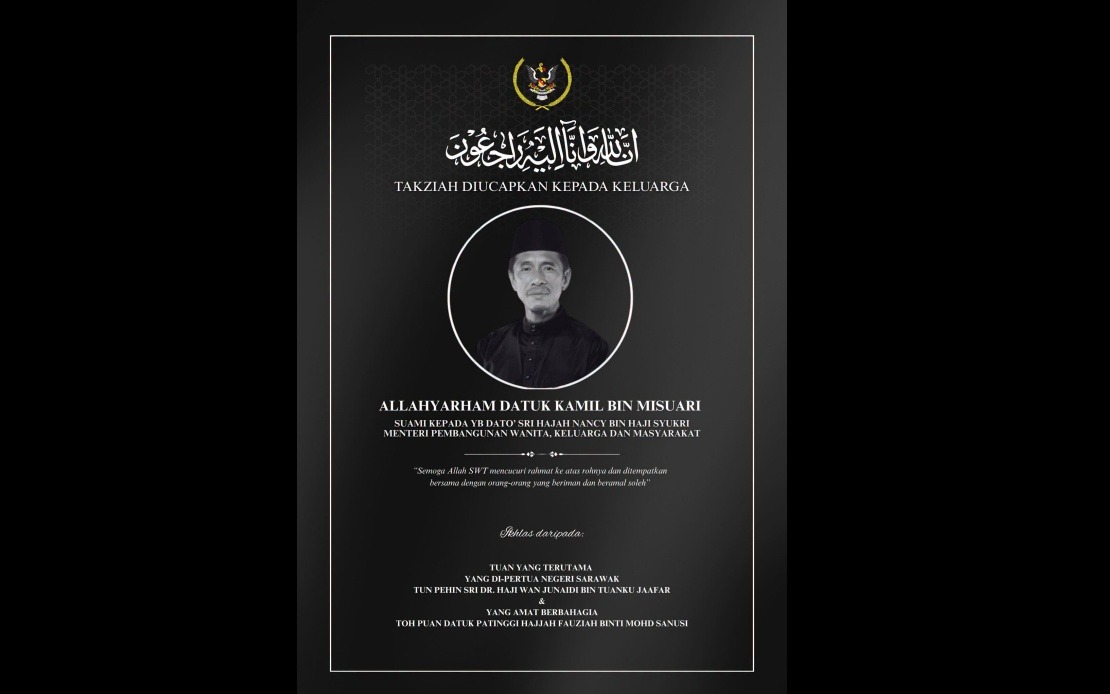
The Yang Dipertua Negeri of Sarawak, Tun Dr Wan Junaidi Tuanku Jaafar, has conveyed his sympathy to Women, Family and Community Development Minister Datuk Seri Nancy Shukri following the passing of her husband, Datuk Kamil Misuari. The announcement came through a statement released by Astana Sarawak on June 18, marking a significant moment for the federal minister and her family during their period of bereavement.
The late Datuk Kamil, aged 65, passed away at a hospital in Kuala Lumpur earlier that day. The couple's long marriage, which began in 1985, had produced three children together. Their decades-long partnership represented a significant chapter in the personal lives of both the minister and her family, and his death marks a considerable loss for those close to him.
In his statement, Tun Wan Junaidi joined his wife, Toh Puan Fauziah Mohd Sanusi, in offering prayers for the departed soul. The couple invoked blessings upon Datuk Kamil, expressing hope that Allah SWT would accept his good deeds and grant him a place among the righteous. Such expressions of spiritual solidarity are customary in Malaysian political and social circles, reflecting the Islamic faith shared by much of the nation's leadership.
Beyond the immediate prayers for the deceased, Tun Wan Junaidi and Toh Puan also extended their hopes that Datuk Seri Nancy and her extended family would find the inner strength needed to navigate their grief. The statement specifically prayed for fortitude and patience as they confronted this difficult period, acknowledging the emotional toll that such loss imposes on close relatives.
The decision to lay Datuk Kamil to rest in Sarawak underscores the couple's deep roots in the state. His remains were scheduled to be flown to Kuching the following day, with the funeral service planned at the Samariang Muslim Cemetery. This arrangement reflects the family's connection to Sarawak, even as their professional lives have extended into federal politics through Datuk Seri Nancy's ministerial position.
As the minister responsible for women, family, and community development, Datuk Seri Nancy holds a portfolio that directly shapes policies affecting Malaysian families and household structures. Her work in this role has placed her at the forefront of discussions regarding family welfare, women's rights, and community cohesion. The passing of her spouse inevitably creates a personal dimension to her public responsibilities, as she continues to serve her ministry while processing personal loss.
The timing and nature of public condolences from senior political figures like Tun Wan Junaidi reflect the importance placed on acknowledging such moments within Malaysia's political establishment. The gesture extends beyond mere formality, representing institutional recognition of the minister's grief and an expression of collective empathy from the state's highest authority.
For readers across Southeast Asia, Datuk Seri Nancy's situation illustrates how high-ranking female ministers balance demanding public portfolios with personal and family responsibilities. Her continued role during this period will likely garner public attention and discussion about work-life balance and the particular pressures faced by women in senior government positions throughout the region.
The expressions of support from Sarawak's leadership also highlight the interconnected nature of Malaysian politics, where state and federal leaders maintain close relationships and demonstrate solidarity during significant personal events affecting their colleagues. Such connections often transcend partisan considerations, unified by shared values and professional respect.
Datuk Kamil Misuari's death represents a poignant reminder of mortality and the human dimensions underlying political life. While administrative details regarding memorial services and the minister's return to duties would likely emerge in subsequent days, the immediate response from senior figures prioritized acknowledging the personal tragedy with appropriate dignity and spiritual consideration.

