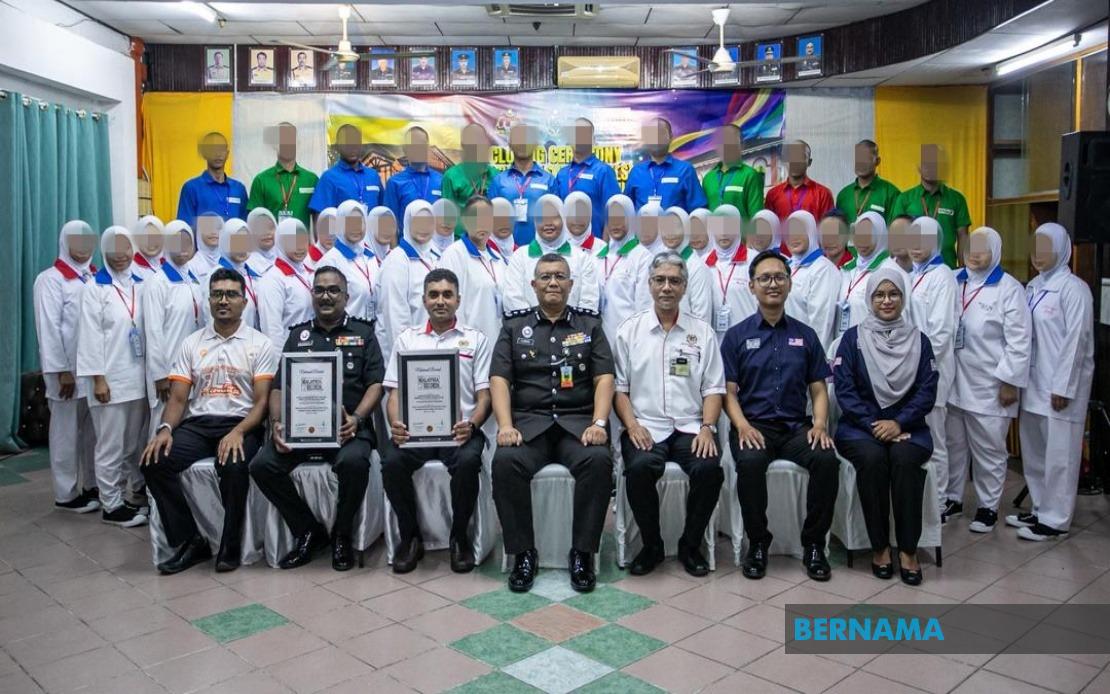
The Malaysian Prisons Department has earned recognition from the Malaysia Book of Records for an innovative rehabilitation programme, with Home Minister Datuk Seri Saifuddin Nasution Ismail publicly commending the achievement. The Batu Gajah Correctional Centre led the initiative by organising a comprehensive Basic Life Support and Automated External Defibrillator training course that encompassed 42 inmates, marking a significant milestone in the country's correctional system.
Saifuddin's endorsement underscores a fundamental shift in how Malaysia's penal institutions conceptualise their societal role. Rather than viewing prisons solely as venues for punishment, the minister framed the recognition as validation that these facilities function primarily as rehabilitation centres offering individuals genuine pathways to personal transformation. This distinction carries considerable weight in regional discourse around criminal justice philosophy, where traditional punitive approaches increasingly compete with evidence-based rehabilitation models that demonstrably reduce recidivism.
The Basic Life Support and Automated External Defibrillator training represents more than a mere technical skills transfer. According to Saifuddin, the programme simultaneously cultivates humanitarian values, instils discipline, nurtures personal responsibility, and builds self-confidence among participants. These competencies extend far beyond emergency medical intervention; they address the psychological and social deficits that often correlate with incarceration. By equipping inmates with both practical, marketable skills and intrinsic values, the programme positions individuals for meaningful reintegration upon release.
The Prisons Department's core philosophy, as articulated by the Home Minister, centres on rehabilitation rather than retribution. This conceptual framework acknowledges that Malaysia's correctional system ultimately measures success not by the severity of punishment administered, but by the extent to which formerly incarcerated individuals successfully rejoin society as contributing members. The Batu Gajah initiative demonstrates how strategic programming can operationalise this philosophy within existing institutional constraints.
From a Malaysian perspective, this development carries implications for broader public health and workplace preparedness. Life support certification creates a cadre of trained individuals who, upon community reentry, possess skills with genuine market value. Healthcare facilities, manufacturing operations, hospitality establishments, and other workplaces consistently require Basic Life Support-certified personnel. Thus, the programme simultaneously addresses rehabilitation objectives while creating employment readiness that enhances prospects for successful reintegration and reduces recidivism risk factors.
The recognition by the Malaysia Book of Records likely reflects the scale and novelty of achieving such certification within a correctional setting. Coordinating mass training delivery in a custodial environment presents logistical, security, and administrative challenges distinct from civilian settings. Successfully executing such a programme while maintaining institutional security protocols and ensuring meaningful learning outcomes represents a legitimate operational achievement worthy of documentation.
Regionally, Malaysia's approach to correctional rehabilitation increasingly aligns with evidence-based international standards promoted by criminal justice reform advocates. Southeast Asian neighbours including Thailand, Indonesia, and the Philippines have variously implemented rehabilitation programmes, though inconsistent funding and institutional capacity often limit scope and effectiveness. Malaysia's documented success in scaling such initiatives positions the country as a regional reference point for correctional innovation.
Saifuddin's public recognition carries strategic value beyond immediate operational matters. By prominently celebrating rehabilitation achievements, the Home Minister signals governmental commitment to evidence-based criminal justice policy. This positioning influences public perception of the Prisons Department, potentially building political capital for sustained funding and policy support for rehabilitation programmes amid competing budgetary pressures.
The minister explicitly articulated an expectation that similar high-impact programming should proliferate across the correctional system. This statement implies potential expansion of structured skills training across multiple facilities and prisoner cohorts. Whether such expansion materialises depends on institutional capacity, budgetary allocation, and coordination between the Prisons Department and external training providers. Successful scaling would substantially amplify the rehabilitation agenda's practical impact.
For incarcerated individuals, the programme creates tangible markers of achievement and personal progress. Obtaining formal certification of life-saving competencies provides psychological validation and concrete evidence of capability that facilitates employment discussions upon release. This psychological dimension often receives insufficient attention in rehabilitation discourse, yet substantially influences individual agency and reintegration prospects.
The ultimate measurement of the Batu Gajah initiative's success will emerge through longitudinal analysis of participant outcomes following release. Reduced recidivism rates, sustained employment, and positive community integration would substantiate claims that the programme functionally advances rehabilitation objectives. Such data, when available, would provide empirical foundation for further policy expansion and resource allocation decisions.
Looking forward, the challenge involves translating isolated success stories into systematic, institutionalised practice across Malaysia's correctional network. Replicating the Batu Gajah model across multiple facilities while maintaining quality standards and measuring genuine outcomes requires sustained political commitment, adequate resourcing, and rigorous evaluation protocols. The Home Minister's public commendation suggests official recognition of these imperatives, though actual implementation will determine whether the initiative represents transformative policy direction or symbolic gesture.

