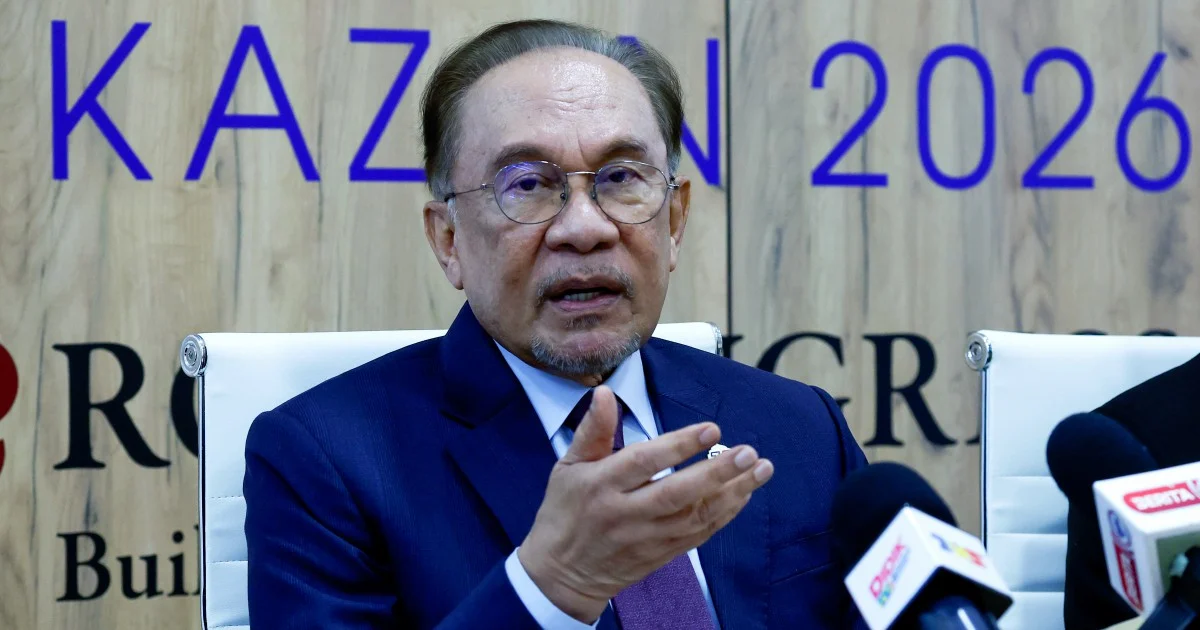
Prime Minister Anwar Ibrahim announced on Monday that Russia has committed to supplying Malaysia with petrol, oil, and gas over an extended period, marking a significant development in bilateral energy relations between the two countries.
The assurance came as Anwar addressed regional economic matters during his engagement in Kazan, reflecting Malaysia's strategic efforts to diversify its energy sourcing and secure reliable supply chains amid global market volatility. The commitment underscores Moscow's intention to deepen its economic ties with Southeast Asian nations at a time when Western sanctions have prompted Russian policymakers to reorient trade relationships eastward.
For Malaysia, which remains heavily dependent on hydrocarbon revenues and faces growing domestic energy consumption, the prospect of stable Russian supplies carries substantial economic implications. The nation's proven oil and gas reserves have been steadily declining, necessitating increased imports to meet industrial demands and household energy needs. A long-term arrangement with Russia could provide Malaysia with more predictable pricing and supply security compared to spot market purchases, while simultaneously offering Russian producers a reliable customer base in the strategically important Asia-Pacific region.
The timing of this assurance reflects broader geopolitical shifts in energy markets. Traditionally, Malaysia has sourced crude oil and liquefied natural gas from diverse suppliers, including OPEC members and regional producers in the Middle East and Brunei. However, expanding bilateral engagement with Russia demonstrates Kuala Lumpur's pragmatic approach to foreign policy, balancing relationships across multiple powers while prioritising national economic interests.
Russia's energy sector has undergone significant restructuring following international sanctions imposed in 2022. European customers, once the primary market for Russian oil and gas, have substantially reduced purchases and sought alternative suppliers. This reorientation has created opportunities for Asian buyers willing to engage in long-term contracts, and Malaysia's openness to such arrangements reflects rational economic calculus rather than geopolitical alignment.
Energy security remains a critical concern for Southeast Asian nations. The region's rapid industrialisation and rising living standards have driven electricity and fuel demand upward, while domestic production capacity has not kept pace. Regional heavyweights like Indonesia and Vietnam have similarly pursued diversified supply strategies, establishing partnerships with multiple producing nations to avoid overdependence on any single source. Malaysia's engagement with Russia follows this established pattern of pragmatic energy diplomacy.
The agreement also carries implications for Malaysia's domestic energy policy and petrochemical industries. Secure access to affordable crude oil could support downstream manufacturing sectors, including petrochemical production and refining, which contribute substantially to the nation's export revenues and employment. Long-term pricing certainty would enable Malaysian refiners and industrial users to plan capital investments with greater confidence.
Within Southeast Asia, Malaysia's energy arrangements influence regional dynamics. As one of the bloc's more developed economies with significant energy infrastructure, decisions by Malaysian policymakers regarding supply sources often signal broader shifts in regional openness to Russian engagement. Other ASEAN members watching Malaysia's approach may interpret this development as validation of commercial engagement with Moscow, despite ongoing international divisions over geopolitical matters.
Anwar's public confirmation of the Russian commitment demonstrates Malaysia's willingness to maintain pragmatic economic relationships across the international system. While Malaysia has not aligned itself with Western sanctions regimes against Russia, it has also sought to maintain balanced diplomatic relations with the United States and European partners. Energy agreements with Russia represent economic transactions rather than political endorsements, a distinction Kuala Lumpur has consistently articulated.
Implementing long-term fuel supply arrangements between Malaysia and Russia will require establishing or strengthening institutional mechanisms for contract negotiations, payment arrangements, and logistics coordination. Such frameworks typically involve engagement between state-owned petroleum companies, regulatory authorities, and both governments' economic ministries. The practical mechanics of sustained energy trade between the countries will unfold over coming months as negotiations progress from political commitment to binding commercial agreements.
For the Russian energy sector, Malaysia represents part of a broader Asian market expansion strategy. Developing customer relationships in Southeast Asia provides Moscow with economic diversification and reduces vulnerability to further Western sanctions. The region's growing energy appetite and willingness to engage commercially create attractive opportunities for Russian producers seeking outlets for crude oil and natural gas production.
The announcement also reflects Malaysia's position as an energy-consuming nation moving toward greater independence in supply security. Rather than accepting reliance on any single supplier, Kuala Lumpur continues cultivating multiple partnerships to ensure competitive pricing and supply reliability. The Russian commitment sits alongside existing arrangements with established suppliers, representing another layer in Malaysia's comprehensive energy security strategy.

