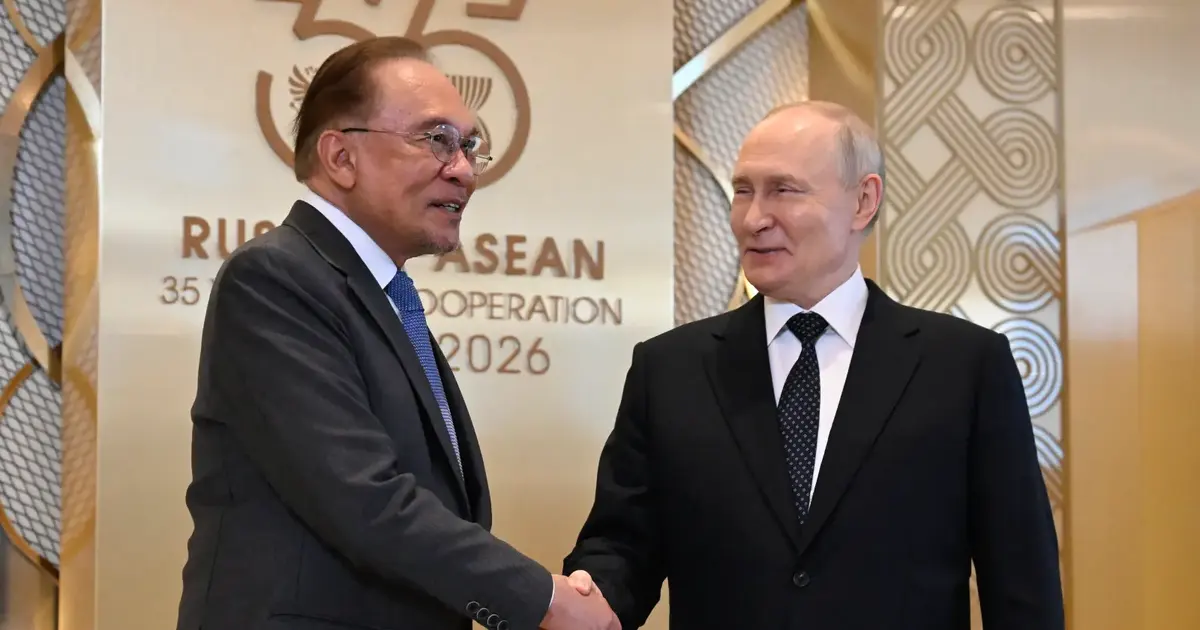
Prime Minister Anwar Ibrahim has returned from high-level talks with assurances that Russia will maintain consistent supplies of oil and gas to Malaysia for the next 20 years, a significant development for a country heavily dependent on energy imports. The commitment addresses longstanding concerns about securing reliable fuel sources in an increasingly competitive global market, where energy-hungry emerging economies continue to compete for access to finite resources.
The pledge from Russian President Vladimir Putin represents a strategic alignment between Kuala Lumpur and Moscow at a time when Malaysia seeks to diversify its energy portfolio and reduce vulnerability to supply disruptions. For Malaysia, which consumed approximately 570,000 barrels of crude oil daily in recent years and relies substantially on imported natural gas, such guarantees provide crucial stability for industrial operations, power generation, and broader economic planning. The assurance extends beyond immediate commercial benefit to offer predictability for long-term infrastructure development and investment decisions across energy-dependent sectors.
Malaysia's energy landscape has become increasingly complex as domestic oil and gas reserves decline relative to national demand. The country operates significant refineries and petrochemical facilities that depend on consistent feedstock supplies, making international partnerships essential for maintaining competitive advantages in downstream industries. Russia, as a major global energy producer, can provide the volume and reliability that Malaysian planners require, particularly given the geopolitical uncertainties affecting Middle Eastern suppliers and the volatility affecting liquefied natural gas markets.
Beyond energy security, Anwar's diplomatic initiative encompasses broader economic cooperation across Central Asia. The Prime Minister indicated that his planned visit to Turkmenistan will serve multiple objectives, including establishing pathways for Malaysian exporters to access major Asian markets. This multi-pronged approach reflects growing recognition that Southeast Asian economies must establish direct connections with resource-rich regions rather than relying solely on traditional Western-dominated trade channels.
Malaysia has demonstrated increasing strategic interest in Central Asian markets, particularly given China, Japan, and South Korea's own active engagement in the region. By positioning Malaysian companies ahead of supply chains linking Central Asian resources to these major economies, Anwar's government aims to capture value-added opportunities in logistics, trading, and manufacturing. The Turkmenistan component of the diplomatic mission is particularly significant because that country possesses substantial natural gas reserves and serves as a transit corridor for regional trade flows.
For Malaysian exporters, particularly those in manufacturing, petrochemicals, and financial services, gaining preferred access to markets in China, Japan, and South Korea represents substantial commercial potential. These economies collectively represent over three billion consumers and account for a significant portion of global purchasing power. Malaysian companies often struggle with market access barriers and competitive disadvantages against established competitors from developed nations, making government-facilitated market entry channels valuable strategic assets.
The timing of these diplomatic initiatives reflects Malaysia's broader pivot toward engaging major Asian economies more directly. Rather than accepting a position as a secondary market dependent on Western companies' Asia-Pacific strategies, Malaysian policymakers increasingly pursue bilateral and regional relationships that can generate independent economic momentum. This approach aligns with broader Southeast Asian trends toward greater strategic autonomy in trade and foreign policy.
Energy security and export expansion are not separate priorities but interconnected elements of Malaysia's economic strategy. Stable energy costs and supplies enhance competitiveness for Malaysian manufacturers and exporters, enabling them to maintain lower production costs relative to competitors. Simultaneously, establishing reliable trade relationships with major Asian economies ensures that Malaysian producers can access distribution channels and customer bases necessary for sustainable growth. The diplomatic mission therefore represents integrated thinking about how resource relationships and market access combine to strengthen national prosperity.
For Malaysian investors and businesses, the implications extend across multiple sectors. Manufacturing facilities relying on energy-intensive processes benefit directly from assured fuel supplies. Companies in automotive, electronics, chemicals, and textiles can plan expansion with greater confidence regarding input costs. Financial and logistics companies can develop new service offerings around facilitating Malaysia's expanded role as a supplier to East Asian markets. The diplomatic framework thus creates conditions where private sector growth becomes feasible at scale.
The commitment to 20-year energy supplies also signals Malaysian confidence in maintaining stable, investment-friendly conditions for Russian companies and capital. Such long-term arrangements typically require substantial infrastructure development, potentially including pipeline upgrades, port facilities, and trading operations, creating opportunities for Malaysian contractors and service providers. The deeper the commercial relationship, the greater the potential for Malaysian stakeholder benefits throughout the economy.
Regionally, Malaysia's successful cultivation of partnerships with major energy producers and major consumer economies positions Southeast Asia more favorably in global competition. As regional economies individually pursue deeper integration with Asia's major powers, the collective effect strengthens ASEAN's negotiating position in broader economic arrangements. Malaysia's diplomatic activism therefore generates positive externalities for neighbouring countries pursuing similar strategies.
The assurances secured from Russia also reflect confidence in Malaysia's ability to serve as reliable, professional partner for international commercial arrangements. Such perceptions matter significantly in international business, where reputation and proven stability attract further investment and partnership opportunities. Malaysia's standing as a capable intermediary between different regions and economic systems creates opportunities for expanded roles in regional value chains and international commerce.

