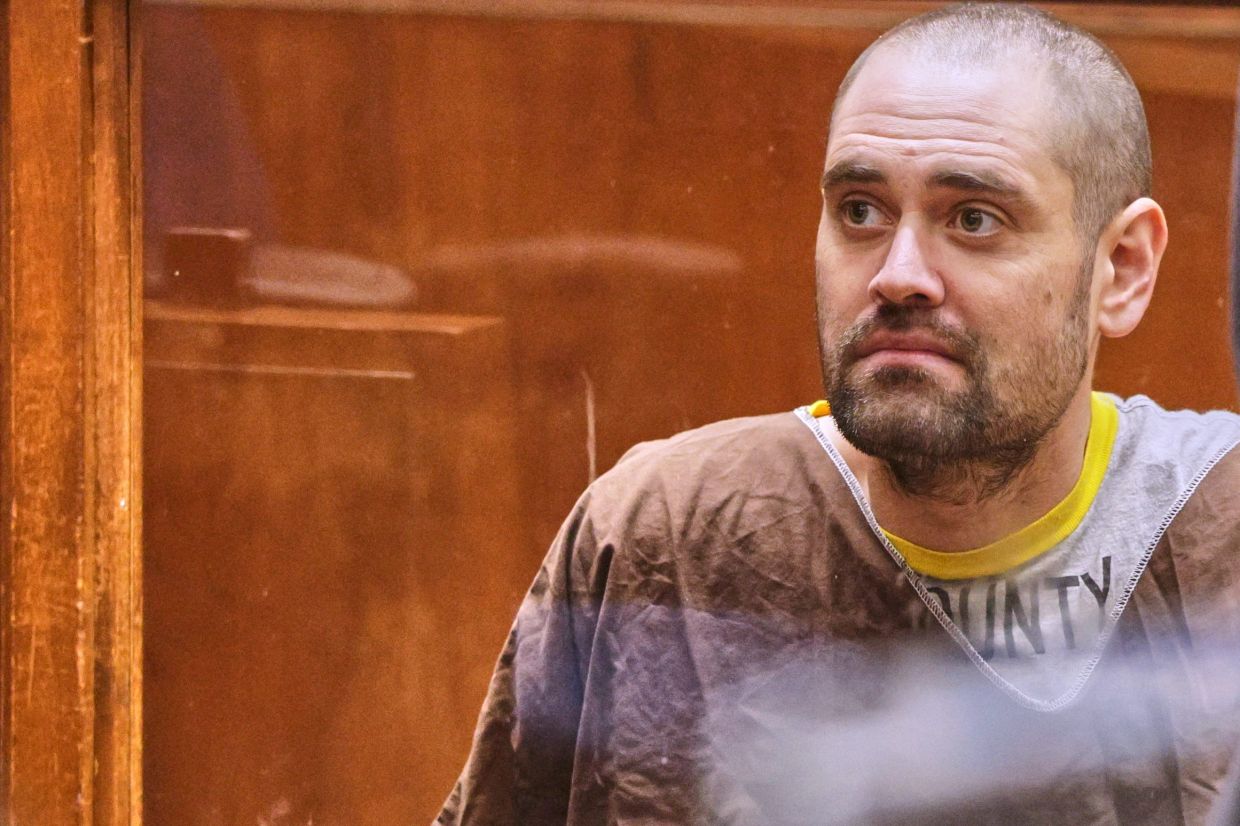
Nick Reiner, the 32-year-old son of acclaimed Hollywood director Rob Reiner, has launched a legal bid to unlock funds from a family trust established by his parents, arguing he requires the money to mount a proper defence against murder charges. The petition, filed through his civil attorneys in Los Angeles County Court on Monday, contends that the trustees overseeing the trust have wrongfully withheld payments to which he is legally entitled. The filing positions the trust dispute as a separate civil matter from the criminal allegations, emphasising that access to personal financial resources is a fundamental right for any defendant.
The circumstances surrounding the case have captivated and shocked Hollywood. Rob Reiner, a director renowned for his influential filmography spanning decades, and his wife Michele Singer Reiner, a photographer and producer, were fatally stabbed in their Brentwood residence on December 14. Nick Reiner was arrested hours after the deaths and subsequently entered not guilty pleas to two counts of murder. The tragic incident sent shockwaves through the entertainment industry and raised profound questions about familial tragedy and justice.
Nick Reiner's legal predicament extends beyond the murder charges themselves. He initially retained prominent defence attorney Alan Jackson, who abandoned the case less than a month after taking it on, citing reasons he declined to disclose publicly. The circumstances surrounding Jackson's departure reveal internal family tensions. According to the petition, Nick's siblings Jake and Romy Reiner had initially agreed to fund Jackson's legal services, but subsequently reversed their decision, effectively cutting off financial support for the defence team.
The trust documentation reveals that Rob and Michele Reiner created individual trusts for each of their children separate from the larger family trust. Nick Reiner's trust, established in 1993, contained what the petition describes as clear and unambiguous instructions that he receive half the trust assets upon turning thirty and the remainder at thirty-five. However, the filing asserts that Nick never received the funds due to him at age thirty, and that the current trustee, attorney Paul R. Kanin, has employed a series of shifting justifications to refuse disbursement.
The trustee's objections reportedly centre on concerns about Nick Reiner's competence, arguments that the petition characterises as irrelevant to a mandatory payout obligation. The filing argues that a trust grantor's explicit distribution instructions cannot be overridden by a trustee's subjective concerns about the beneficiary's decision-making capacity, particularly when the distributions are scheduled and unconditional. This legal principle appears central to Nick Reiner's case, as it distinguishes between discretionary distributions, which trustees can refuse, and mandatory ones, which they must honour.
Financial dimensions of the dispute remain partially opaque. The trust holds at least $1.5 million in assets, according to the petition, though Kanin has refused to disclose its precise value. The refusal to provide exact figures adds another layer of complexity, preventing Nick Reiner's legal team from calculating precisely what sums he should receive under the trust's distribution schedule. Access to these funds would presumably allow him to rehire Jackson or engage alternative legal representation, as Jackson's declaration indicates his firm remains prepared to resume representation once funds materialise.
The murder investigation itself has proceeded with remarkable discretion. Criminal proceedings are advancing slowly, with a pretrial hearing scheduled for September. District Attorney Nathan Hochman's office has not yet determined whether to pursue capital punishment, though Nick Reiner remains death-penalty eligible. A court order sealing autopsy records and investigators' apparent commitment to preventing case leaks have left fundamental questions unanswered in the public domain. Authorities have released nothing regarding potential motives or the circumstances that precipitated the killings, creating an information vacuum that has allowed speculation to flourish.
The emotional toll on the Reiner family extends beyond the immediate tragedy. Jake Reiner, Nick's brother, provided his first public account in April of the devastation surrounding his parents' deaths and his brother's central role in the criminal investigation. He described the experience as a living nightmare too overwhelming to process, a characterisation that reflects the profound rupture such circumstances inflict on family units. The simultaneous loss of two parents and the spectacle of a sibling facing murder charges represents trauma of almost incomprehensible magnitude.
Nick Reiner's legal positioning emphasises a crucial distinction between criminal and civil proceedings. The petition argues explicitly that the factual questions surrounding his parents' deaths are not germane to the trust dispute, insisting instead on fundamental legal principles of due process and access to resources for defence. This argument attempts to separate the trust litigation from the murder case's outcome, though judges may view the cases as inevitably interconnected given their shared facts and parties.
The strategic importance of regaining Jackson's representation cannot be understated. As a high-profile defence attorney, Jackson's public declaration that Nick Reiner is not guilty under California law carried significant weight. His departure coincided with the siblings' withdrawal of financial support, suggesting potential family fractures beyond the immediate tragedy. Should the court grant Nick Reiner access to trust funds, the question of whether Jackson will resume representation becomes pivotal to the defence strategy moving forward.
This case intersects several substantial legal and ethical territories: trust law, criminal defence financing, family dynamics under extraordinary stress, and questions about how justice systems accommodate accused individuals whose families view them with suspicion. For Malaysian and Southeast Asian observers, the case illustrates how wealth and legal resources intertwine with criminal justice outcomes, and how family conflicts can compound legal jeopardy. The unfolding litigation will likely establish precedent regarding trustees' obligations when beneficiaries face criminal charges.