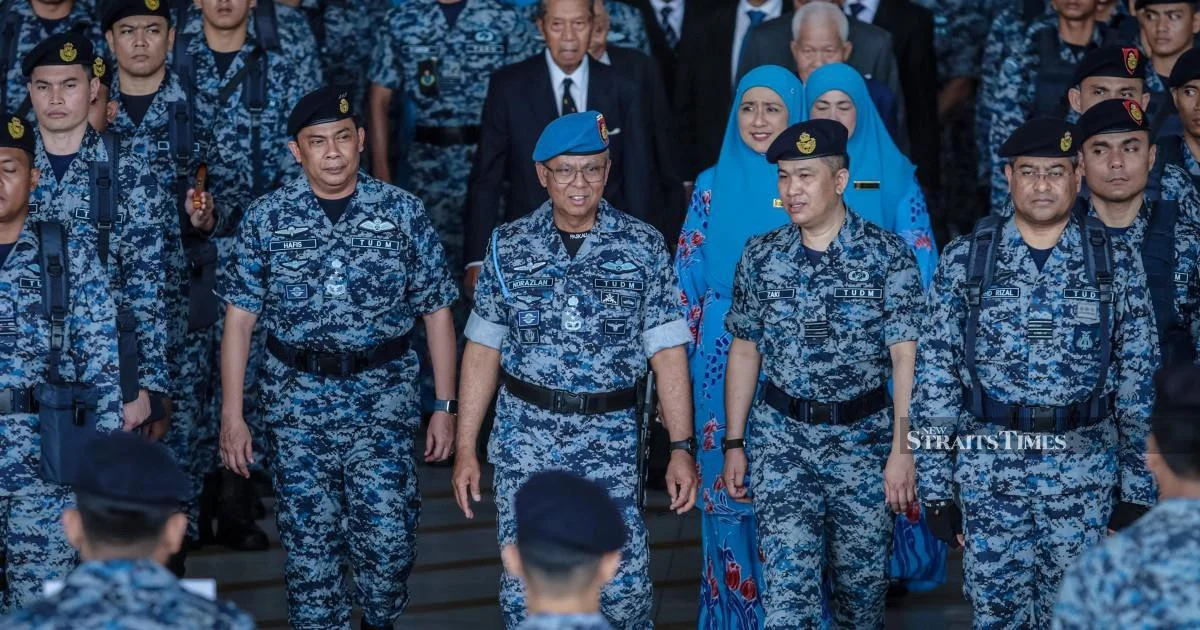
Malaysia's capacity to defend its extensive maritime territory through advanced air defence systems has become a pressing strategic concern, according to Royal Malaysian Air Force leadership. Speaking in Subang, General Tan Sri Muhamad Norazlan Aris, who heads the RMAF, stressed that contemporary regional security challenges demand a fundamental reassessment of how the nation protects its ocean-going commerce and territorial interests. The remarks reflect growing recognition within Malaysian defence circles that traditional naval patrols alone may prove insufficient against an increasingly complex threat landscape.
Malaysia's geographic position on the Malacca Strait and surrounding waters places it at the junction of some of the world's busiest shipping corridors. Billions of dollars in global trade pass through these channels annually, making the security of these routes not merely a Malaysian concern but a matter of international commercial significance. The volume and value of maritime traffic moving through Malaysian waters creates both economic opportunity and strategic vulnerability. Any disruption to these passages reverberates throughout regional supply chains and global markets, placing Malaysia in a position where maritime security directly influences its economic standing and diplomatic weight in Southeast Asia.
The RMAF chief's emphasis on air power reflects a broader modernisation philosophy now taking shape within Malaysia's defence establishment. Rather than relying exclusively on surface vessels to monitor and protect territorial waters, incorporating aerial reconnaissance, early warning systems, and combat-ready aircraft multiplies the military's effectiveness across vast ocean areas. Aircraft can cover considerably larger distances in shorter timeframes than ships, respond to emerging threats with greater speed, and maintain persistent surveillance capabilities that ground-based systems cannot match. This represents a significant doctrinal shift from historical approaches that prioritised naval deployments.
Regional geopolitical dynamics have grown noticeably more complicated over recent years. Competition among major powers over maritime territorial claims, the emergence of non-state maritime threats, and the increasing sophistication of international maritime smuggling operations all create fluid security conditions. For a medium-sized power like Malaysia, the ability to project protective force across substantial maritime zones without depending entirely on allies or international patrol arrangements becomes strategically attractive. Air power offers Malaysia a degree of self-reliance that other defensive mechanisms cannot provide, while also signalling to neighbouring countries and great power competitors that Malaysia takes its maritime security seriously.
The operational reality of maintaining air superiority over contested maritime areas presents Malaysia with considerable technical and budgetary challenges. Modern air defence demands investment in advanced radar systems, fighter aircraft with extended range and endurance, aerial refuelling capabilities, and integrated command-and-control infrastructure. Southeast Asian neighbours have pursued varying strategies in addressing similar challenges, with some nations prioritising domestic aircraft production and others favouring strategic partnerships with established defence manufacturers. Malaysia's approach must balance affordability with operational effectiveness while maintaining technological compatibility with existing systems and allied forces.
Beyond immediate tactical considerations, the RMAF chief's statement carries implications for Malaysia's broader security strategy and international relationships. Countries that effectively control airspace over their territorial waters gain enhanced leverage in maritime disputes, negotiate from positions of greater strength in international forums, and demonstrate the institutional capacity necessary for securing major defence partnerships. For Malaysia, demonstrating serious commitment to maritime air defence strengthens its voice within ASEAN discussions on regional stability and helps position the nation as a responsible guardian of critical global commerce corridors.
The timing of these remarks also reflects practical challenges facing Malaysia's maritime domain. Illegal fishing operations, human trafficking networks, and drug smuggling continue to exploit inadequate monitoring capabilities across vast ocean areas. Enhanced air capabilities would enable more effective responses to these transnational criminal activities while simultaneously addressing interstate territorial concerns. The convergence of traditional security threats and transnational crime demonstrates why air power deserves prominence within Malaysian defence planning.
Investment requirements for meaningful air defence enhancement extend beyond aircraft acquisition to encompass infrastructure development, personnel training, and institutional reorganisation. Establishing and maintaining the operational effectiveness of aircraft requires sophisticated maintenance facilities, trained technician pools, and sustained funding commitments. Malaysia must ensure that capital expenditure on new platforms translates into genuine operational capability rather than acquiring equipment that remains underutilised due to logistical or technical constraints.
The RMAF chief's statement arrives amid broader discussions within Southeast Asian defence establishments regarding appropriate force structures for twenty-first century security environments. As maritime commerce continues expanding and technological capabilities evolve rapidly, nations increasingly recognise that historical patterns of military organisation may poorly suit contemporary threats. Malaysia's articulation of air power's critical role in maritime protection reflects this recognition and suggests the RMAF will advocate for budgetary priorities aligned with aerial capabilities, fighter modernisation, and supporting infrastructure over the coming budget cycles.
For Malaysian policymakers, the defence chief's position presents both opportunity and challenge. Opportunity emerges from the legitimate strategic case supporting investment in air capabilities and the broad consensus within the defence establishment regarding maritime security priorities. The challenge lies in securing political support and budget allocations for defence spending in an environment competing with urgent developmental and social needs. Nevertheless, the RMAF chief's public emphasis underscores that Malaysia's regional standing and economic interests increasingly depend on demonstrable ability to project power across maritime domains through modern air assets.