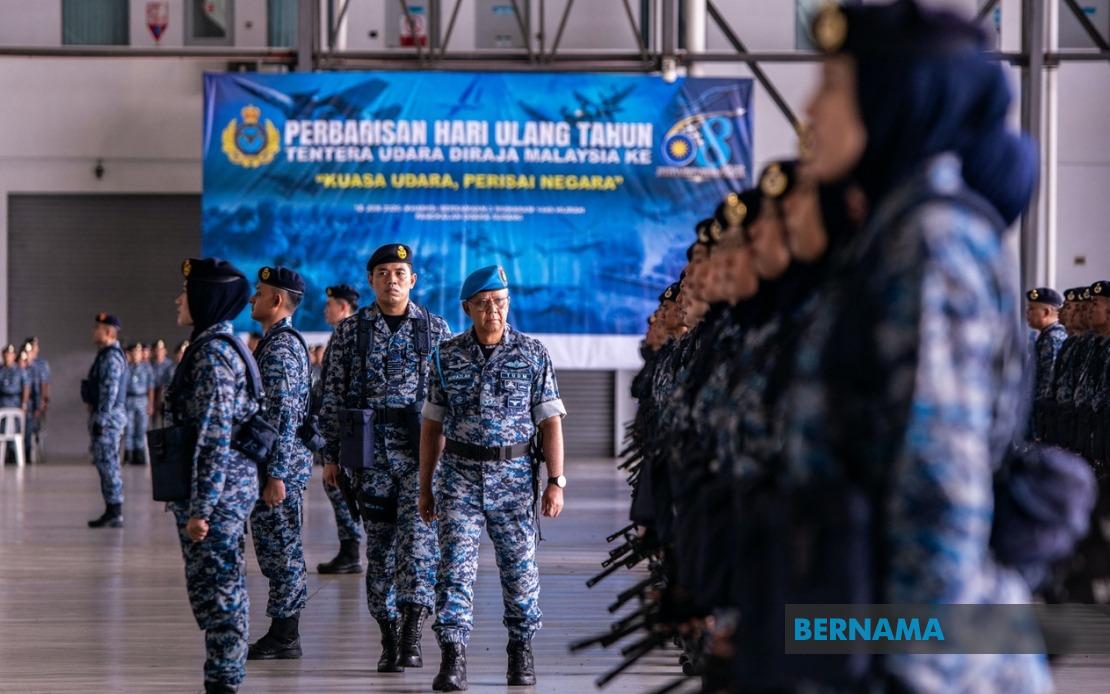
Malaysia is significantly upgrading its air defence infrastructure, with the Royal Malaysian Air Force deploying advanced radar systems across four strategically important locations to strengthen the nation's surveillance and early warning capabilities. The installations, announced during the RMAF's 68th Anniversary Parade in Subang, represent a major step in modernising the service's operational reach and tactical responsiveness across the country's vast airspace and maritime domains.
General Tan Sri Muhamad Norazlan Aris, the Chief of Air Force, unveiled plans to establish air defence radars at Bintulu in Sarawak, Bukit Puteri in Terengganu, and Bukit Lunchu in Johor, while simultaneously commissioning an air surveillance radar on Pulau Layang-Layang in the South China Sea. These four locations form a critical architecture for detecting and tracking potential threats across Malaysian territory and the adjacent maritime zones where the country maintains sovereign interests. The distribution across the peninsula and East Malaysia ensures comprehensive coverage of areas previously identified as having surveillance gaps.
The modernisation initiative forms the foundation of the RMAF Capability Development Plan 2055 (CAP55), a long-term strategic framework designed to keep Malaysia's air defence posture aligned with evolving technological standards and anticipated security threats through 2055. The first phase focuses on closing existing detection gaps and establishing redundancy in critical early warning systems. This generational planning approach reflects the service's recognition that security challenges will become increasingly complex, requiring infrastructure investments today that will remain relevant for decades.
General Muhamad Norazlan contextualised these investments within the broader regional security landscape, pointing to ongoing West Asian conflicts as instructive examples of how quickly circumstances can deteriorate and how catastrophic the consequences become for nations unprepared for rapid escalation. The disruption to shipping through the Strait of Hormuz has demonstrated the vulnerability of global energy supplies to geopolitical volatility, with ripple effects extending throughout international commerce, manufacturing supply chains, and financial markets. Malaysia, as a trading nation dependent on stable energy imports and maritime commerce, faces exposure to these same vulnerabilities.
The air force chief emphasised that Malaysia's own strategic position renders it particularly susceptible to shipping lane disruptions. The Strait of Malacca and the South China Sea represent indispensable conduits for Malaysian trade and economic activity, with the former serving as one of the world's busiest maritime passages. Any conflict or instability affecting these waters could rapidly cascade into domestic economic damage, making it essential that Malaysia maintains constant vigilance and readiness to protect these vital corridors. The radar investments directly support this protective capability by enabling early detection of threats and rapid response to emerging problems.
Beyond the immediate security function, these radar systems provide Malaysia with enhanced situational awareness in waters where the country maintains legitimate interests but faces competing claims from regional neighbours. Pulau Layang-Layang's strategic location makes surveillance capabilities there particularly valuable, offering coverage of maritime approaches and potential air traffic that might threaten Malaysian interests or territory. The integration of this offshore radar into a nationwide network substantially improves the RMAF's ability to track movements and respond to incidents in contested zones.
The infrastructure upgrades also carry implications for Malaysia's ability to contribute to regional stability and international maritime security. Enhanced surveillance capabilities enable more effective maritime domain awareness and coordination with regional partners on shared security concerns. As a major stakeholder in South China Sea stability and security of sea lanes, Malaysia's improved detection capacity contributes to regional confidence and transparency.
The parade itself demonstrated the breadth and composition of Malaysia's air defence force structure, with 16 officers and 272 personnel drawn from the RMAF Special Forces (PASKAU), Ground Defence Force (HANDAU), the Women's Composite Flight, and the Multi-Trade Composite Flight. This representation illustrates the comprehensive and increasingly integrated nature of modern air defence operations, where specialised personnel across different domains must function seamlessly. General Muhamad Norazlan presented service medals and commendation certificates to 17 recipients during the ceremony, recognising contributions to air force operations.
The timing of these announcements reflects Malaysia's heightened awareness of regional security challenges and the accelerating pace of technological change in defence systems. Investment in radar infrastructure requires years of planning and execution, and the decision to commence these projects now suggests defence planners have concluded that the window for closing surveillance gaps is narrowing. Competitors in the region are simultaneously upgrading their own systems, making it essential that Malaysia not fall further behind in detection capabilities.
Financial and logistical challenges accompany such ambitious infrastructure projects, particularly given Malaysia's geographic expanse and the remote locations of some installations. Maintaining these systems in tropical conditions requires specialised expertise and sustained funding. The long-term nature of CAP55 indicates a commitment to allocating resources across multiple budget cycles, prioritising these defence investments even as other government spending pressures mount.
The radar deployments represent one component of a broader modernisation agenda within the RMAF that likely extends to aircraft, missiles, and command-and-control systems. Radar systems are only effective when integrated with weapons systems and human operators trained to respond rapidly to detected threats. The full capability delivered by these radars will depend on complementary investments in supporting infrastructure, personnel training, and operational doctrine.
As Malaysia navigates an increasingly multipolar and contested regional environment, investments in early warning and surveillance systems serve as force multipliers that enhance deterrence and response capabilities without requiring expensive new aircraft or weapons platforms. The radar network essentially extends the RMAF's eyes and ears, enabling faster decision-making and more effective force deployment. For a country with Malaysia's resource constraints relative to its strategic responsibilities, such investments represent prudent allocation of limited defence budgets toward capabilities that yield disproportionate security benefits.