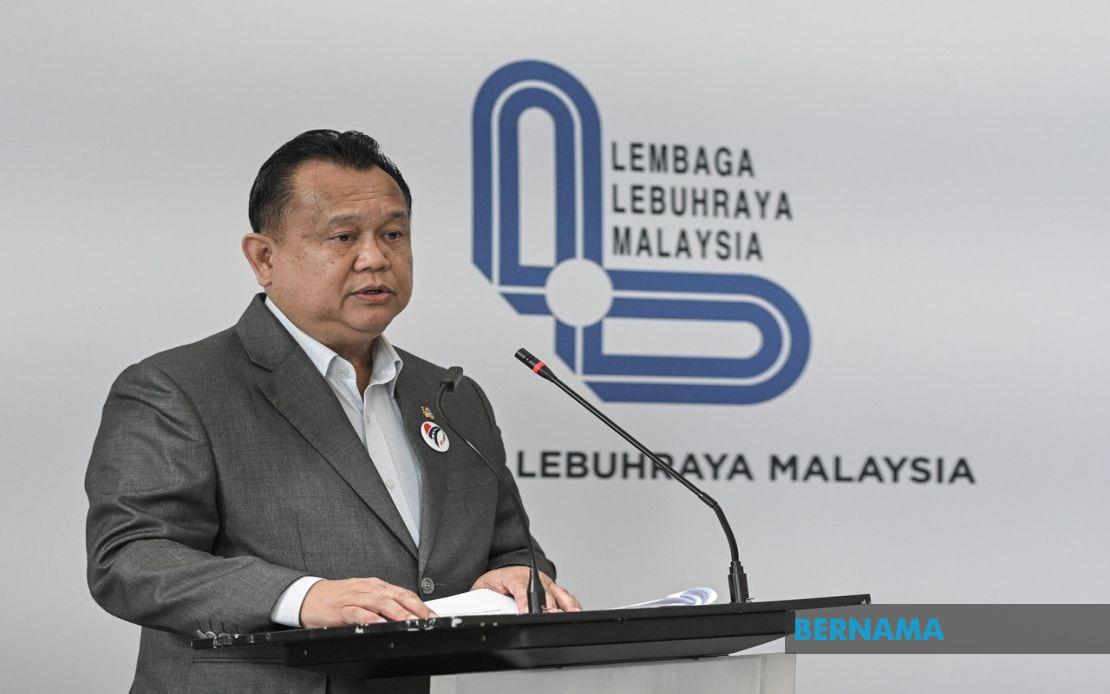
The Malaysian government has earmarked RM25.2 million for the first stage of a nationwide road safety initiative involving the installation of solar-powered LED street lights at 32 high-accident zones along the country's highway network. Works Minister Datuk Seri Alexander Nanta Linggi announced that the project would see 3,000 light poles erected at these strategic danger points to bolster visibility and reduce collision incidents. The scheme represents a coordinated effort between the Works Ministry, the Finance Ministry, and the Malaysian Highway Authority to address persistent road safety challenges across the nation's transport infrastructure.
The initiative emerged from Prime Minister Datuk Seri Anwar Ibrahim's vision announced during the 2026 Budget presentation in October, where the government signalled its commitment to tackling road fatalities through infrastructure improvements. While the original budget allocation stood at RM30 million, the Works Ministry opted to deploy RM25.2 million in this opening phase, preserving flexibility to allocate the remaining funds based on evolving operational requirements and site assessments. This phased approach suggests a pragmatic strategy that allows the government to evaluate implementation challenges and adjust spending patterns as the project develops.
The contract award ceremony took place in Kuala Lumpur on June 23, with the Letter of Acceptance formally handed to the appointed contractor, paving the way for immediate commencement of on-site construction activities. Minister Nanta emphasised that the government views road accident prevention as a critical policy priority, explaining that the deliberate sequencing of fund releases reflects careful planning rather than budget constraint. The full project timeline targets completion by the end of November, setting an ambitious but achievable deadline for delivering enhanced lighting infrastructure across these dangerous stretches.
Solar-powered LED technology offers multiple advantages for Malaysian highway conditions. These systems operate independently of grid electricity, reducing operational costs while providing round-the-clock illumination at locations where traditional street lighting infrastructure may be inadequate or prohibitively expensive to maintain. The renewable energy component also aligns with Malaysia's broader sustainability objectives and reduces the carbon footprint associated with conventional highway lighting. For remote or rural highway sections, solar LED poles eliminate dependency on extending electricity supply lines, making this solution particularly cost-effective.
The selection of 32 specific locations reflects data-driven accident analysis, though the Works Ministry has not publicly detailed the criteria for identifying these zones. Road safety experts typically designate high-risk areas based on historical accident rates, fatality statistics, traffic volume, road geometry factors such as curves and gradients, and visibility challenges. Clustering these improvements at proven danger points maximises the safety return on investment compared to dispersing resources across the network. These locations likely include notorious accident hotspots that feature prominently in highway patrol incident reports.
The deployment of 3,000 light poles represents a substantial infrastructure undertaking requiring careful logistical planning. Installation involves site surveying, foundation preparation, pole erection, electrical integration of solar systems and LED fixtures, and commissioning before operational handover. In Malaysia's tropical climate, construction teams must navigate monsoon patterns and environmental conditions that affect installation schedules. The November completion target thus demands accelerated work sequencing, suggesting the contractor has mobilised resources efficiently to meet this timeframe.
For Malaysian drivers and road users, improved lighting at accident-prone locations carries tangible safety implications. Enhanced visibility enables motorists to detect hazards earlier, particularly during night-time travel when a disproportionate share of serious accidents occurs. Fatigue-related incidents become less likely when roads are well-lit, reducing the eye strain that contributes to driver drowsiness. Motorcyclists, who comprise a significant proportion of Malaysian road deaths, particularly benefit from enhanced illumination that helps them navigate curves and avoid obstacles. Emergency services responding to incidents also gain operational advantages from better-lit accident scenes.
The MADANI Monitoring programme framework under which this initiative operates reflects the government's broader structural approach to public policy implementation. This framework emphasises measurable outcomes, timeline adherence, and accountability in project delivery—a deliberate contrast to previous infrastructure initiatives that experienced delays or cost overruns. By housing the highway lighting project within this governance structure, the Works Ministry signals that delivery performance will be transparently tracked and progress reported regularly to stakeholders.
Regional context adds significance to this initiative. Across Southeast Asia, road fatality rates remain stubbornly elevated, with Malaysia experiencing annual casualties that rank among the highest in the region. Infrastructure-based interventions like improved highway lighting represent cost-effective measures that complement enforcement and driver education programmes. Neighbouring countries including Thailand and Indonesia have similarly invested in highway safety infrastructure, suggesting that Malaysia's initiative reflects regional acknowledgement that engineering solutions play a crucial role in reducing accidents.
The economic dimension of this spending deserves consideration. Road accidents impose substantial costs on the Malaysian economy through medical expenses, vehicle damage, lost productivity, and insurance claims. The World Health Organisation estimates that road injuries cost developing economies approximately three per cent of GDP in direct and indirect expenses. By investing RM25.2 million in accident prevention, the government potentially avoids far larger expenditures on treating injuries and managing accident consequences. This preventive spending represents sound fiscal policy that yields returns extending beyond the immediate budget cycle.
Future phases of the programme remain undefined but are implicitly envisioned. If the current initiative succeeds in reducing accident rates at the 32 designated locations, financial and political case studies will support broader expansion. Additional phases could extend solar LED installation to secondary roads, urban highways, or additional accident zones identified through ongoing monitoring. The phased budgeting approach therefore functions as both prudent fiscal management and a test-case for scaling up successful interventions.
The works sector faces ongoing pressure to modernise Malaysia's infrastructure to international standards while managing costs responsibly. This solar LED initiative demonstrates how technological innovation—coupling renewable energy with smart lighting—can solve traditional infrastructure challenges efficiently. As Malaysia pursues its Vision 2050 objectives and digital economy ambitions, enhancing the physical infrastructure that supports safe, reliable transport becomes increasingly vital. The highway lighting programme exemplifies how government can leverage available technology and strategic investment to deliver measurable improvements in public safety.

