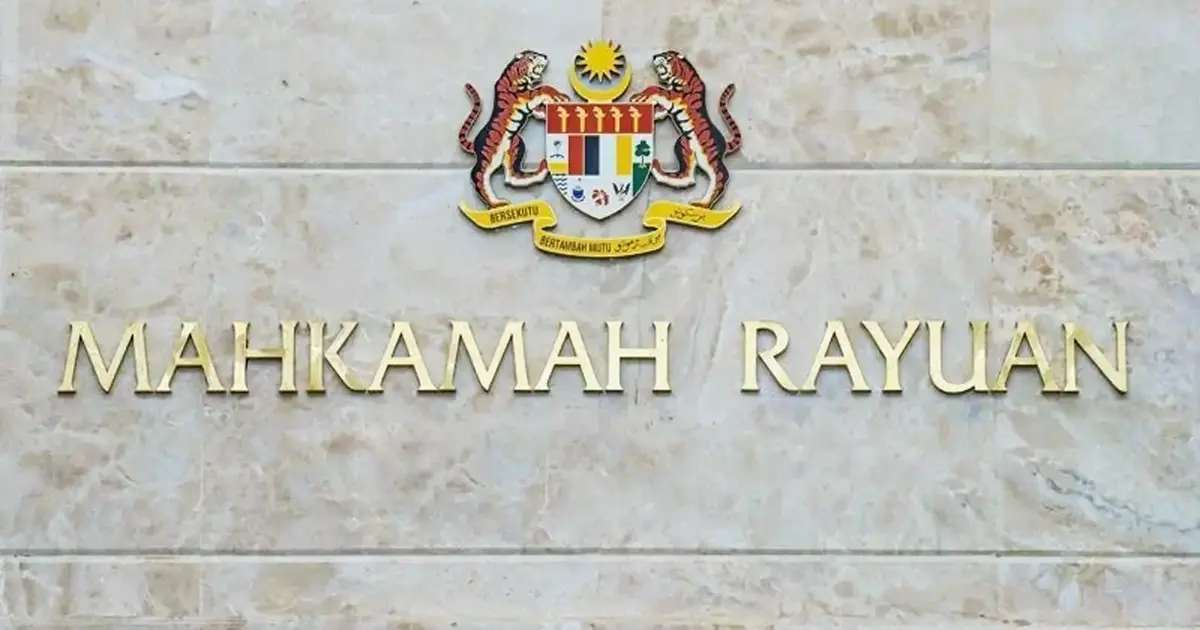
Malaysia's Court of Appeal has delivered a consequential ruling on the legal standing of registered societies, determining that such organisations cannot pursue defamation lawsuits. The decision arose from the court's dismissal of an appeal by Pertubuhan Ikram Malaysia, a registered society that had sought to protect its reputation through the courts. The judgment clarifies an important boundary in Malaysian civil law regarding the protections available to different categories of organisations and raises substantive questions about how registered societies can defend their interests in the legal system.
The core of the court's reasoning centred on a fundamental principle of legal personality. Registered societies, the judges determined, do not possess the legal status necessary to claim ownership of a reputation that can be damaged by defamatory statements. This distinction carries significant implications across Malaysia's civil society sector, where many community groups, professional associations, and grassroots organisations operate under the registered societies framework. Unlike incorporated companies, which enjoy separate legal personality distinct from their members, registered societies occupy a more ambiguous legal position, and this judgment has now clarified that such ambiguity extends to their inability to sue for defamation.
The Pertubuhan Ikram Malaysia case thus represents a watershed moment for registered societies seeking legal remedies against reputational harm. The organisation had presumably believed it could defend its name and standing through defamation proceedings, as private companies and individuals routinely do. The Court of Appeal's decision strips away this avenue, suggesting that registered societies must find alternative mechanisms to address false or damaging statements made about them. This creates a practical difficulty for organisations operating in Malaysia's social, cultural, and professional spheres, many of which have significant public profiles and genuine interests in correcting misinformation.
The legal principle underlying the judgment reflects traditional common law doctrine, which ties the ability to sue for defamation to the possession of a legally recognised reputation. Only entities with legal personality—individuals and incorporated bodies—have traditionally been considered to possess reputational interests worthy of judicial protection. Unincorporated associations and societies have historically occupied a grey area in this framework, and the Court of Appeal has now resolved that ambiguity against affording them defamation rights. This aligns Malaysian law with certain other Commonwealth jurisdictions but may diverge from approaches in some neighbouring Southeast Asian nations.
The timing of this judgment warrants consideration within Malaysia's broader legal and social context. As civil society organisations become increasingly active in public discourse, from advocacy campaigns to community mobilisation, the inability to sue for defamation effectively removes a legal tool that might otherwise deter false statements. Organisations like Pertubuhan Ikram Malaysia, which engage in public education and community work, may now find themselves vulnerable to misinformation without access to defamation law as a remedy. This could have downstream effects on how registered societies operate and communicate, potentially making them more cautious or alternatively forcing them to seek incorporation as companies to gain necessary legal protections.
The distinction the court has drawn also raises questions about statutory interpretation and legislative intent. Registered societies operate under specific legislation in Malaysia, and the question of whether these statutes implicitly grant or deny defamation rights has now been definitively answered by the appellate bench. This suggests that if Parliament intended registered societies to possess defamation rights, it may need to amend the relevant legislation explicitly. The absence of such protective provisions in the current framework has been interpreted as a deliberate exclusion rather than an oversight.
For Malaysian civil society, the practical implications are substantial. Registered societies that wish to protect themselves against defamation may now need to restructure as companies or other incorporated entities, a process that carries administrative and financial costs. Alternatively, they might pursue remedies under other legal frameworks, such as the Printing Presses and Publications Act or regulations governing public order and security, though these may provide less precise protection against reputational damage. Some organisations may conclude that the legal system offers insufficient recourse and resort to alternative dispute resolution mechanisms or public communication strategies instead.
The judgment also intersects with questions of access to justice and equality before the law. While incorporated companies enjoy robust defamation protections, registered societies—often community-based and resource-constrained—now lack these same safeguards. This asymmetry could be challenged as potentially unjust, particularly when registered societies operate in the public interest and depend on public trust and reputation. Advocacy groups and civil society observers may view this decision as establishing a legal gap that requires legislative correction.
Regionally, the decision may influence how other Southeast Asian jurisdictions approach similar questions about registered societies and defamation rights. Malaysia's Court of Appeal judgment could serve as persuasive authority in neighbouring countries grappling with comparable legal issues. Conversely, different outcomes in other ASEAN nations might prompt Malaysian legal scholars and policymakers to revisit whether the current position adequately serves the region's civil society ecosystem.
Looking forward, the implications of this ruling will likely become clearer as registered societies respond to the judgment. Some organisations may pursue legislative reform efforts, seeking statutory amendments that explicitly grant defamation rights. Others may choose to restructure their legal status or develop alternative communication and dispute-resolution strategies. The ruling ultimately underscores that while Malaysian law provides robust defamation protections for individuals and incorporated entities, the same protections do not extend uniformly across all forms of organisation, a reality that registered societies must now navigate.

